
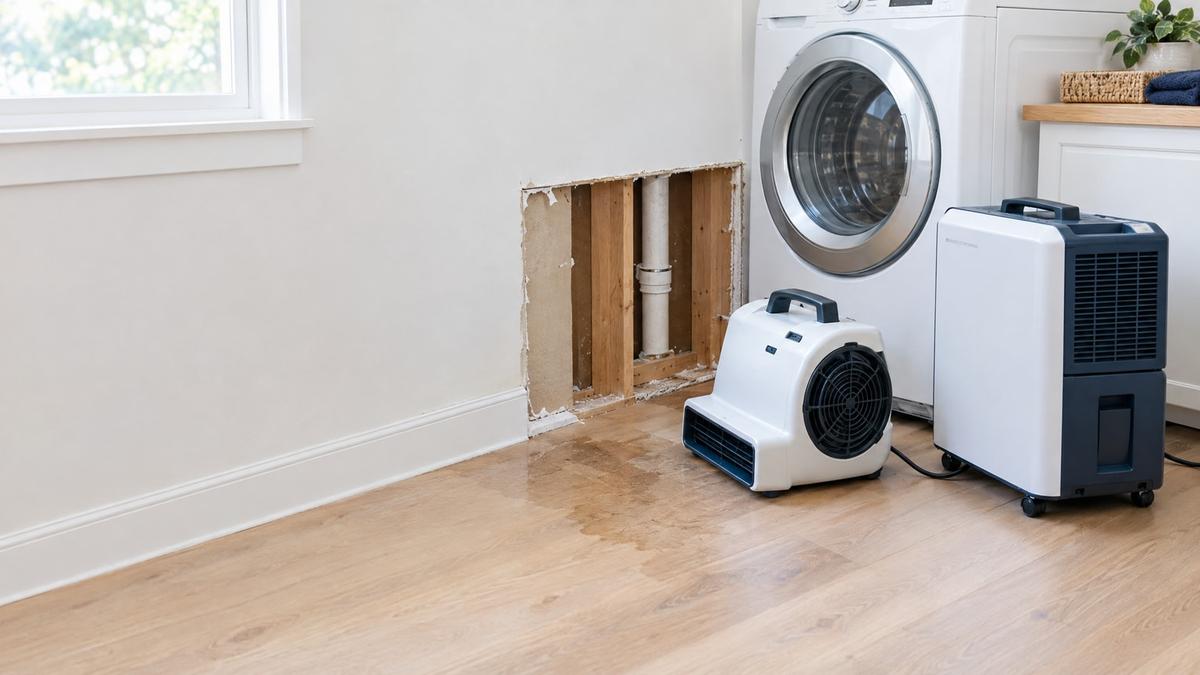
After storm water enters, begin safe drying promptly. Use the next 24–48 hours as a prompt-drying target, not as a guarantee or proof that mold will or will not grow. Assess the actual moisture, materials, and source-control result rather than relying on a clock.
The Prompt-Drying Window After Water Intrusion
Moisture is the condition you can address first. Remove standing water and dry materials promptly when it is safe to do so; the 24–48-hour interval is a response target, not proof that mold has or has not established.
Hour 0-4: Immediate Response
Safety First
- Stay out of standing water near electrical equipment. Isolate power only from a dry, safe location; otherwise have the utility or qualified personnel handle it.
- Wear rubber boots and gloves
- Watch for structural damage
- Don't wade through water with hidden hazards
- Be aware of contamination (sewage, chemicals)
Stop the Source
- Identify where water is entering
- Make emergency repairs if safely possible
- Use a qualified roofer for damaged roof coverings or temporary tarps. Do not climb onto a wet or storm-damaged roof.
- Sandbag if water is still coming
Document
Before removing any water:
- Take photos and video of all damage
- Note water levels (mark on walls)
- Document damaged items
- Keep records for insurance
Hour 4-12: Water Removal
Remove Standing Water
- Major standing water or a flooded basement requires a plan for structural pressure, contamination and electrical safety; obtain experienced professional help before pumping.
- For a small clean-water incident, use extraction equipment only after electrical hazards are excluded and according to its instructions. Floodwater or sewage requires experienced help.
- Mop up pooled water
- Move water away from foundation
Remove Wet Materials
Assess wet materials for contamination, cleanability, saturation and access. Remove materials that cannot be safely cleaned and dried under the agreed scope.
- Carpet padding (almost never salvageable)
- Wet insulation
- Base drywall removal on actual moisture, wicking, contamination and assembly conditions, not a universal height above a water line.
- Wet ceiling tiles
- Ruined furniture (particleboard, heavily soaked upholstery)
Prepare for Drying
- Pull back carpet (save if possible)
- Remove baseboards
- Open cabinet doors and closets
- Move furniture to center of rooms
Hours 12–24: Continue Safe Drying
Air Circulation
- Start drying after electrical, structural and contamination hazards are controlled
- Do not direct fans across visible mold
- Use equipment suited to the water source and safe power supply
- Track material moisture and concealed areas before closing finishes
Dehumidification
- Run every dehumidifier you have
- Rent additional units if needed
- Empty reservoirs frequently
- Close windows if running dehumidifiers
HVAC Considerations
- Do not use the HVAC system as a drying tool if it may be wet, damaged or contaminated. A qualified technician should determine when it can safely return to service.
Hours 24–48: Continue Drying and Assess
Monitor Progress
- Compare moisture readings with appropriate unaffected material using the instrument’s instructions
- Check drying progress at relevant depths and inaccessible boundaries through a qualified scope
- Do not treat a dry feel or room humidity alone as proof of dry cavities
- Recheck repaired areas during the next relevant weather event
Continue Drying
- Keep fans and dehumidifiers running
- Reposition as areas dry
- Don't stop until everything is dry
Watch for Mold
- Check high-risk areas for early growth
- Smell for musty odors
- Note any discoloration
After the Initial Drying Effort
If Still Wet
- If drying is delayed or the scope is uncertain, reassess for concealed damage, contamination and professional help. Passing 48 hours does not by itself establish the presence or extent of mold.
If Mold Appears
- For a small area on a cleanable surface, correct the moisture source first. Then use a material-appropriate detergent or a labeled product according to its directions. Do not rely on an unlabelled household recipe or a universal contact time.
- Large areas: call professional remediation
- Don't disturb extensive growth
- Protect yourself during any cleaning
Special Considerations
Sewage Contamination
If floodwater contained sewage:
- This is Category 3 water—serious contamination
- Discard all porous materials it contacted
- Disinfect hard surfaces thoroughly
- Wear full protective equipment
- Professional cleanup is strongly recommended
Electrical Systems
- Don't restore power until electrician approves
- Don't use wet appliances
- Have electrical panels inspected after flooding
HVAC System
- Keep potentially flooded or contaminated HVAC off
- Have affected components, insulation and ducts assessed by a qualified professional
- Do not treat a new filter alone as system restoration
- Record the completed repairs and any remaining limitations
Insurance Tips
- Photograph damage and keep a dated inventory when safe
- Notify the insurer and ask what documentation it requires
- Keep receipts and the repair timeline
- Do not retain contaminated samples in occupied space merely for a claim
When to Call Professionals
Call professional restoration if:
- Large area affected
- Contaminated water
- You cannot dry the affected materials promptly or they remain wet after the initial drying effort.
- Water in wall cavities
- HVAC system affected
- Mold appears or moisture remains after drying; document the condition and assess the materials and source-control needs.
Prevention for Next Time
After you recover:
- Fix whatever allowed water entry
- Improve drainage and grading
- Consider flood insurance
- Stock emergency supplies
- Have restoration company contact ready
Act Fast
Prompt action can reduce continued water damage, but no timer predicts mold growth, project scope, health outcome, or the need for professional work. Document the event, dry safely, and assess the actual conditions.
Sources and Further Reading
For current moisture and mold guidance, see EPA's A Brief Guide to Mold, Moisture, and Your Home.