
Unlock more guides and resources
How Poor Drainage Causes Mold
Rain and snowmelt that collect near the foundation raise moisture levels in walls and floors. Over time, this creates ideal conditions for mold growth.
Signs of Drainage Problems
- Water pooling near the foundation after rain
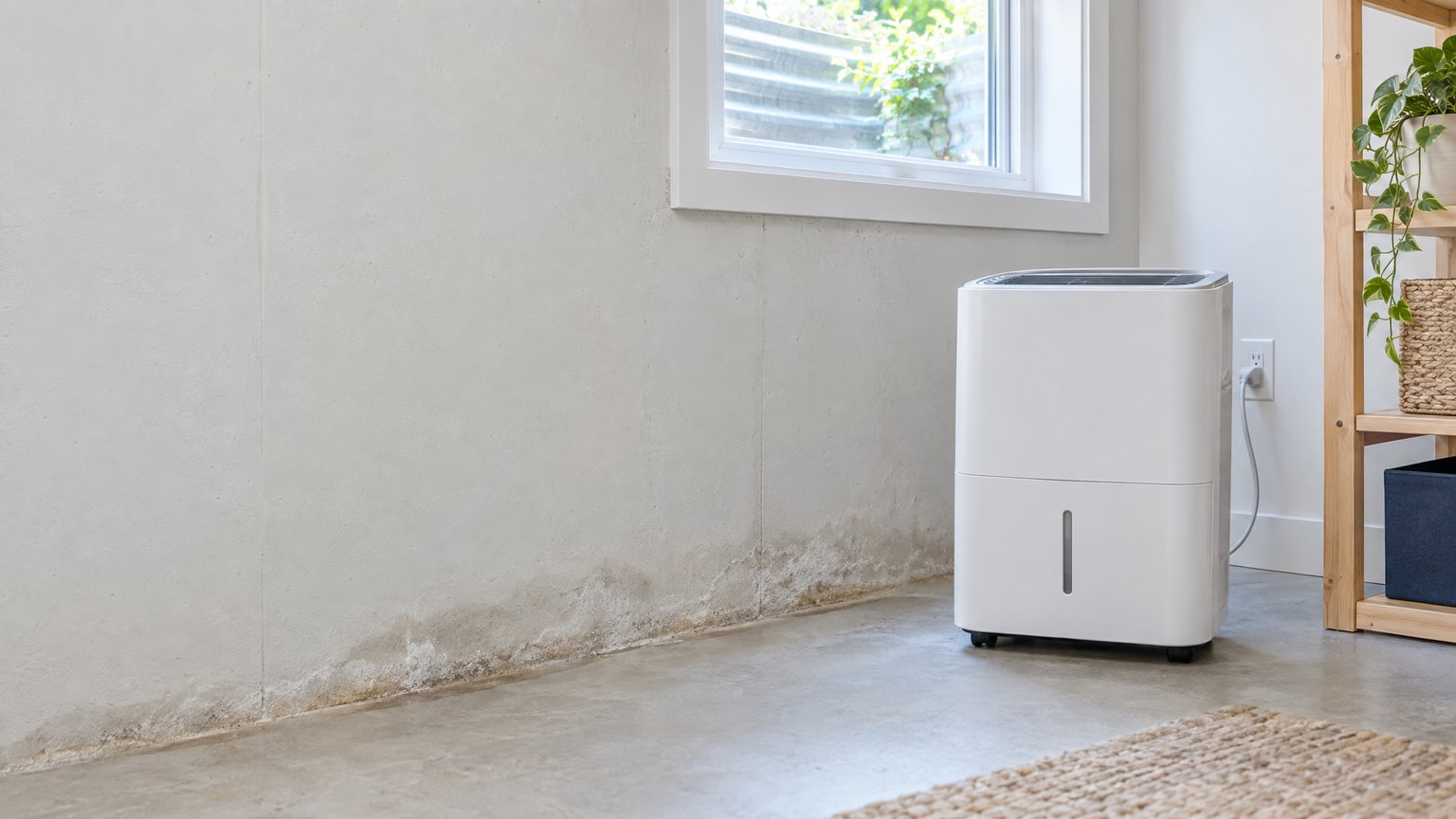
- Efflorescence or damp spots on basement walls
- Musty odors in lower levels
- Gutters overflowing during storms
Exterior Fixes
- Spout empties at the wall
- Water runs down the foundation
- Extended and sloped away
Downspouts and grading are only part of site drainage, and a dry basement one day does not rule out entry in heavy rain. Discharge to a permitted spot that does not flood a neighbor, and photograph where water collects during a storm.
Grading and Gutters
- Slope soil away from the house
- Discharge downspouts to a permitted location that carries water away without flooding neighboring property
- Keep gutters clean and aligned
Drainage Additions
- Install French drains where needed
- Add gravel or swales to redirect water
- Use window well covers and drainage
Interior Protections
- Use dehumidifiers in below grade spaces
- Have moving, widening, or displaced foundation cracks assessed before choosing a sealant or repair
- Store items off the floor
Basic Moisture Control
Photograph pooling and seepage during or after rain, noting where water starts and how long it lasts. Share that record when comparing drainage proposals; a dehumidifier can lower air moisture but cannot stop water entering the foundation.
- Keep gutters and downspouts clear
- Extend downspouts away from the foundation
- Make sure HVAC drain pans and lines flow freely
- Fix plumbing leaks quickly before they saturate materials