
Unlock more guides and resources
Why Containment Matters
Disturbing mold releases spores and fragments. Containment reduces the risk of particles spreading to clean areas, helps protect occupants, and keeps remediation focused on the affected zone.
When Containment Is Often Appropriate
Factors Favoring Containment
- Visible growth covering more than a small patch
- Demolition or material removal is planned
- Mold is inside wall cavities or ceilings
- HVAC system contamination
- Occupants with asthma, allergies, or immune conditions
Extra Precautions
- Use full containment for large or multi-room jobs
- Add a decontamination entry (two-stage) for heavy work
- Keep HVAC off or isolated during active remediation
- Protect adjacent rooms with critical barriers
What Good Containment Looks Like
Physical Barriers
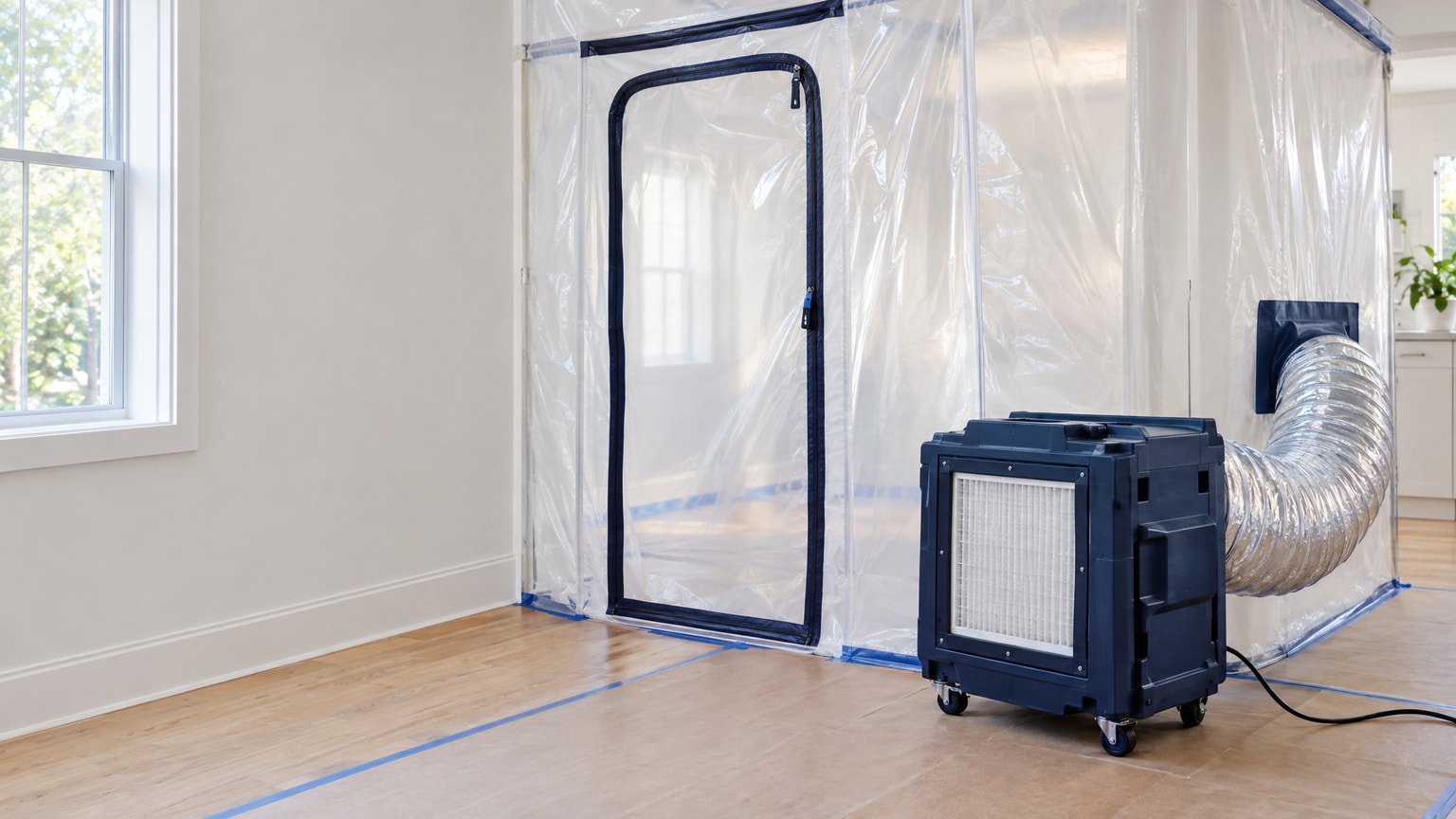
- 6-mil plastic sheeting with sealed seams
- Floor-to-ceiling coverage around the work area
- Zipper doors or sealed entry points
- Protected pathways for debris removal
Work Practices
- HEPA-filtered exhaust maintaining verified inward airflow
- Final HEPA vacuuming after removal, damp cleaning, and drying
- Bagging debris inside the containment zone
- Clean tools and PPE before leaving the area
Negative Air Pressure: How It Works
Negative air pressure means air flows into the work area, not out. A recirculating HEPA unit can filter particles, but it does not create negative pressure. Negative pressure requires HEPA-filtered air to be exhausted from the containment to a safe outdoor location, with inward airflow verified before materials are disturbed.
- 1
Seal the work zone
Close all openings and tape seams to prevent leaks.
- 2
Set up filtered exhaust
Duct HEPA-filtered exhaust from the containment to a safe outdoor location; recirculation alone does not create negative pressure.
- 3
Verify inward airflow
Confirm plastic sheeting pulls inward and use pressure measurements when the project scope calls for them before work begins.
- 4
Maintain negative pressure
Run machines continuously during demolition and cleaning.
- 5
Verify before teardown
Keep containment and filtered exhaust in place until final cleaning is complete, surfaces are dry, and the work area is ready for clearance.
Homeowner Checklist
- Ask how containment will be built and photographed
- Confirm HEPA-filtered exhaust reaches a safe outdoor location and inward airflow will be verified
- Make sure debris is bagged inside the work zone
- Verify HVAC is isolated or turned off during remediation
- Request a written scope describing containment steps