
Unlock more guides and resources
When You Need a Dehumidifier
A dehumidifier can help when measured indoor relative humidity stays high after leaks, drainage problems, and other liquid-water sources have been corrected. Condensation, damp materials, or a musty odor should prompt a source investigation; none of them tells you by itself how much mold is present.
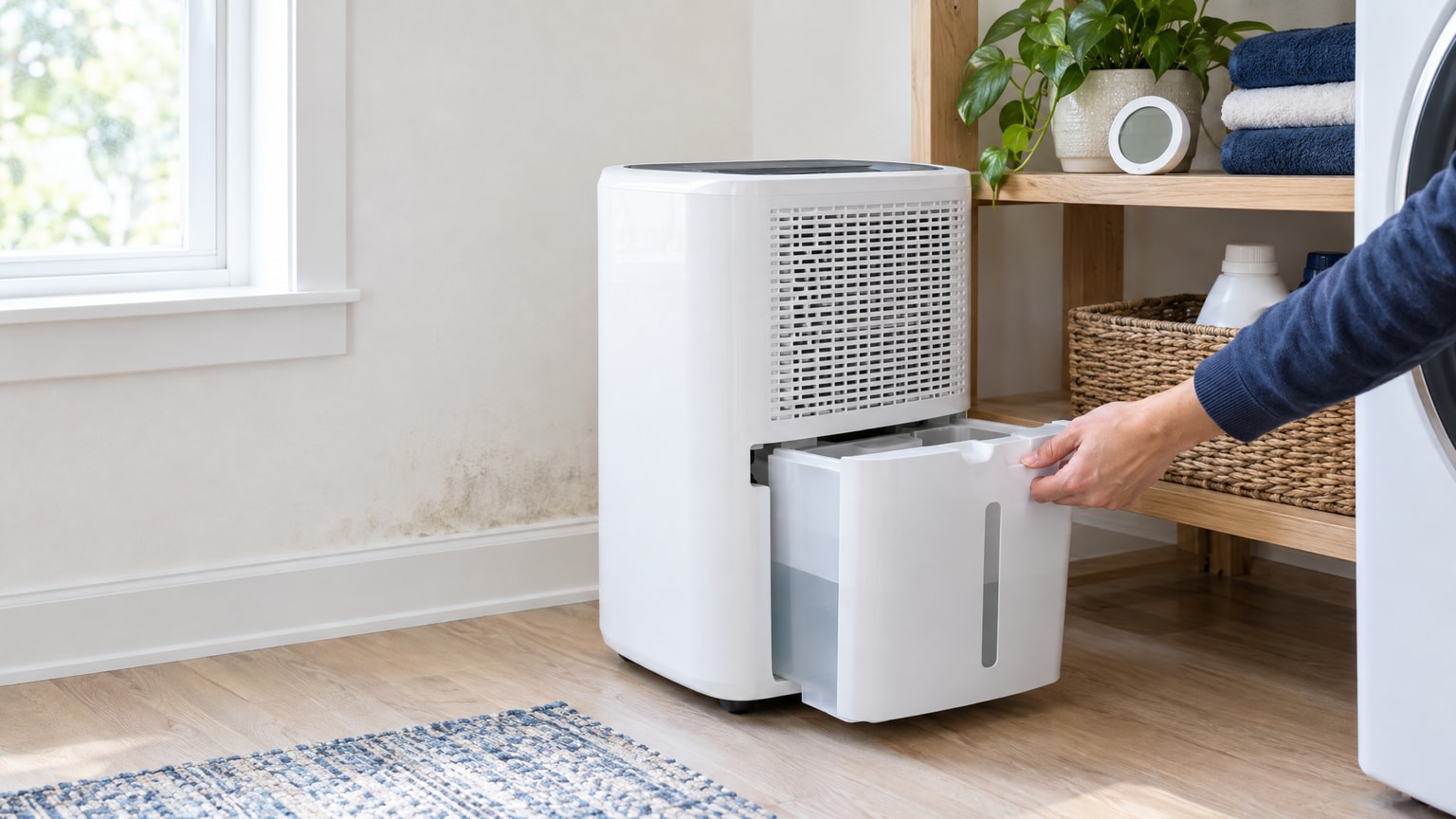
A dehumidifier removes water vapor from air. It does not repair a leak, drain standing water, prove that a wall cavity is dry, or remediate existing mold growth.
Choosing the Right Unit
Sizing Tips
- Match current pints-per-day capacity to both space size and dampness level
- Account for cool temperatures, air leakage, laundry, and other moisture loads
- Compare ENERGY STAR certification and Integrated Energy Factor (IEF)
- Check noise ratings and low-temperature operation for the intended location
Helpful Features
- Built-in humidistat
- Auto-restart after power loss
- Continuous drain or condensate-pump option that fits the site
- Easy-to-clean filter
Portable vs. Whole-Home
Choose the equipment only after you know where humidity is high, what is adding the moisture, and where condensate can drain safely.
When Portable Dehumidifiers Are Sufficient
- Measurements show the excess humidity is limited to one connected area
- The unit can circulate air without blocked intake or discharge
- The bucket can be emptied reliably or a safe continuous drain is available
- A renter needs a reversible option and has permission for any drain connection
Types of Whole-House Units
Whole-house dehumidifiers come in two main configurations, each with distinct advantages.
HVAC-Integrated Units
Connect to a compatible duct system and use the installed controls to call for dehumidification. Airflow paths and blower operation depend on the equipment design and approved installation.
- Requires compatible ductwork and enough service access
- May use a thermostat, separate humidistat, or equipment controls
- Needs a designed return and supply path
- Must manage interaction with ventilation and heating or cooling equipment
Ducted Standalone Units
Use dedicated or partially dedicated ductwork and controls. Some designs can serve a target area without relying on the central cooling system.
- Can target a defined zone
- Can operate on its own humidity call when designed that way
- Needs a return-air path and dry-air distribution plan
- Still requires safe drainage, electrical supply, and maintenance access
Installation and Quote Checklist
A ducted whole-home system normally involves HVAC design plus site-specific electrical and condensate work. Verify which licenses and permits your jurisdiction requires.
What to Expect During Installation
- Technician assesses your ductwork and recommends placement
- The proposal identifies capacity, airflow path, controls, service clearances, and drainage
Placement and Operation
- Place the unit on a stable surface with the manual-required intake, discharge, and service clearance
- Use separate humidity measurements to confirm which connected spaces the unit actually reaches
Maintenance
- Clean or replace filters per the manual
- Clean and dry the bucket according to the manual
- Check the drain hose, pump, and overflow controls for clogs or leaks
- Keep coils and air openings clear and investigate repeated frost or shutdowns
- Record humidity in the problem area and a comparison area with a separate hygrometer
If Humidity Stays High
A dehumidifier helps, but it cannot fix a water problem. Persistent humidity usually means a moisture source is still active.
- Confirm the reading with another hygrometer and compare multiple locations
- Check for plumbing, roof, appliance, foundation, or drainage water