
Unlock more guides and resources
Wood: A Semi-Porous Material
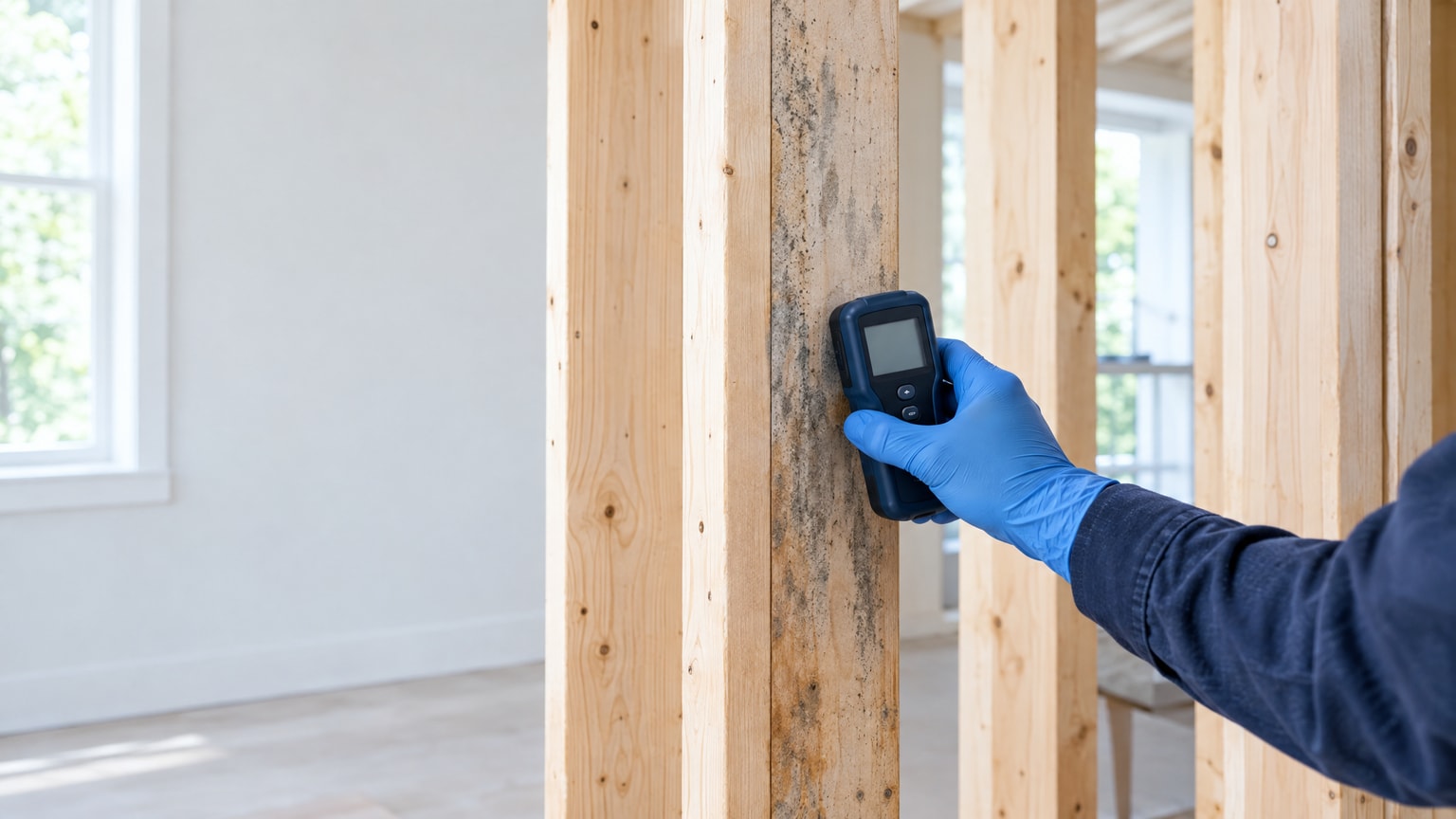
Unlike highly porous materials such as drywall and carpet, solid wood is classified as semi-porous. This distinction matters significantly for remediation decisions:
Why Wood Is Often Salvageable
- Denser structure limits mold penetration
- Surface contamination can usually be removed
- Structural integrity often preserved if caught early
- Replacement is expensive and disruptive
- Proper cleaning restores the wood to acceptable condition
Types of Wood in Homes
- Solid lumber (studs, joists, rafters)
- Plywood (sheathing, subfloors)
- OSB (oriented strand board)
- Engineered lumber (LVL, I-joists)
- Hardwood flooring
- Trim and millwork
Solid lumber is most salvageable. Engineered products vary.
When Wood Can Be Cleaned
Wood can typically be cleaned and retained when the following conditions are met:
- Mold growth is on the surface only (not deeply embedded)
- The wood is structurally sound (not soft, rotted, or crumbling)
- Moisture readings meet the project dry standard or appropriate unaffected reference material
- The moisture source has been identified and corrected
- Growth can be removed by surface cleaning methods
Good Candidates for Cleaning
- Wall studs with surface growth
- Floor joists with light contamination
- Roof rafters and trusses
- Subflooring with surface mold
- Hardwood floors (if structurally sound)
May Require Replacement
- Wood that is soft or crumbling
- Heavily saturated engineered products
- OSB with significant mold penetration
- Particleboard (highly porous)
- Wood with structural damage from rot
When Replacement Is Needed
Wood must be replaced when:
- Structural integrity is compromised (soft, rotted, or crumbling)
- Wood rot (decay fungus) has developed in addition to mold
- Moisture damage has caused warping or delamination
- The wood cannot be dried to acceptable moisture levels
- Mold has penetrated too deeply for surface cleaning to be effective
- Engineered wood products have absorbed significant moisture
Wood Cleaning Techniques
Several methods are used to clean mold from wood surfaces, often in combination:
HEPA Vacuuming
A remediation plan may use a sealed HEPA-filtered vacuum to collect loose surface debris. Sequence it with containment, dust control, damp cleaning, and any mechanical removal so the process does not spread particles.
Sanding and Wire Brushing
For surface mold on unfinished wood (studs, joists, sheathing):
- 1
HEPA vacuum first
Remove loose contamination before mechanical cleaning.
- 2
Use appropriate tools
Wire brushes, sanding sponges, or power sanders depending on the surface.
Wet Cleaning
After mechanical cleaning, a damp wipe with detergent solution removes remaining surface contamination:
- Use clean water with mild detergent
- Wipe with damp (not wet) cloths
- Work in sections, using fresh cloths frequently
- Allow wood to dry completely after cleaning
- Do not saturate wood with cleaning solution
Encapsulation Options
After cleaning, encapsulation may be appropriate in certain situations:
What Is Encapsulation?
Encapsulation applies a coating over a cleaned, dry, structurally sound surface. It may cover residual staining or serve a project-specific coating purpose, but it does not correct leaks, waterproof the assembly, or guarantee that mold will not return.
Common encapsulants include antimicrobial sealers, shellac-based primers, and specialized mold encapsulation products.
When Encapsulation Is Appropriate
- After thorough cleaning and drying
- When staining remains after cleaning
- In crawlspaces and attics (with proper ventilation)
- As part of a comprehensive remediation plan
- When recommended by a qualified professional
Material Porosity and Cleanup Decisions
Professional remediation decisions depend heavily on material porosity. Porous materials are harder to clean reliably; non-porous materials are usually easier to clean after the moisture source is fixed.
Porous Materials
Usually Remove
- Drywall
- Insulation
- Carpet and padding
- Ceiling tiles
- Particleboard
Semi-Porous Materials
Often Cleanable
- Solid lumber
- Plywood
- Hardwood flooring
- Engineered wood (varies)
- Concrete (sometimes)
Non-Porous Materials
Usually Clean
- Metal
- Glass
- Hard plastics
- Sealed surfaces
- Tile and glazed ceramics
Wood structural members such as studs, joists, and rafters are often good candidates for cleaning when they are structurally sound and can be dried. See our standards guide for more on IICRC S520.
Common Wood Mold Mistakes
- Using bleach or another biocide as a substitute for physical cleaning and moisture correction
- Skipping HEPA vacuuming before sanding (spreads spores)
- Sanding without containment or air filtration