
Unlock more guides and resources
Understanding Mold Risks During Pregnancy
MotherToBaby says mold exposure has not been well studied in pregnancy. There is no proven pregnancy risk from airborne household mold, but dampness and mold should still be corrected because they can affect the pregnant person's health and the baby's environment after birth.
Pregnancy alone is not listed in CDC's general mold-cleanup high-risk groups. People with asthma, mold allergy, chronic lung disease, or immune suppression have additional reasons to avoid exposure and cleanup work. After a flood or disaster, CDC advises pregnant people to avoid entering mold-damaged buildings and to avoid disaster cleanup.
Effects on Pregnant Women
Mold exposure can affect pregnant women in several ways. The respiratory and allergic effects that affect anyone exposed to mold can be particularly burdensome during pregnancy.
Mold can be associated with respiratory or allergic symptoms such as congestion, eye irritation, cough, wheeze, or rash in some people, while others have no symptoms. Pregnancy does not make those symptoms proof that mold is the cause.
Asthma symptoms during pregnancy deserve prompt medical attention. Follow the asthma action plan made with your clinician and do not change prescribed medication on your own.
Fetal Development Concerns
Available studies do not establish that airborne household mold increases birth-defect risk. MotherToBaby notes that animal findings involve eating large quantities of mold, which is a different exposure route from breathing indoor air.
It is not known whether household mold exposure increases miscarriage, preterm delivery, low birth weight, later behavior or learning problems, or difficulty becoming pregnant. “Unknown” means the evidence cannot answer the question; it is not proof of either harm or safety.
Precautions to Take
If possible, have someone else handle cleanup—especially after a flood, for a large or complex area, or when you have asthma, allergy, chronic lung disease, or immune suppression. If you are considering a small ordinary cleanup, ask your prenatal clinician about your circumstances and follow CDC protection guidance: at least a NIOSH Approved N95 respirator, gloves, and eye protection.
Avoid spending time in areas with visible mold or musty odors until the problem is addressed. Ensure good ventilation in your home, especially in bathrooms and kitchens where moisture accumulates.
Monitor humidity levels and use a dehumidifier if needed, keeping indoor humidity below 50%. Address any water leaks or water damage promptly, as mold can begin growing within 24-48 hours.
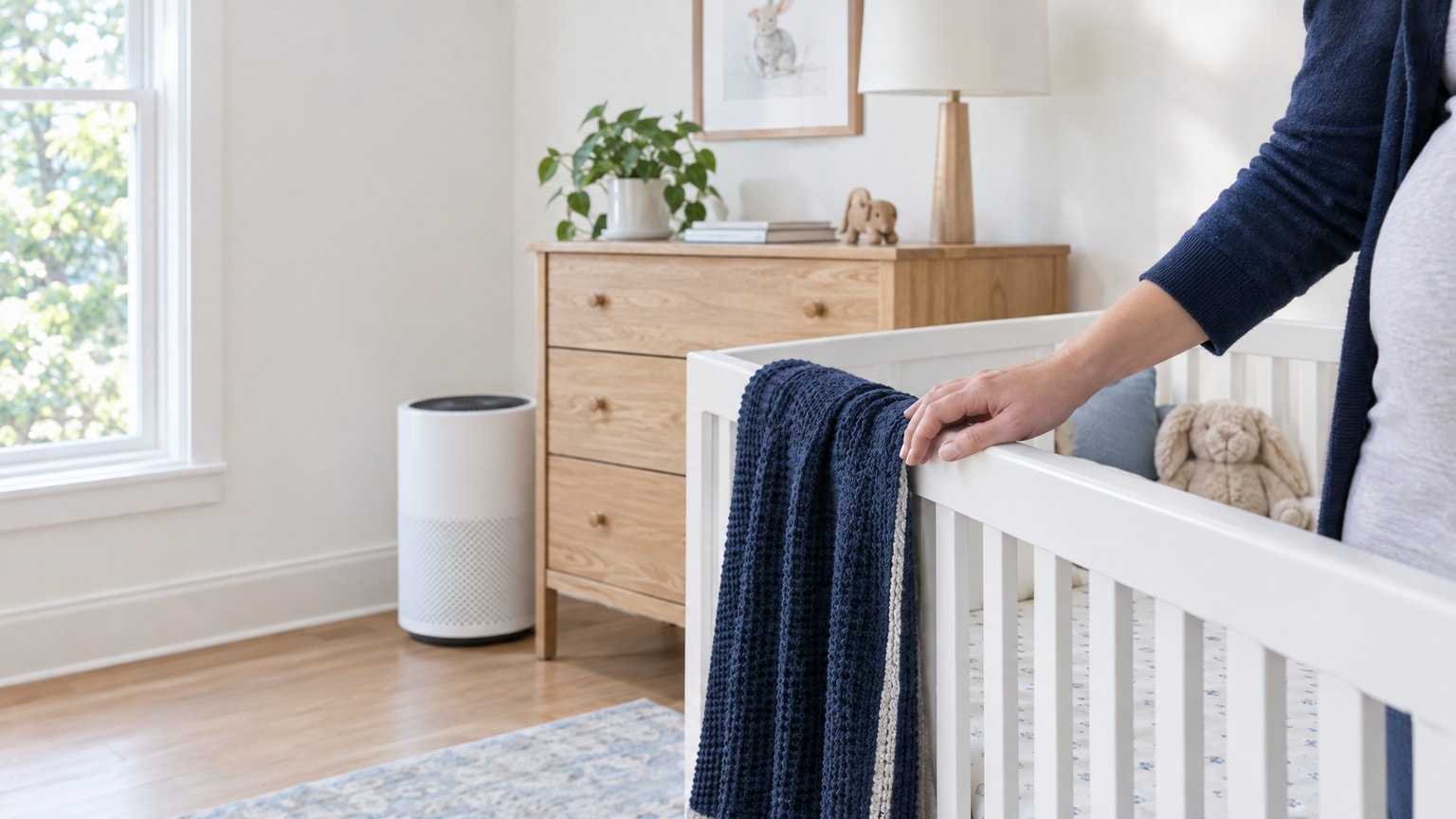
A correctly sized particle air cleaner may reduce some airborne particles, but it does not correct moisture, remove growth, or prove that a room is safe.
When to Consider Temporary Relocation
There is no pregnancy-specific square-foot rule for relocation. Consider staying elsewhere during major demolition, flood cleanup, extensive remediation, or when you cannot keep living space separated from dust and damaged materials. If symptoms worsen in the home, contact your clinician promptly and ask whether avoiding the space is appropriate for your medical situation.
If you rent, document the condition and written notices and use your state and local renter resources. Do not assume that a health concern automatically creates a particular relocation or reimbursement right.
Consulting Healthcare Providers
Communication with your healthcare team is essential when dealing with mold exposure during pregnancy. Inform your OB-GYN or midwife about mold in your home environment. Mention any symptoms you are experiencing, especially respiratory symptoms, congestion, or asthma flare-ups.
Ask for guidance specific to your health history and pregnancy stage. If you have pre-existing asthma, discuss whether your management plan needs adjustment. Do not hesitate to ask for a referral to a specialist if needed, such as a pulmonologist for respiratory concerns or an allergist for allergy symptoms.
Your healthcare provider can help you weigh the risks and benefits of various courses of action and document your reported symptoms and clinical findings when appropriate. Keep building photos, repair requests, and other housing documentation separate from the medical record. For more guidance on medical evaluation, see our guide on when to see a doctor about mold exposure.
Official Resources
This content is for educational purposes only and is not a substitute for medical advice. Consult your OB-GYN, midwife, or other healthcare provider for guidance specific to your pregnancy.