
Unlock more guides and resources
The Quick Answer
EPA says mildew refers to certain kinds of mold or fungus. People often use the word for flat growth on shower walls, windowsills, plants, or fabric, but appearance alone cannot tell you the species, depth of growth, or health risk.
Use the same practical response for either label: find and correct the moisture source, avoid unnecessary exposure, clean or remove affected material appropriately, and dry the area completely.
How the Terms Relate
What “Mildew” Usually Describes
- Flat, powdery texture
- White, gray, or yellowish color
- Often flat growth in a damp location
- Commonly used for growth on shower walls or windowsills
- Still indicates a moisture or ventilation problem
- Not a species identification or safety rating
What Determines the Response
- Whether the water source is fixed
- Whether material is porous or damaged
- How large and hidden the affected area is
- Whether sewage, floodwater, HVAC, or structural hazards are involved
- Whether someone at higher risk would be exposed during cleanup
What You Can Observe
Common Uses of the Word “Mildew”
People commonly call flat or powdery growth “mildew,” especially when it appears:
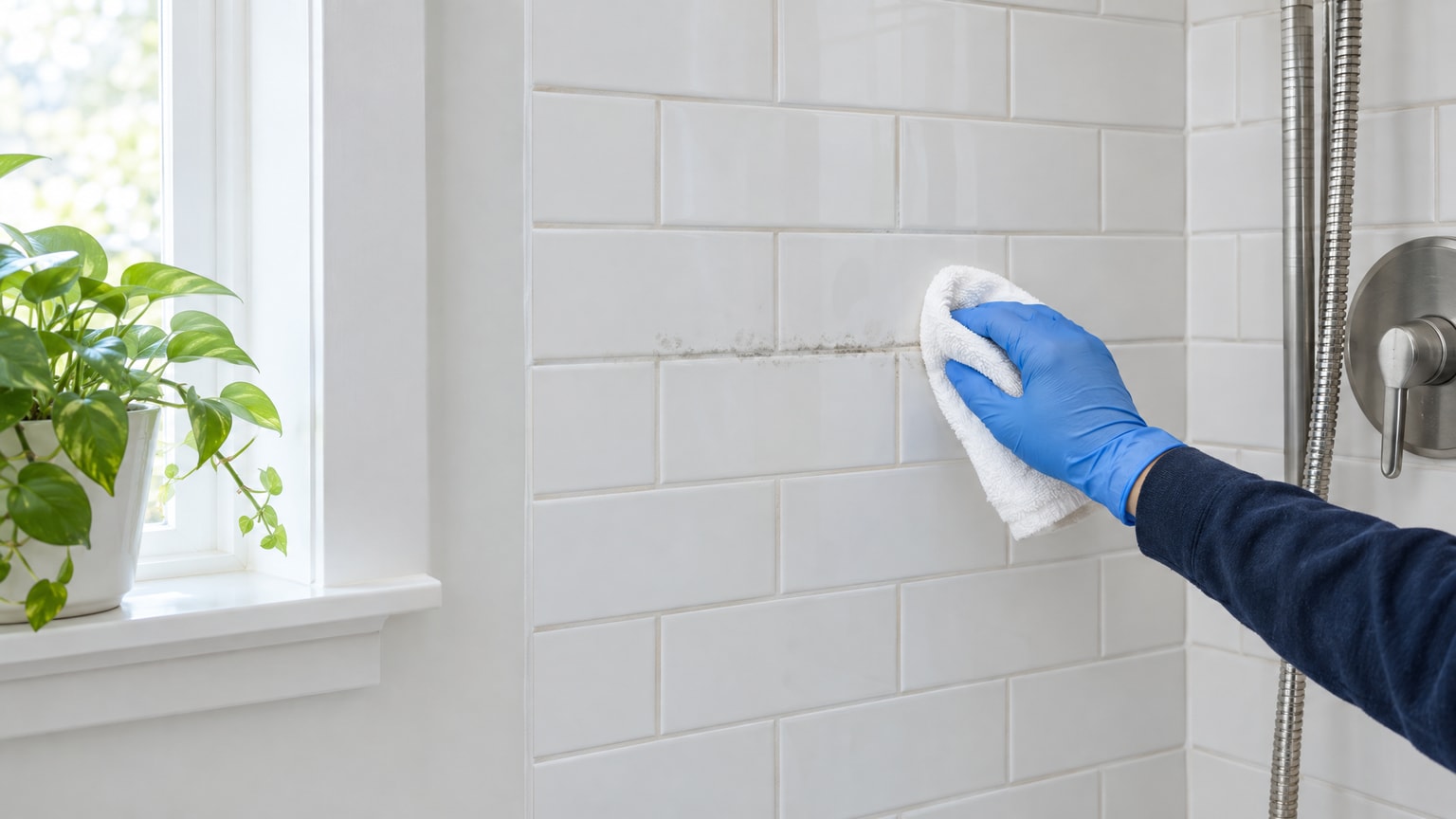
- On bathroom tiles and grout
- On windowsills with condensation
- On damp fabrics and paper
- On leather goods in humid closets
If growth wipes away but returns, the moisture or ventilation problem remains. Repeated surface cleaning is not a substitute for correcting that condition.
What You Can Observe Reliably
You usually do not need a species name to act. Document the building conditions that change the cleanup plan:
- The location and approximate affected area
- Active leaks, condensation, or past water damage
- Soft, swollen, crumbling, or delaminated material
- Growth that returns after cleaning and drying
- Musty odor or damage that may extend into a hidden space
Color and texture cannot determine whether growth is dangerous. Learn why species identification has limits and how to investigate possible hidden growth.
Health Risks
Health Guidance Does Not Split Mold by Nickname
CDC says damp and moldy environments may cause health effects in some people and none in others. The word “mildew,” the color of the growth, and a visual guess at species do not predict how a person will react.
- Possible effects include stuffy nose, sore throat, coughing or wheezing, burning eyes, or skin rash
- People with asthma or mold allergy may have stronger respiratory reactions
- People with immune suppression or chronic lung disease can be at risk of fungal lung infections
- Persistent, severe, or unexplained symptoms need medical evaluation rather than a visual mold diagnosis
Learn more about mold health effects and when to see a doctor.
Treatment Approaches
Use the Same Cleanup Decision
For a small area on a hard surface, EPA recommends scrubbing with detergent and water and drying completely. Absorbent material may need removal when growth cannot be cleaned out. EPA does not recommend biocides such as chlorine bleach as a routine mold-cleanup practice.
- Small hard-surface areas: Clean with detergent and water, use appropriate protection, and dry completely
- Porous materials: Often need to be removed (drywall, carpet, insulation)
- Complex or extensive damage: Use an experienced professional and a written scope
- Always correct the water or humidity source
See our guide on when cleaning works vs. when materials need removal.
When to Worry
Get More Help When...
- The affected area is larger than about 10 square feet and you need help applying EPA's more extensive guidance
- You see mold in multiple rooms or areas
- Mold has penetrated walls, floors, or ceilings
- There has been water damage or flooding
- You smell mold but cannot see it (hidden mold)
- Someone with asthma, chronic lung disease, immune suppression, or mold allergy would be exposed during cleanup
- You have recurring mold despite cleaning and drying
Color alone is not a reliable indicator of risk. Learn about black mold facts vs. fiction and finding hidden mold.