
Unlock more guides and resources
Common Causes and Warning Signs
Basement dampness may come from seepage, drainage, plumbing, or condensation; it does not by itself establish a structural defect. Learn to recognize hidden mold indicators that may not be immediately visible.
Common Causes
- Foundation cracks or hydrostatic seepage
- Poor exterior drainage or gutter overflow
- High humidity with inadequate airflow
- Plumbing leaks (often hidden in walls)
- Wet storage items acting as moisture reservoirs
Warning Signs
- Persistent musty odor (even without visible mold)
- Condensation on pipes, windows, or walls
- Water staining or tide marks on foundation
- Warped wood, bubbling paint, or soft drywall
- Efflorescence (white crystalline deposits on concrete)
Inspection Checklist
- Check foundation walls for dampness
- Inspect corners and behind stored items
Safe Cleanup for Small Areas
This section applies only to a small, accessible area with a known clean-water source and safe power and access. Sewage, floodwater, hidden wall damage, or a bowed foundation requires qualified help before cleanup.
Basement mold cleanup is only effective after addressing the moisture source. Without fixing the underlying issue, mold will return. See our guide on when to clean vs. remove materials.
- 1
Remove wet items
Discard porous items like cardboard, paper, and fabric that cannot be dried within 48 hours.
- 2
Clean hard surfaces
Use detergent and water on concrete, sealed floors, and non-porous materials.
Prevention Tips
Basement mold prevention requires both humidity control and addressing water intrusion at its source.
- Keep relative humidity below 60% (ideally 30-50%)
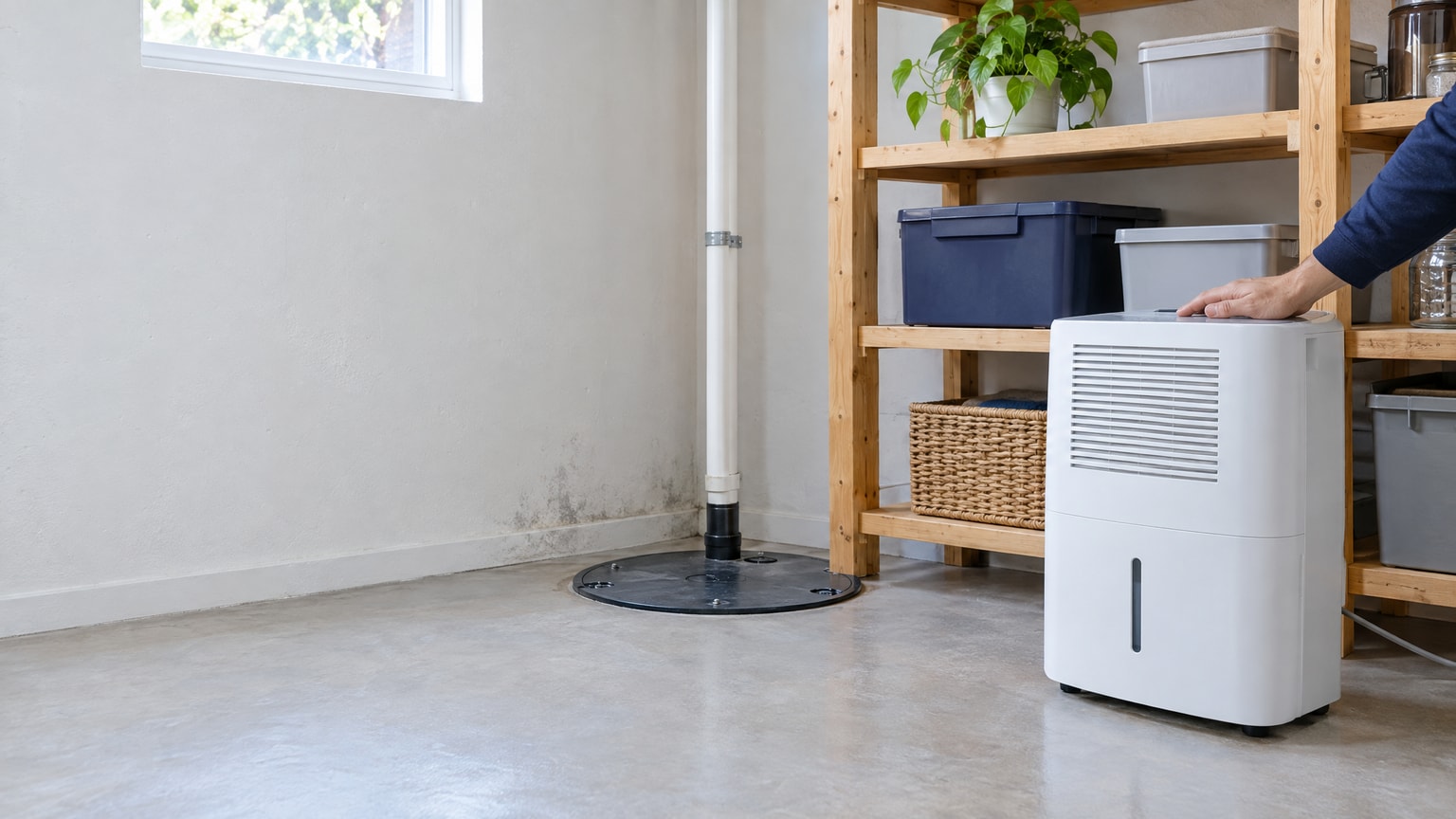
- Run a dehumidifier sized for your basement square footage
- Route downspout water to a permitted location where it cannot flow back toward the foundation
- Seal foundation cracks and pipe penetrations
- Store items on shelving, not directly on concrete floors
- Ensure proper grading slopes away from the house
For basement-specific dehumidifier recommendations, see our dehumidifier guide.
When to Call a Pro
Recurring basement dampness needs a source investigation. Bowing walls, displacement, or concerning cracks also need a structural assessment. Take our DIY vs. Pro quiz for personalized guidance.
- Recurring water intrusion or history of flooding
- Mold covering more than 10 square feet
- Hidden mold suspected behind finished walls