
Unlock more guides and resources
Common Causes of Roof Leaks
Roof leaks are particularly problematic for mold because water often travels far from the entry point before becoming visible. By the time you see a ceiling stain, mold may have been growing in the attic or walls for weeks.
Roofing Failures
- Missing/damaged shingles: Wind, age, and impact damage
- Flashing failures: Around chimneys, vents, skylights, and valleys
- Cracked vent boots: Rubber seals around pipes deteriorate
- Worn sealants: Caulk and roofing cement break down over time
- Aging materials: Shingles become brittle and fail
Other Entry Points
- Skylights: Seal failures and improper installation
- Chimneys: Deteriorating mortar and flashing
- Gutters: Clogs causing backup under shingles
- Siding gaps: Wind-driven rain enters walls
- Window/door seals: Failed weatherstripping and caulk
Detecting Roof Leaks
Warning Signs Inside
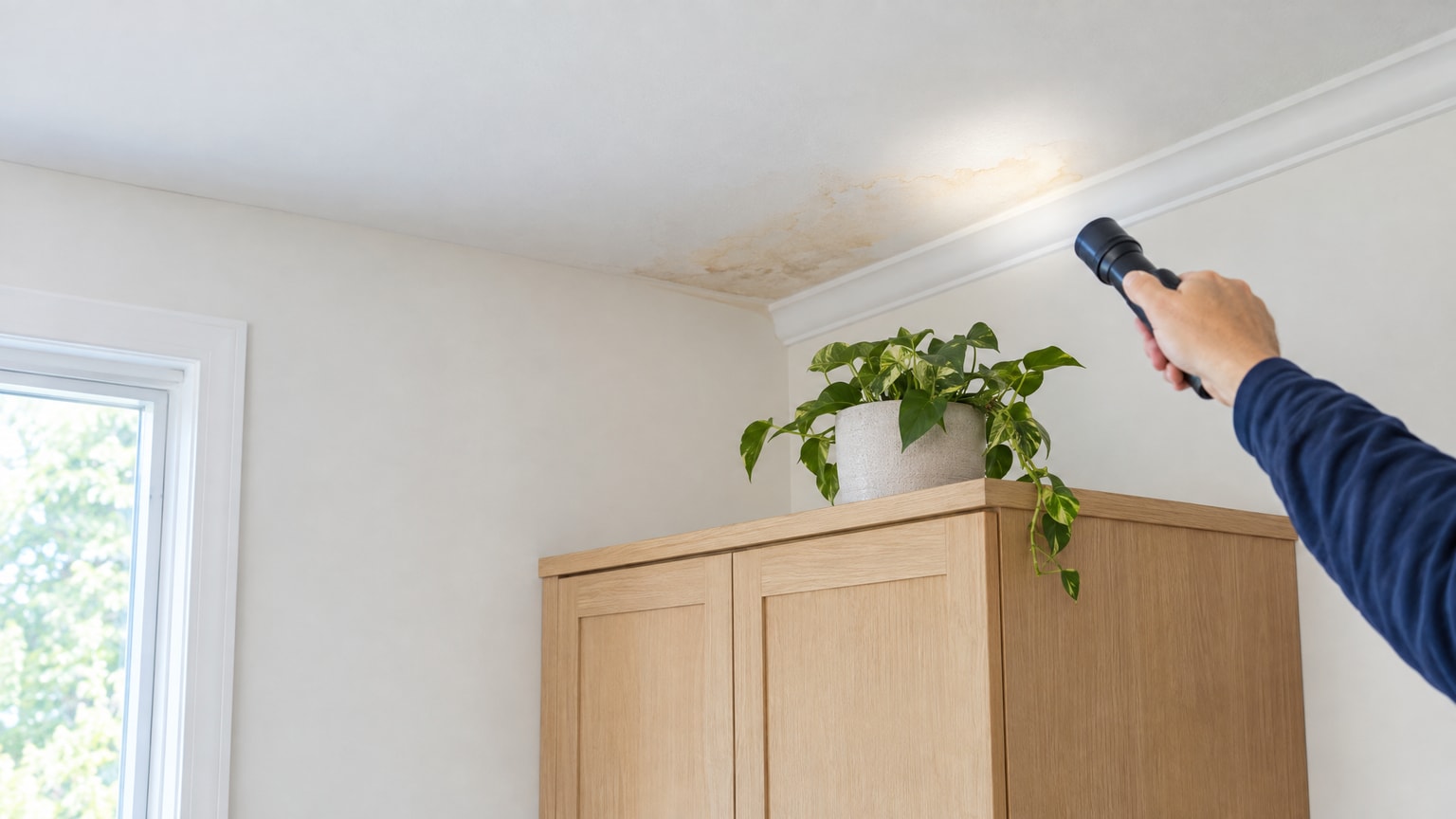
- Water stains on ceilings (often brown or yellow rings)
- Peeling paint or bubbling wallpaper
- Damp spots that appear during or after rain
- Musty odors in upper floors or attic
- Visible mold on ceilings or upper walls
- Daylight visible through roof boards (in attic)
Exterior Inspection Points
- Shingles: Look for missing, cracked, curled, or granule-bare shingles
- Flashing: Check for rust, gaps, or lifted edges around protrusions
- Valleys: Where roof planes meet - common leak locations
- Gutters: Clear of debris, securely attached, draining away from foundation
- Vent boots: Rubber collars around pipes - check for cracks
- Chimneys: Mortar condition, cap, and flashing
Ice Dams
In cold climates, ice dams are a major cause of roof leaks and attic mold. They form when heat escaping from the attic melts snow on the roof, which refreezes at the cold eaves.
How Ice Dams Form
- Heat from the living space rises into the attic
- Warm attic air heats the roof deck, melting snow above
- Meltwater runs down to the cold eaves (overhangs past the walls)
- Water refreezes at the eaves, forming an ice ridge
- More meltwater backs up behind the ice dam
- Water seeps under shingles and into the attic and walls
Prevention
- Air sealing: Seal gaps that let warm air into the attic (around fixtures, pipes, wiring)
- Insulation: Adequate attic insulation keeps heat in living spaces
- Ventilation: Proper attic ventilation keeps the roof deck cold
- Ice and water shield: Membrane under shingles at eaves provides backup protection
- Roof raking: Remove snow from the first few feet of roof after heavy storms
Attic Mold Risk
Attics are high-risk areas for mold because roof leaks often go unnoticed, and moisture from the living space can accumulate if ventilation is poor.
- Roof leaks often appear in attics before reaching living spaces
- Poor ventilation traps moisture from the house below
- Bathroom and kitchen exhaust fans sometimes vent into attics (improper)
- Attics are rarely inspected, allowing mold to grow undetected
- OSB and plywood sheathing are highly susceptible to mold
See our detailed attic mold guide for prevention, detection, and remediation specific to attic spaces.
Emergency Response
When You Discover a Leak
Prevention
Regular Maintenance
- Annual roof inspection: Professional inspection catches problems early
- Gutter cleaning: Clean gutters in spring and fall (more often if many trees)
- Trim overhanging branches: Prevents debris accumulation and storm damage
- Attic inspection: Check for daylight, stains, or mold annually
- Address repairs promptly: Small problems become expensive ones
Know Your Roof
- Roof age and expected lifespan (asphalt shingles typically 20-30 years)
- Warranty status and what it covers
- History of repairs or problem areas
- When to plan for replacement vs ongoing repairs