
Unlock more guides and resources
Use this record with the landlord escalation guide, retaliation guide, or lease-termination guide only after checking the state and local rules that apply.
What to Document
The Mold Itself
- Location (room, wall, ceiling, etc.)
- Size (measure or compare to common objects)
- Color and appearance
- Any musty or moldy odors
- Moisture sources nearby
- Any visible water damage
Related Conditions
- Leaks or water intrusion
- Humidity, condensation, and other moisture indicators (if available)
- Ventilation issues
- Previous water damage
- Condensation on windows/walls
- Any health symptoms, recorded separately from building observations
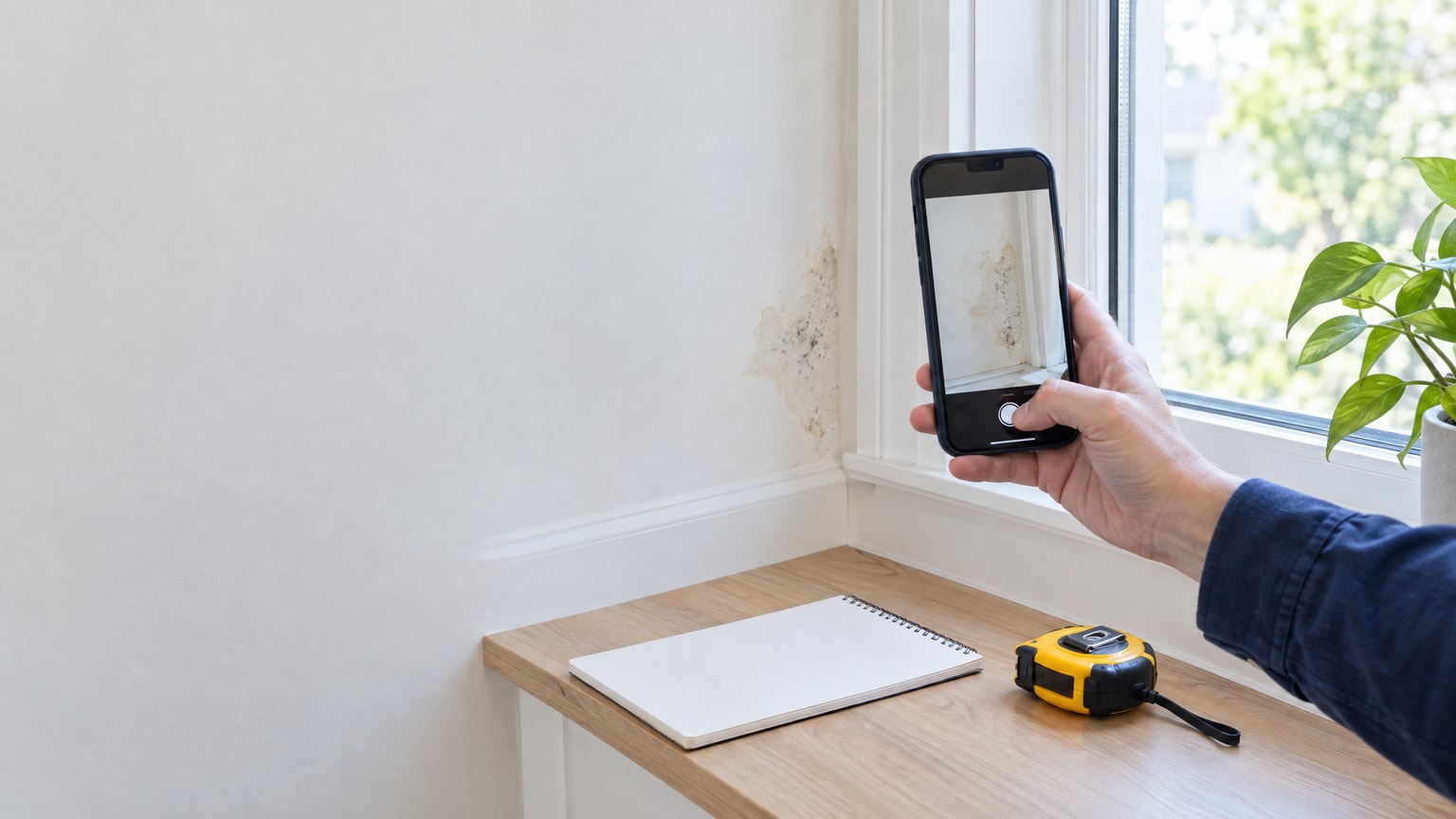
Photo Documentation Best Practices
- 1
Use Good Lighting
Mold can be hard to see in photos. Use natural light or a flashlight to ensure the mold is clearly visible.
- 2
Take Multiple Angles
Wide shots showing context, medium shots showing the affected area, and close-ups showing detail.
- 3
Include a Reference Object
Place a ruler, coin, or your hand in frame to show scale.
Written Communication Records
Create a Written Record
Email, a resident portal, or another method accepted by the lease or local rules can:
- Record when the request was sent and any confirmation of receipt
- Preserve a searchable copy of the request
- Keep the record easy to organize and search
- Can be shared with a legal or tenant-rights advisor
What to Include in Reports
- Date you discovered the problem
- Specific location of the mold
- Description of what you observed
- Any health symptoms
- Request for inspection and remediation
- Request for response timeline
Creating a Documentation Timeline
Keep a Mold Issue Log
Create a simple log or spreadsheet tracking:
When you discovered mold, reported it, and any follow-ups.
Every email, call, or in-person conversation with your landlord.
What your landlord said or did (or didn't do) in response.
Health Symptom Documentation
Track Your Symptoms
- Keep a symptom diary with dates
- Note when symptoms worsen (at home vs. away)
- Document doctor visits related to symptoms
- Get medical records if seeking treatment
- Note if symptoms improve when away from home
Important Disclaimer
We cannot provide medical advice. If you're experiencing health symptoms, consult a healthcare provider.
Documentation of symptoms and medical visits can be relevant, but symptoms alone do not prove that a building caused them. Health causation is complex and should be discussed with a healthcare provider and, where relevant, a qualified legal advisor.
Professional Documentation
Consider additional documentation when it answers a defined question or when a local advisor recommends it. Professional sampling is not a universal prerequisite:
Mold Inspector
An independent inspection report may add context about moisture sources and affected materials, while dated tenant photos and repair records can still be useful.
When could testing change the plan? →Medical Records
If claiming health impacts, documentation from healthcare providers is important.
Certified Mail
For a formal demand, use a delivery method accepted by the applicable lease or law and keep proof. Certified mail is one option, not a universal requirement.