
Unlock more guides and resources
The Core Principle
EPA guidance emphasizes that porous materials with mold growth often need to be removed because mold can penetrate into the material. Non-porous surfaces can usually be cleaned if the moisture source is fixed.
Material Decision Guide
Usually Remove
- Drywall and insulation
- Carpet and carpet pad
- Ceiling tiles
- Particle board or pressboard
- Paper products and cardboard
Usually Clean
- Glass, metal, and tile
- Solid plastic and laminate
- Sealed concrete or masonry
- Non-porous fixtures
Sometimes Salvage
- Solid wood framing
- Subflooring
- Concrete or brick
- Cabinet boxes (if solid and dry)
Small-Area Cleaning Steps
- 1
Protect yourself
Wear gloves, eye protection, and a well-fitted respirator.
- 2
Isolate the area
Close doors and reduce airflow to other rooms.
- 3
Remove unsalvageable materials
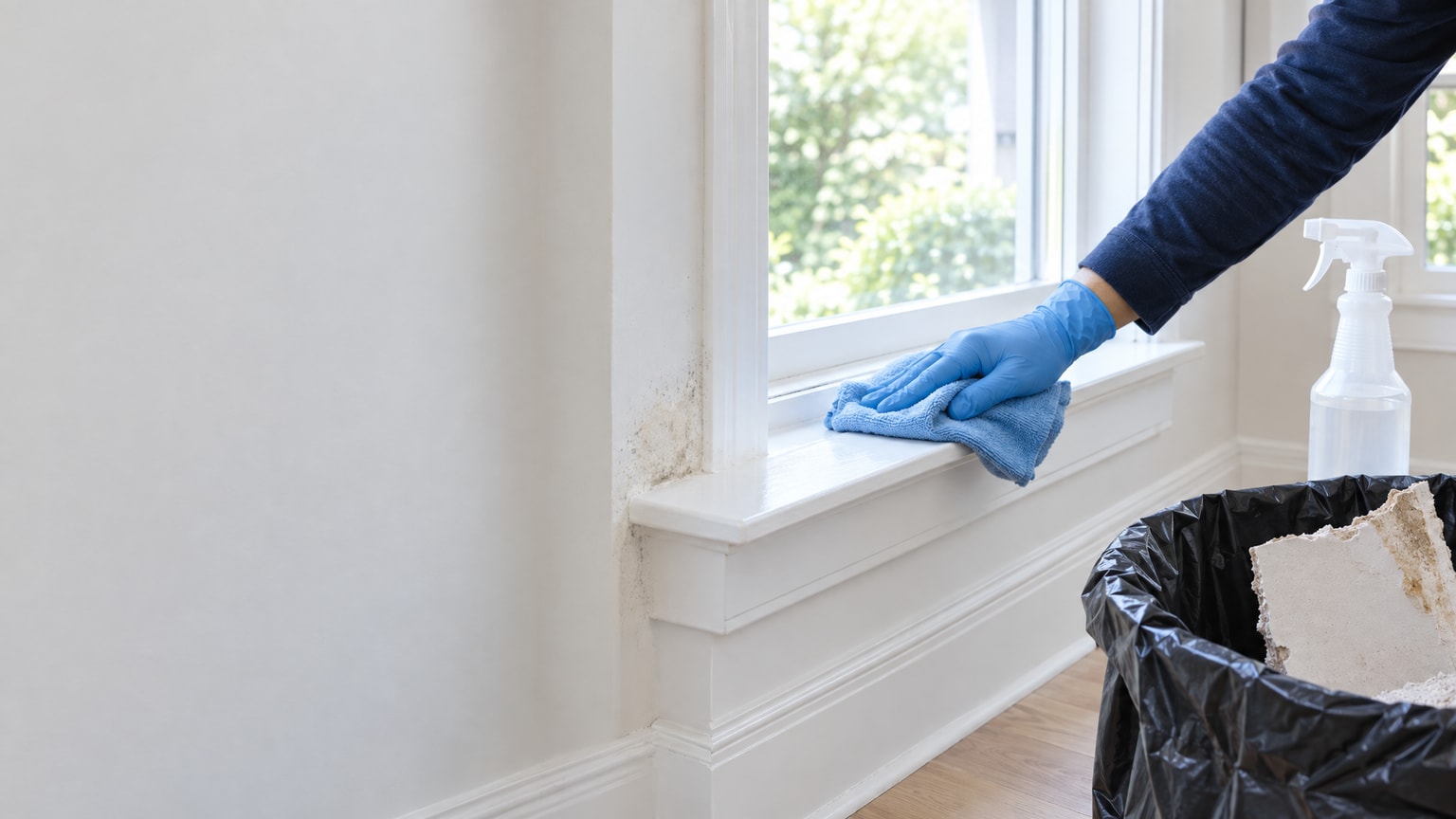
Remove moldy porous materials and seal them in bags before carrying them out of the work area.
- 4
Damp-clean the surface
Use detergent and water on hard, non-porous surfaces without creating airborne dust.
- 5
Dry thoroughly
Dry materials completely to prevent regrowth.
- 6
Complete final HEPA cleanup
After removal, damp cleaning, and drying, use a sealed true-HEPA vacuum to capture settled dust and debris.
Common Mistakes
- Painting over mold without cleaning
- Using bleach on porous materials
- Skipping moisture repair
- Leaving damp materials in place
When to Call a Pro
- Large areas or multiple rooms
- HVAC system contamination
- Sewage or contaminated water
- Health concerns or vulnerable occupants
- Hidden mold behind walls or ceilings