
Unlock more guides and resources
Immediate Response Steps
When a pipe bursts or you discover a significant leak, every minute matters. Water spreads quickly through walls, under floors, and into adjacent spaces.
- Stop the source from a safe location: Close the water shutoff only if you can reach it without entering water or crossing another hazard.
- Isolate hazards: Keep people out and arrange electrical, gas, structural, access, or contamination help when the safety gate cannot be cleared safely.
- Document the damage: Take photos and video before cleanup for insurance purposes.
- Remove standing water only after the gate is cleared: For confirmed clean supply water with safe power and access, use equipment appropriate to the conditions; otherwise arrange qualified cleanup.
- Move belongings only from a safe area: Keep people, pets, and belongings out of contaminated or structurally unsafe areas.
- Start drying only when appropriate: Use ventilation, fans, or dehumidifiers only after the water category, power, access, and controls have been confirmed safe.
Types of Plumbing Leaks
Sudden Failures
- Burst pipes: Catastrophic failure from freezing, age, or pressure
- Supply line failures: Washing machine, dishwasher, toilet connections
- Water heater failures: Tank rupture or fitting failure
- Fixture failures: Faucets, valves, and toilet components
Slow Leaks (More Dangerous)
- Pinhole leaks: Small holes in copper pipes from corrosion
- Joint leaks: Failing connections behind walls
- Drain leaks: P-trap and drain line seepage
- Slab leaks: Pipes under concrete foundation
Frozen Pipe Prevention
Frozen pipes are a leading cause of water damage, especially in regions with cold winters. Water expands when it freezes, cracking pipes that then flood when they thaw.
Prevention Strategies
- Insulate pipes: Wrap exposed pipes in unheated areas (attics, crawlspaces, garages) with foam insulation
- Seal air leaks: Cold air drafts near pipes accelerate freezing. Seal gaps around pipes entering the building.
- Keep heat on: Maintain minimum 55F even when away. Open cabinet doors to let warm air reach pipes.
- Let faucets drip: During extreme cold, a slight drip keeps water moving and prevents freezing.
- Know your shutoffs: If pipes do freeze, shut off water immediately to minimize damage when they thaw.
If Pipes Freeze
- Shut off the main water supply immediately
- Open faucets to relieve pressure as ice melts
- Apply gentle heat (hair dryer, heat lamp, space heater) - never open flame
- Check for cracks before turning water back on
- Be present when water is restored to catch any leaks immediately
Drying Process
Equipment Needed
- Wet/dry vacuum: For confirmed clean supply water only, and only when power, access, and the water category make its use safe and appropriate
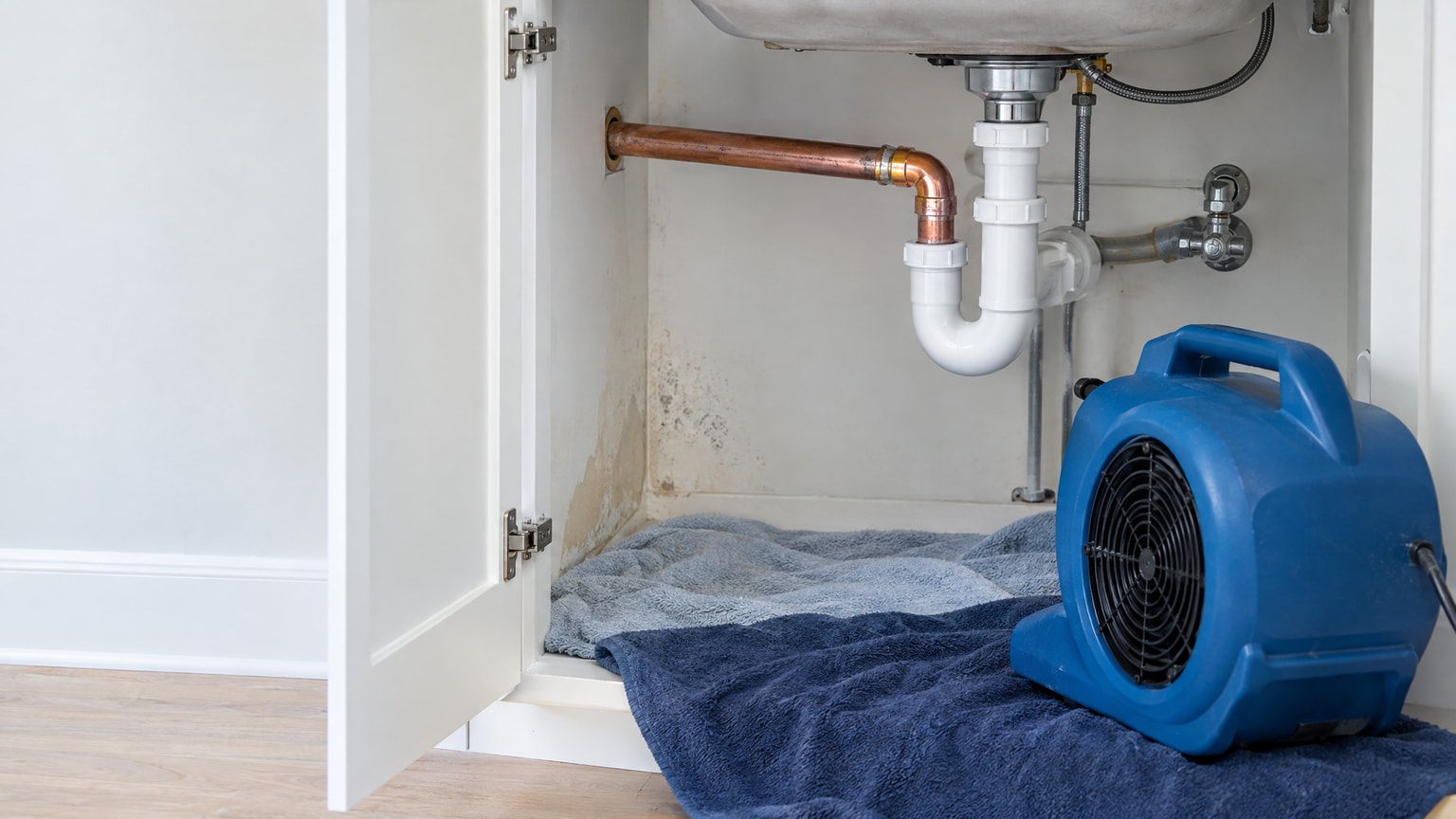
- Fans: Use only after the safety gate is cleared and airflow will not spread contamination or create another hazard
- Dehumidifiers: Use only with safe power and access after the water category and controls are confirmed. Size matters - residential units for small leaks, rent industrial units for larger events.
- Moisture meter: Verify materials are actually dry, not just surface-dry
Drying Steps
When to Call Professionals
- Water in walls or ceilings: Proper drying requires opening wall cavities, which most homeowners cannot do effectively
- Large area affected: More than a single room or extensive flooding
- Prompt drying is not possible: If you lack safe equipment, access, or time to meet the EPA prompt-drying target, arrange qualified help and investigate persistent wetness or hidden assemblies
- Contaminated or unknown water: Sewage, toilet overflows, drain, flood, storm, chemical, or unknown water needs qualified cleanup; PPE or equipment alone does not make it DIY-safe
- Visible mold: If mold is already visible, cleanup has escalated to remediation
- Insurance claim: Professional documentation may be required for claims
See our DIY vs Professional guide and assessment tool to evaluate your situation.
Prevention Strategies
Regular Maintenance
- Inspect under sinks monthly for signs of leaks
- Replace washing machine hoses every 5 years (use braided stainless steel)
- Inspect water heater annually for corrosion and leaks
- Know the age of your plumbing and plan for replacement
- Clear slow drains before they become complete blockages
Smart Prevention
- Install leak detectors: Place sensors under sinks, near water heaters, washing machines, and in basements
- Consider automatic shutoff valves: Smart water valves detect leaks and shut off water automatically
- Monitor water bills: Unusual increases often indicate hidden leaks
- Shut off water when away: For extended absences, turn off the main water supply