
Unlock more guides and resources
Common Causes and Warning Signs
Common Causes
- Poor ventilation
- Shower steam accumulation
- Leaking fixtures
- Splashing water
- Grout deterioration
Warning Signs
- Black spots on grout or caulk
- Musty odor
- Peeling paint
- Soft drywall
- Discoloration around fixtures
Inspection Checklist
- Check caulk lines around tubs and showers
- Look for leaks under sinks and behind toilets
Safe Cleanup for Small Areas
A small patch on hard tile or glass may be suitable for DIY cleanup when the source is controlled and no sewage, hidden damage, or health-related cleanup restriction is involved. EPA uses about 10 square feet as one consideration, not a safety cutoff. For larger areas or if you have health concerns, see our guide on DIY vs. professional remediation.
- 1
Protect yourself
Wear at least a NIOSH Approved N95 respirator, gloves, and goggles without open vents. People with mold allergy, asthma, chronic lung disease, or immune suppression should not do the cleanup.
- 2
Clean non-porous surfaces
Use detergent and water on tile, glass, and fixtures. Avoid bleach on porous materials.
Prevention Tips
The most effective strategy is controlling humidity and ensuring surfaces dry quickly.
- Humid air from the shower
- Fan pulls it into the duct
- Duct ends outdoors
A fan that ends in the attic or a floor cavity only moves the moisture into the building, and fan noise does not prove air is moving. Run it during and after showers, and check that the room humidity drops to see whether it is working.
- Run the outdoor-vented exhaust fan during showers and afterward until moisture clears; check humidity to see whether it is working
- Keep indoor humidity below 60% (ideally 30-50%)
- Fix leaks promptly and aim to dry wet materials within 24–48 hours; do not wait to start
- Reseal grout and caulk at first signs of deterioration
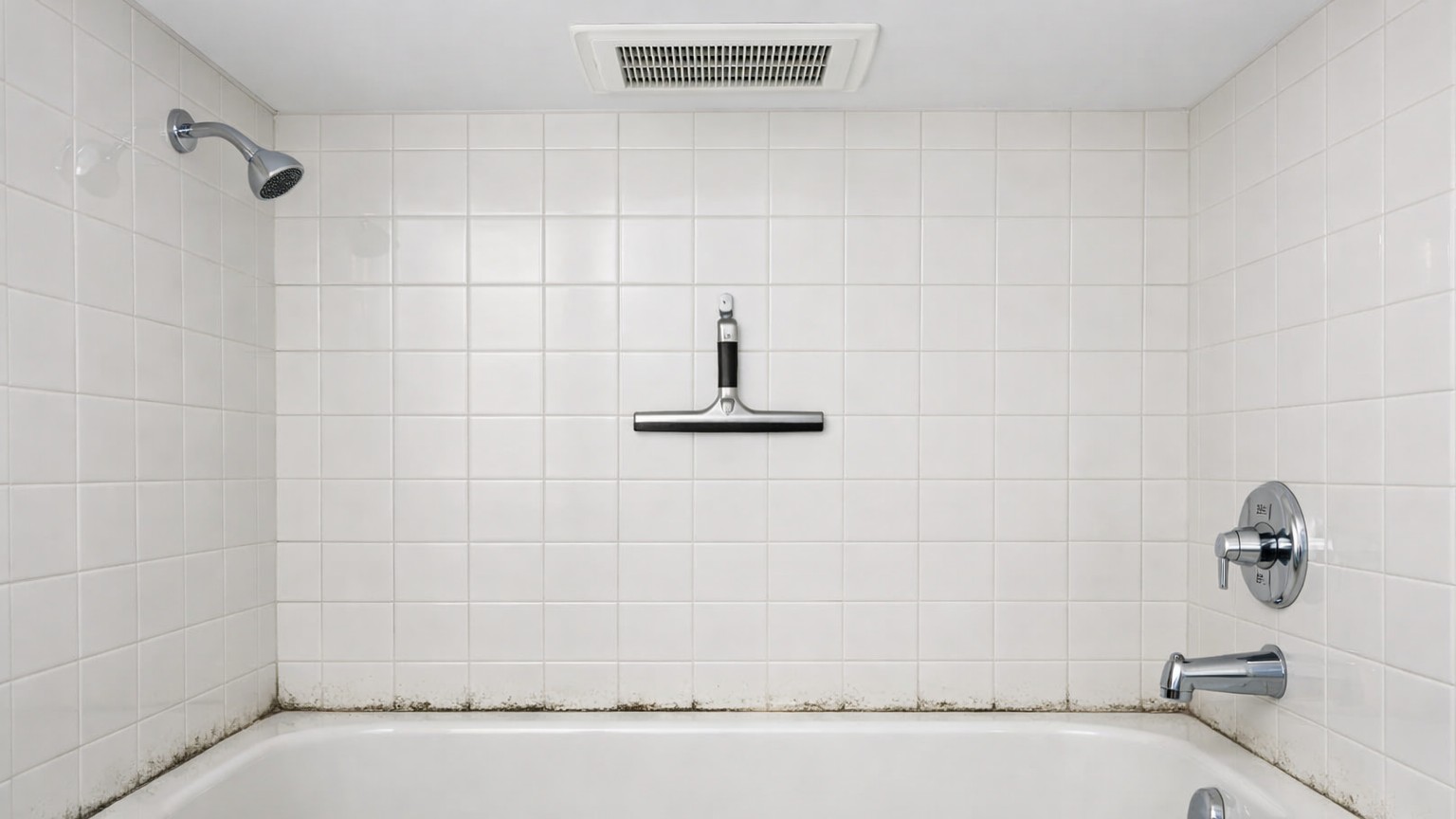
- Squeegee or wipe shower walls after use
For ongoing moisture issues, a dehumidifier may help, especially in bathrooms without exterior windows.
When to Call a Pro
Some situations require professional assessment. Use our DIY vs. Pro quiz if you are unsure.
- Mold returns within weeks of cleaning
- Growth behind walls, under flooring, or in hidden cavities
- Soft, crumbling, or water-damaged drywall