
Unlock more guides and resources
Common Causes and Warning Signs
Bedroom mold often indicates broader humidity problems or building envelope issues. Learn to recognize hidden mold signs.
Common Causes
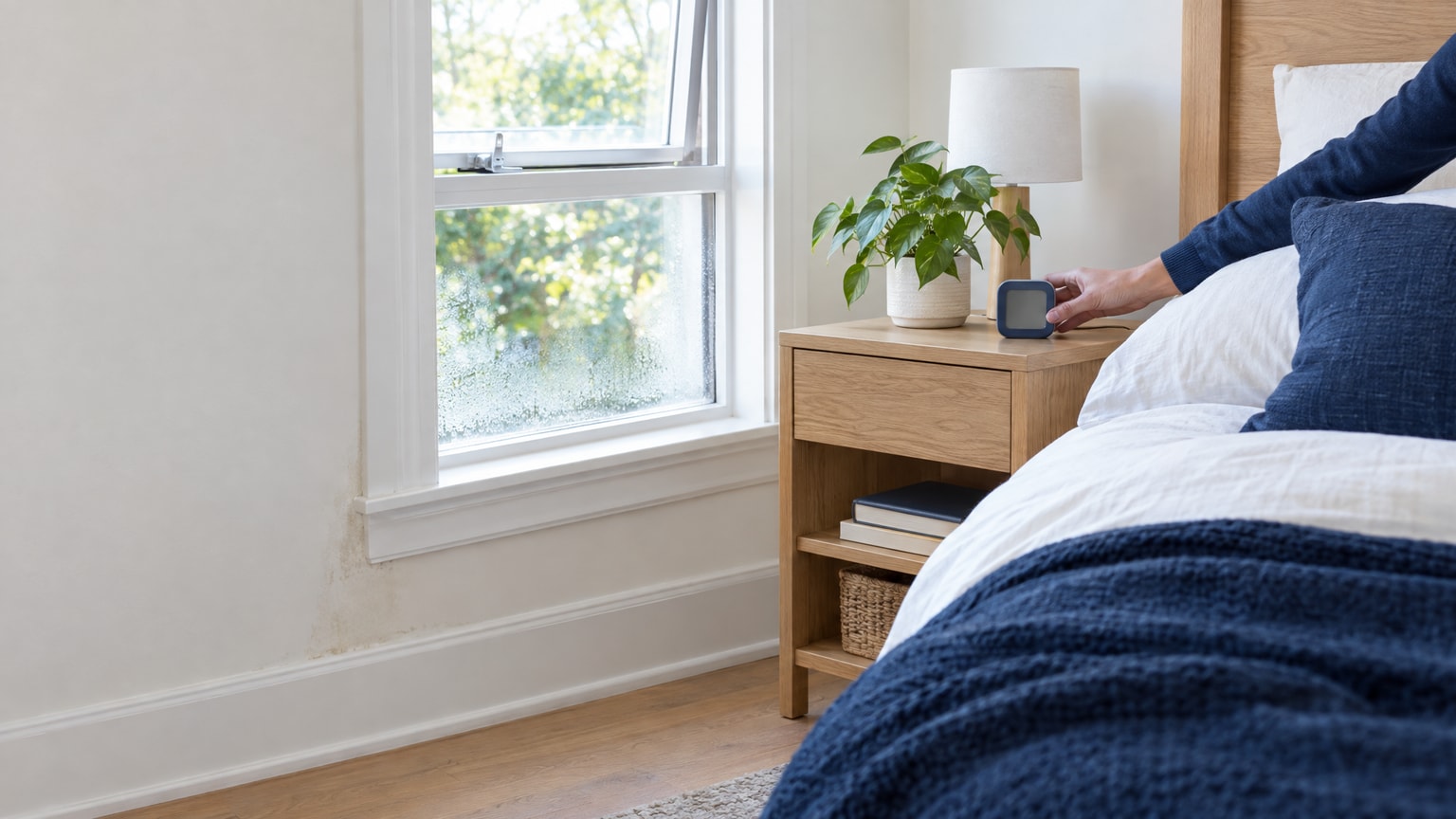
- Window condensation from temperature differences
- Furniture placed tight against cold exterior walls
- High indoor humidity (above 60%)
- Roof leaks or water intrusion through walls
- Poor airflow in closets, especially those on exterior walls
Warning Signs
- Musty odor in closets or corners
- Water staining or discoloration near windows
- Peeling or bubbling paint on exterior walls
- Damp-feeling bedding, carpets, or curtains
- Allergy or respiratory symptoms that worsen at night
Inspection Checklist
- Check window frames and sills for condensation
- Move furniture to inspect exterior walls
Safe Cleanup for Small Areas
A small accessible patch on a hard surface may be suitable for cleanup after the moisture source is fixed. Wear at least a NIOSH Approved N95 respirator, gloves, and dust-tight goggles; people with asthma, mold allergy, chronic lung disease, or immune suppression should not clean mold. For larger areas or wall cavity issues, see our DIY vs. professional guidance.
- 1
Clean non-porous surfaces
Use detergent and water on window frames, sills, and trim. Avoid bleach on porous materials.
- 2
Dry thoroughly
After cleaning, lower excess humidity and dry surfaces. Do not aim a fan at visible growth or spread debris into bedding and clean rooms.
Prevention Tips
Bedroom mold prevention focuses on humidity control and addressing window condensation.
- Pushed tight to the wall
- Mold on the hidden wall face
- Room air
- Pulled 2 to 4 inches out
A gap lets room air keep the wall surface warmer and drier; it helps, but it does not fix high humidity or a leak. Check behind furniture on exterior walls and leave a few inches of space.
- Keep indoor humidity between 30-50% (no higher than 60%)
- Leave 2-4 inches between furniture and exterior walls for airflow
- Use a portable dehumidifier if humidity is consistently high
- Open windows only when outdoor air will reduce moisture and pollution or pollen does not make ventilation unsuitable
- Seal window weatherstripping and caulk gaps around frames
- Keep closet doors open or use louvered doors for airflow
For sizing guidance, see our dehumidifier guide.
When to Call a Pro
Bedroom mold that persists or affects wall cavities needs professional attention. Take our DIY vs. Pro quiz for personalized guidance.
- Mold recurring behind walls, in closets, or in corners despite cleaning
- Large areas of staining, soft drywall, or bubbling paint
- Health symptoms that worsen at night or upon waking