
Unlock more guides and resources
How Condensation Forms
Condensation occurs when warm, humid air contacts a surface that is below the dew point temperature. The air cannot hold as much moisture when cooled, so water vapor condenses into liquid droplets on the cold surface.
The Physics
- Warm air holds more moisture than cold air
- Dew point is the temperature at which air becomes saturated
- When air touches a surface below dew point, water condenses
- Higher indoor humidity = higher dew point = more condensation
Why It Matters for Mold
- Condensation provides the moisture mold needs to grow
- Often occurs in hidden areas (inside walls, behind furniture)
- Can happen repeatedly in the same locations
- Creates ideal conditions without any leak or water event
Common Problem Areas
- Windows: Glass is usually the coldest surface in a room, especially single-pane windows
- Exterior walls: Poorly insulated walls are cold in winter
- Corners: Where exterior walls meet, thermal bridging creates cold spots
- Behind furniture: Furniture against exterior walls blocks air circulation
- Closets on exterior walls: Less air circulation, colder surfaces
- Unheated rooms: Bedrooms, guest rooms, or areas with closed doors
- Cold water pipes: Pipes carrying cold water in humid areas (basements, crawlspaces)
- HVAC ducts: Cold supply ducts in humid spaces
See our guides on bedroom mold, basement mold, and bathroom mold for room-specific condensation issues.
Window Condensation
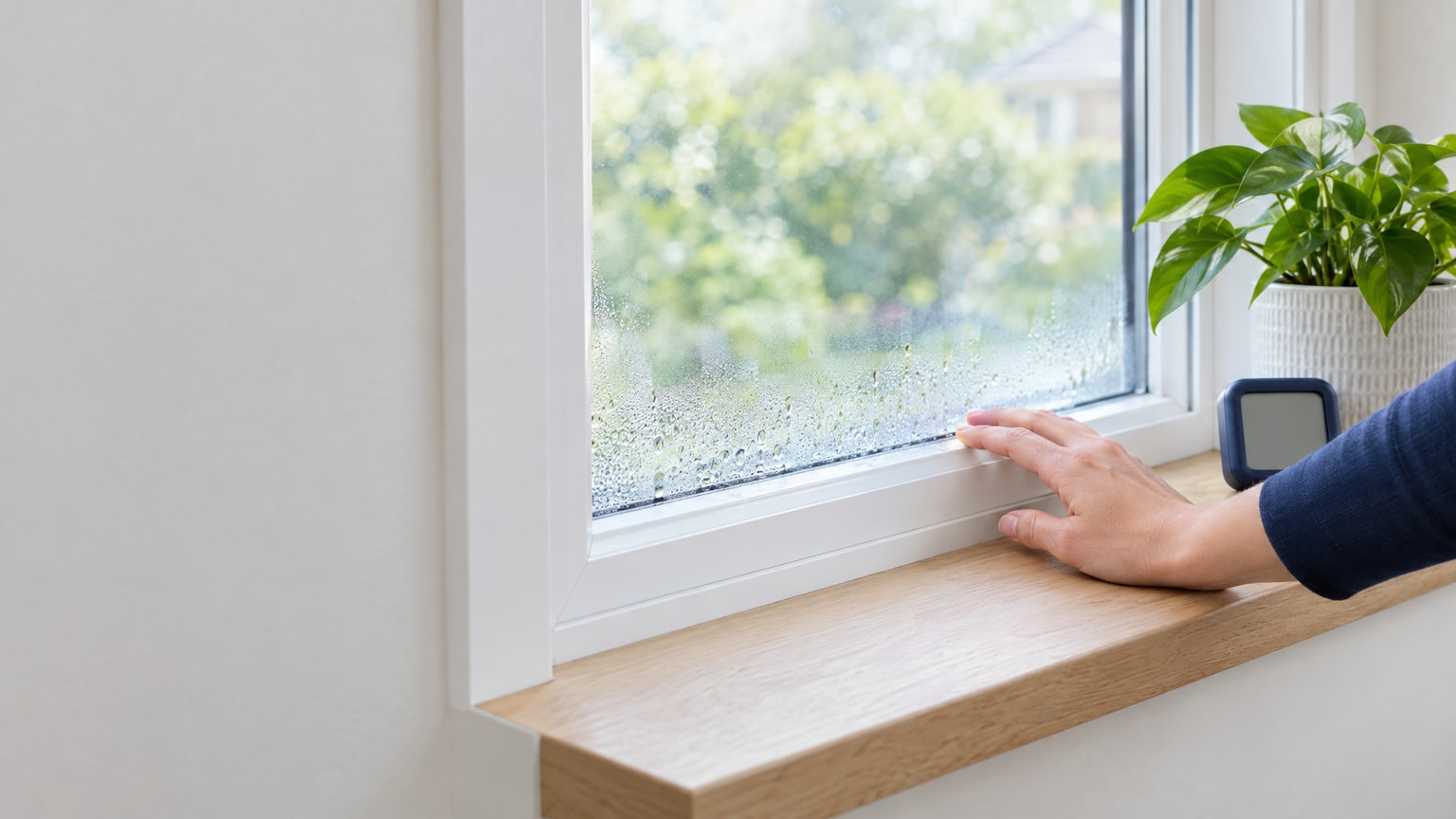
Window condensation is often the first visible sign of excess indoor humidity. The glass surface is typically the coldest in the room, so it is where condensation appears first.
Types of Window Condensation
Interior Condensation
Condensation on the room side of the glass.
- Indicates high indoor humidity
- Worse in bedrooms (breathing adds moisture overnight)
- Can damage window frames, sills, and surrounding walls
- Solution: reduce indoor humidity, improve ventilation
Between Panes
Condensation between glass layers in double/triple pane windows.
- Indicates failed window seal
- Cannot be fixed - requires window replacement
- Does not indicate humidity problem
- Causes foggy, hazy appearance
Solutions for Interior Window Condensation
- Run exhaust fans: During and after showering, cooking, and other moisture-generating activities
- Use a dehumidifier: If humidity stays high despite ventilation
- Improve window insulation: Storm windows, insulating window film, or window replacement
- Increase air circulation: Keep blinds/curtains slightly open to allow air movement at window surface
- Wipe condensation daily: Prevents water from damaging frames and sills while you address the cause
See our detailed window condensation guide for more information.
Condensation in Walls and Ceilings
Hidden condensation inside walls is more dangerous than visible window condensation because it can go unnoticed until mold is established.
How It Happens
- Warm, humid indoor air migrates into wall cavities through gaps and cracks
- Air reaches cold surfaces (exterior sheathing in winter, AC ducts in summer)
- Water condenses on cold surfaces inside the wall
- Mold grows on sheathing, insulation, and framing
- May not become visible until significant damage has occurred
Warning Signs
- Musty odors with no visible source
- Peeling paint or bubbling wallpaper
- Mold appearing on interior wall surfaces
- Moisture readings elevated in wall (use moisture meter)
- Condensation on other cold surfaces (indicates overall humidity issue)
Prevention
- Air sealing: Seal gaps around outlets, fixtures, and penetrations to prevent moist air from entering walls
- Vapor barriers: Properly installed vapor barriers on the warm side of insulation (climate-dependent)
- Adequate insulation: Better insulation means warmer interior surfaces of exterior walls
- Control indoor humidity: Keep below 50% in heating season
- Ensure bathroom/kitchen fans vent outside: Never into attic or wall cavities
Reducing Indoor Humidity
Sources of Indoor Humidity
- Bathrooms: Showers and baths release significant moisture
- Cooking: Boiling water, dishwashing, unvented gas appliances
- People: Breathing and perspiration add moisture, especially in crowded or tightly closed rooms
- Laundry: Drying clothes indoors, dryer not vented outside
- Plants: Houseplants release moisture (moderate impact)
- Aquariums: Open water surfaces evaporate continuously
- Firewood: Stored indoors releases moisture as it dries
- Foundation: Moisture migrating through slab or basement walls
Humidity Reduction Strategies
Improving Ventilation
Source exhaust removes moisture where it is produced. Outdoor-air ventilation helps only when the system is designed for the climate and moisture load; bringing humid outdoor air into a cool building can increase condensation.
Spot Ventilation
- Bathroom exhaust fans: Vent outdoors, use during bathing, and continue until humidity and wet surfaces recover. Size and install them to current local code.
- Kitchen range hoods: Exterior-vented hoods remove cooking moisture more effectively than recirculating units. Use them when cooking.
- Laundry areas: Vent dryers outdoors as the manufacturer and local code require; investigate a room that remains humid.
- Controls: Timers or humidity controls can help, but confirm that the fan actually moves air outdoors and does not create an unsafe pressure problem.
Assess Before Choosing Whole-House Ventilation
- Measure conditions: Compare indoor and outdoor temperature and relative humidity over time, including when and where condensation appears
- Find moisture sources: Check bathing, cooking, laundry, plumbing, foundation, and other sources instead of assuming ventilation is the cause or cure
- Check surfaces and the enclosure: Look for cold surfaces, insulation gaps, thermal bridges, air leakage, and wet assemblies
- Review existing systems: Confirm source-exhaust paths, ventilation operation and controls, HVAC and dehumidifier settings, and humidifier operation
- Evaluate safety and design: Before selecting equipment, have a qualified professional assess airflow, pressure, combustion safety, climate, and dehumidification load
- Choose from the findings: Exhaust-only, supply-only, balanced ventilation, or HRV/ERV may fit different designs; sizing and controls depend on measured conditions, installation, and local code