
Unlock more guides and resources
Why Carpet Is Challenging
Carpet presents unique challenges for mold remediation due to its structure and how it interacts with moisture:
Multiple Layers
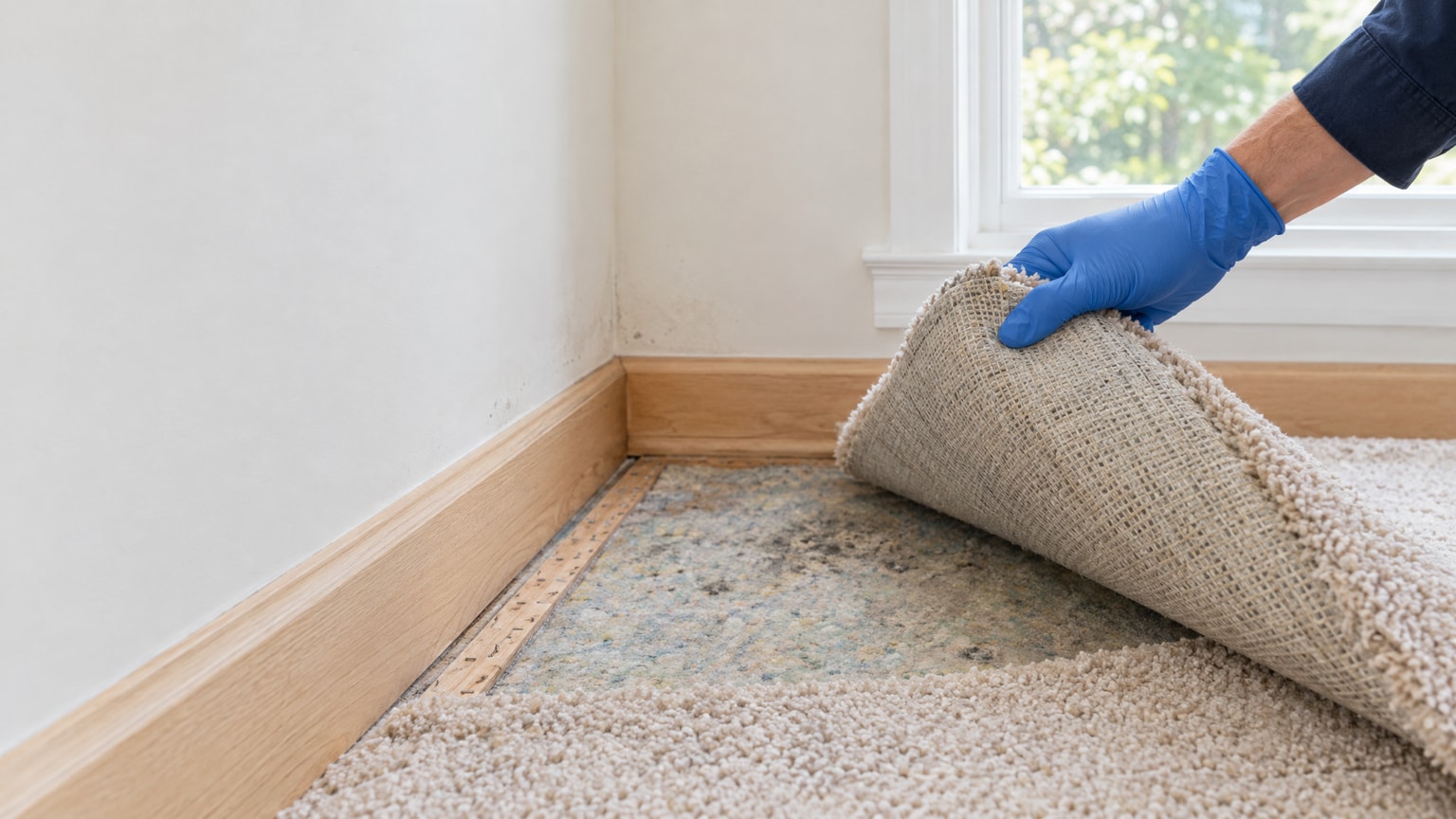
Carpet systems include the carpet fibers, backing material, padding underneath, and the subfloor. Moisture conditions can affect any or all of these layers, so each layer needs its own assessment.
Highly Porous
Both carpet fibers and padding are porous, absorbing and retaining moisture. Drying and verifying all layers can be difficult, especially when the backing or pad cannot be accessed.
Hidden Contamination
Mold often grows at the carpet backing and padding level, invisible from above. Surface cleaning does not address this hidden growth.
Traps Debris
Carpet can trap dust, skin cells, and other organic debris, which can complicate cleaning and assessment when moisture is present.
When Carpet or Pad May Need Removal
Moldy or unsalvageable porous materials may need to be discarded, but a material decision should be based on the actual conditions rather than a slogan. Consider whether there is established growth, the material's condition and construction, water category, contamination extent, odor, access to all layers, and documented drying.
- Carpet and padding can hold moisture below the visible surface, so the backing, pad, and subfloor need separate inspection
- Visible or established growth in fibers, backing, padding, or the subfloor can change the disposition toward removal
- Contaminated or unknown water requires a different response from a documented clean-water event
- Extent, access, material damage, and persistent odor can make cleaning or complete drying impractical
- A reliable drying record and layer-by-layer moisture readings are stronger evidence than elapsed time alone
- Extraction or steam can remove water or soil but does not remediate growth in backing, padding, or subfloor and adds drying burden
When Prompt Clean-Water Drying May Preserve Carpet
After a confirmed clean-water event, carpet and pad may sometimes be pulled back, inspected, and dried promptly. That is a material-specific decision, not an automatic exception based only on a clock. A qualified restoration or remediation professional should document the water category, condition of every layer, moisture readings, access, and odor before deciding whether to clean, dry, or discard.
- The source and water category are confirmed as clean and the area is safe to enter
- Carpet can be lifted enough to inspect the backing, padding, and subfloor
- There is no established growth, persistent odor, or material damage
- Moisture readings and drying records show that the layers reached a dry condition
- The extent and access allow the complete affected assembly to be evaluated
- The written scope explains how cleaning, drying, and any remaining uncertainty will be handled
Extraction or steam may be part of a clean-water drying or soil-cleaning plan, but neither remediates growth in carpet backing, pad, or subfloor. Both can add water that must be measured and dried before any reinstallation decision.
Wet Padding: Evaluate Condition and Drying
Padding can be difficult to inspect, clean, and dry, but wetness alone does not decide its disposition. Evaluate the padding's construction, contamination, condition, access, odor, moisture readings, and drying record.
Why Padding Needs a Separate Decision
- Foam and fiber padding can hold water below the carpet
- Drying access is often limited after installation
- Growth, persistent odor, damage, or contaminated water can favor discard
- Sound padding that was promptly dried may sometimes be evaluated for cleaning or reuse
- Replacement can be practical when condition or drying evidence is uncertain
Types of Carpet Padding
- Rebond (most common) - very absorbent
- Memory foam - highly absorbent
- Fiber padding - somewhat less absorbent
- Rubber padding - less porous but still problematic
No padding type gets an automatic pass or automatic discard rule. Ask for layer-specific inspection and drying evidence.
Subfloor Inspection
When removing carpet, always inspect the subfloor underneath for mold and moisture damage:
Wood Subfloors
- Check for visible mold growth
- Look for water staining or discoloration
- Feel for soft or spongy areas
- Use a moisture meter to check levels
- Surface mold on solid wood can often be cleaned
- Damaged plywood or OSB may need replacement
Concrete Subfloors
- Inspect for mold on the surface
- Check for efflorescence (white mineral deposits)
- Look for cracks allowing moisture entry
- Test for moisture vapor transmission
- Concrete surfaces can usually be cleaned
- Address moisture sources before new flooring
See our guides on mold on wood and mold on concrete for detailed remediation guidance for subfloor materials.
Safety Gate and Professional Handoff
Carpet removal is not a default do-it-yourself project. Pause and hand the assessment to a qualified remediation or restoration professional if any of the following applies:
- The water is contaminated or its category is unknown
- There is established growth, extensive contamination, persistent odor, or hidden wet material
- HVAC, electrical, structural, or concealed-space hazards may be involved
- Asbestos, lead, or destructive work may be present
- A high-risk occupant may be exposed, including someone with asthma or immune suppression
- You cannot isolate the work area or select and use PPE safely
Limited clean-water handling
Only when the event is genuinely limited, confirmed clean water, free of established growth and the hazards above, and the area can be isolated safely should a person consider limited handling consistent with the material manufacturer's instructions and local requirements. CDC's minimum mold-cleanup PPE includes a NIOSH-approved N95 or better, complete dust goggles, and gloves. Do not improvise ad hoc ventilation or pressure changes as containment. For workplace projects, review OSHA's remediation guidance and use qualified help when the hazards or scope exceed that limited condition.
Common Carpet Mold Mistakes
- Attempting to clean heavily contaminated carpet
- Assuming a clean-water drying target is a guaranteed salvage cutoff
- Using extraction or steam as a substitute for evaluating growth in the backing, pad, or subfloor
- Reusing padding despite growth, odor, damage, contamination, or missing drying evidence