
Unlock more guides and resources
Common Causes and Warning Signs
Kitchen moisture comes from both plumbing failures and cooking activity. Understanding what enables mold growth helps you identify and address problems early.
Common Causes
- Leaking sink drain connections or supply lines
- Failing dishwasher supply or drain hoses
- Refrigerator ice maker water line leaks
- Cooking steam without adequate exhaust ventilation
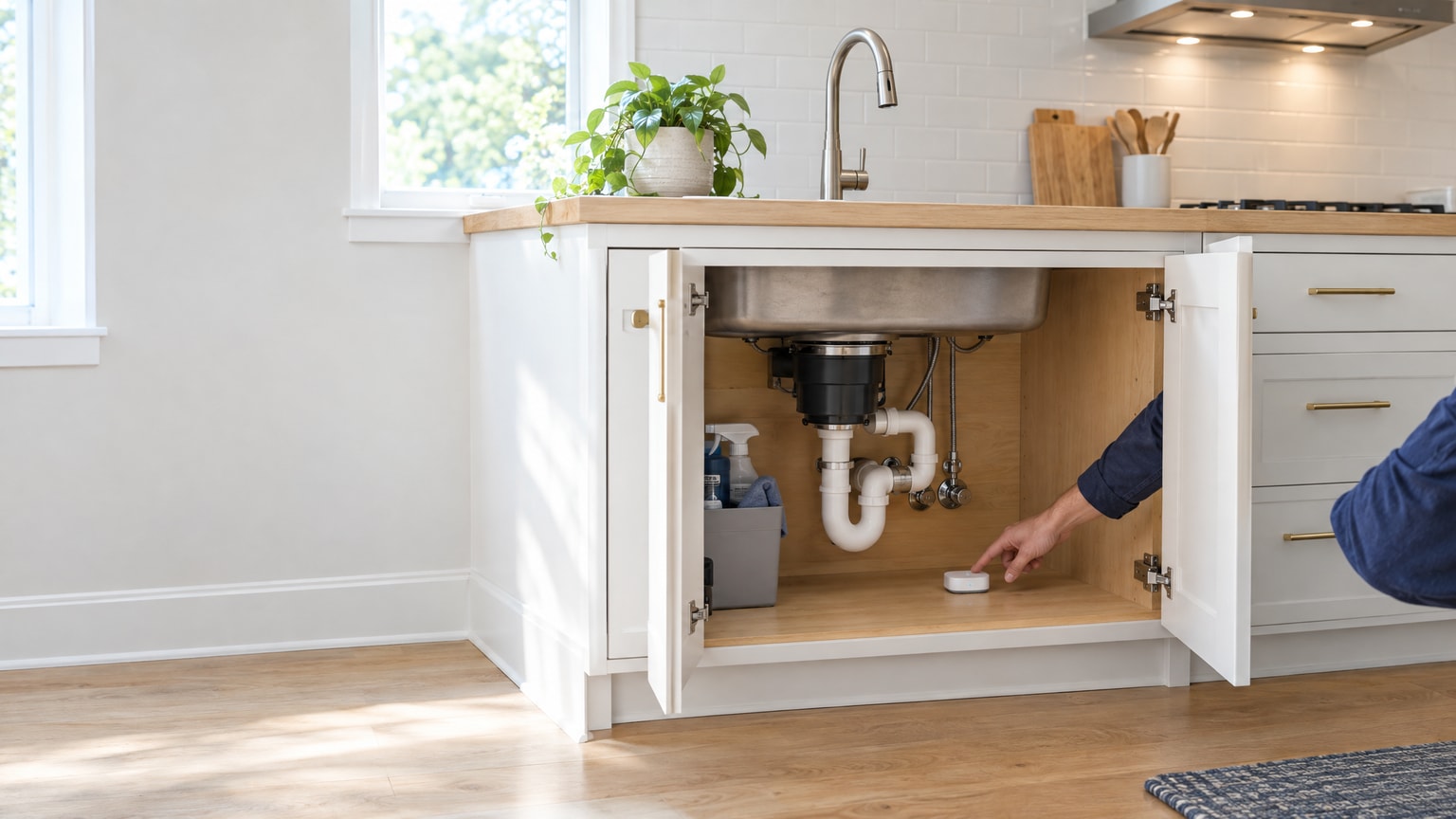
- Condensation on cold water pipes under the sink
Warning Signs
- Musty odor when opening cabinets
- Warped, swollen, or discolored cabinet bottoms
- Water staining around sink or appliances
- Peeling laminate or bubbling finish on cabinets
- Soft, spongy, or discolored flooring near appliances
Inspection Checklist
- Check under the sink for dampness
- Inspect dishwasher and refrigerator water lines
Safe Cleanup for Small Areas
Kitchen mold on non-porous surfaces is often manageable with DIY methods. See our DIY vs. professional guide for larger or more complex situations.
- 1
Stop the moisture source first
Repair leaks before cleaning. Mold will return if moisture persists.
- 2
Clean hard surfaces
Use detergent and water on tile, metal, laminate, and sealed countertops.
Prevention Tips
Kitchen mold prevention combines prompt leak repair with proper humidity control during cooking.
- Fix plumbing leaks within 24-48 hours to prevent mold establishment
- Use the range hood when cooking, especially when boiling or steaming
- Wipe down sink areas and keep them dry
- Inspect dishwasher and refrigerator connections annually
- Avoid storing damp items or paper products under the sink
- Check behind the refrigerator periodically for water line issues
If your kitchen lacks good ventilation, see our post-leak response guide for quick-drying strategies.
When to Call a Pro
Hidden kitchen mold often requires professional investigation. Use our DIY vs. Pro quiz for guidance.
- Mold growth inside wall cavities or behind built-in appliances
- Large areas of damaged subfloor or flooring
- Recurring moisture problems you cannot locate