
Unlock more guides and resources
Common Causes and Warning Signs
Attic mold often goes undetected until it becomes extensive. Learning to spot hidden mold indicators early prevents costly damage.
Common Causes
- Roof leaks from damaged shingles, flashing, or ice dams
- Inadequate attic ventilation (blocked soffit or ridge vents)
- Bathroom or kitchen exhaust fans venting directly into attic
- Air leaks around recessed lights, attic hatches, or plumbing penetrations
- Condensation from insufficient or improperly installed insulation
Warning Signs
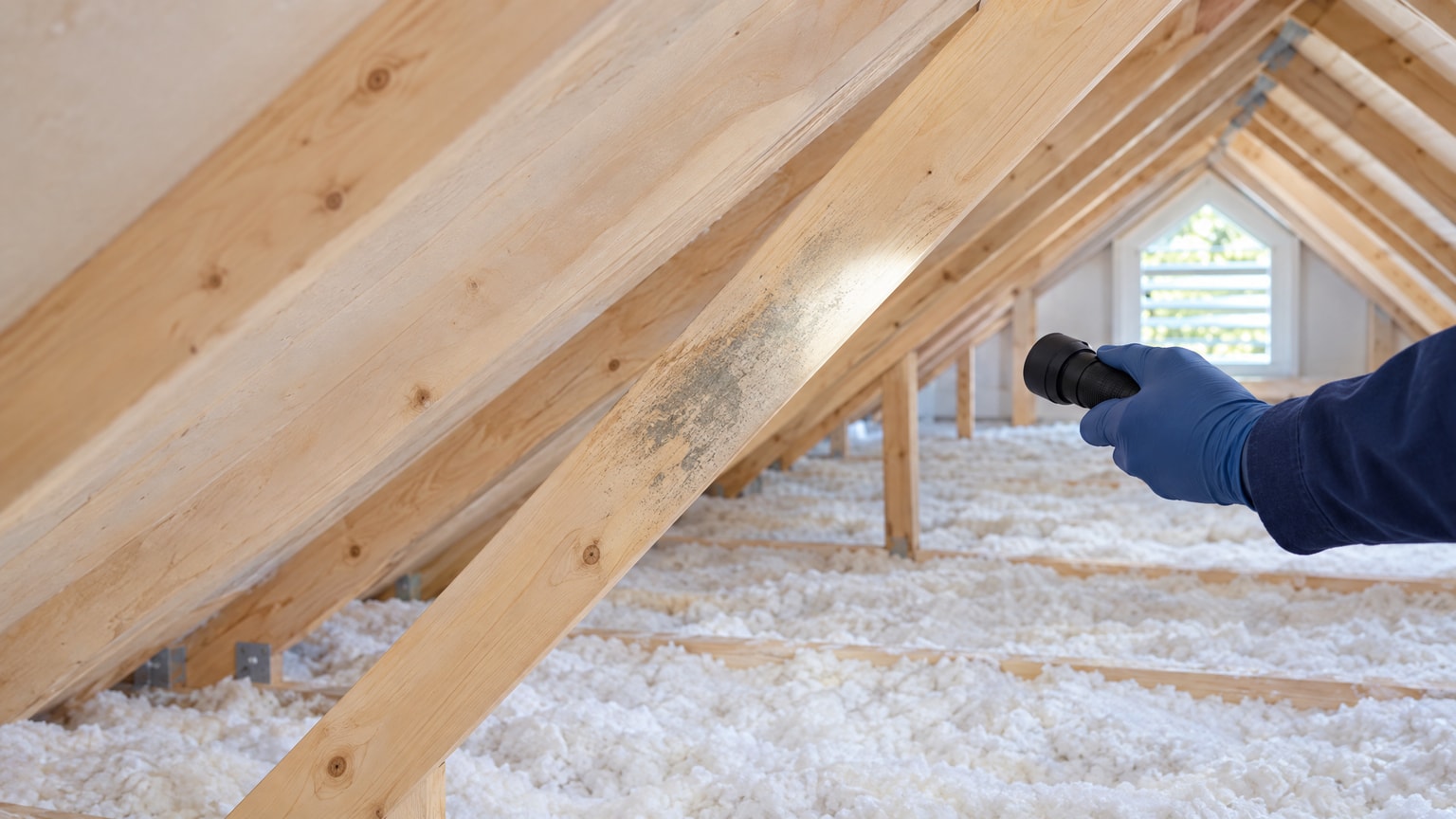
- Dark staining or fuzzy growth on roof sheathing
- Musty odor when entering the attic
- Frost or moisture on roofing nails during cold weather
- Wet, compressed, or discolored insulation
- Condensation on HVAC ducts running through attic
Inspection Checklist
- Check roof decking for staining or fuzz
- Look for roof leaks or damaged flashing
Plan Attic Cleanup Around Access and Moisture
Observe from a safe access point. Do not step on ceiling drywall, disturb unknown insulation, or enter an attic with unsafe wiring, heat, access, or structural conditions. Even a small patch can require professional help. Review our DIY vs. professional guidance before proceeding.
- 1
Stop the moisture source first
Fix roof leaks, re-route exhaust fans to exterior, and seal air leaks from below.
- 2
Improve attic ventilation
Have the roof or building professional confirm whether the attic is vented or unvented. Restore the designed airflow without adding vents to a conditioned roof assembly.
Prevention Tips
Attic mold prevention focuses on controlling moisture at its source and ensuring proper ventilation. See our prevention overview for comprehensive strategies.
- Air leaks around a recessed light
- Moisture condenses on the cold deck
Air also leaks past attic hatches and plumbing penetrations, and frost on roofing nails can be an early sign. Seal ceiling leaks from below and send exhaust fans outdoors; adding vents alone may not fix it.
- Seal air leaks around attic hatches, recessed lights, and plumbing penetrations
- Ensure all bathroom and kitchen exhaust fans vent directly to the exterior, not into the attic
- For a designed vented attic, maintain its intake and exhaust paths. Preserve the designed enclosure of an unvented assembly; have a qualified building professional assess changes
- Choose insulation and vapor-control layers for the climate and roof assembly; avoid adding plastic that traps moisture
- Inspect roof from a safe location after major storms and arrange professional access when needed
Address condensation issues throughout your home, as the same humid air affecting windows also rises into the attic.
When to Call a Pro
Attic mold remediation can be dangerous and often requires specialized equipment. Take our DIY vs. Pro quiz for personalized guidance.
- Large areas of roof sheathing affected (more than about 10 square feet)
- Wet insulation that needs removal and replacement
- Evidence of structural damage or wood rot