
Unlock more guides and resources
How Water Enters
- Failed sealant under the sill
- Water runs down inside the wall
- Stain below the window
Wind-driven rain can enter at a small gap and run inside the wall, so the stain may appear below the window rather than at the gap. Reseal the joint without blocking designed weep holes, then have the framing and insulation checked for wetness.
- Failed flashing around windows and doors
- Cracked or missing caulk lines
- Siding gaps that channel rain inward
- Improperly installed window pans
Indoor Clues
- Staining at window corners or below sills
- Soft drywall around window frames
- Musty odors near exterior walls
- Peeling paint or wallpaper
Exterior Causes
- No head flashing
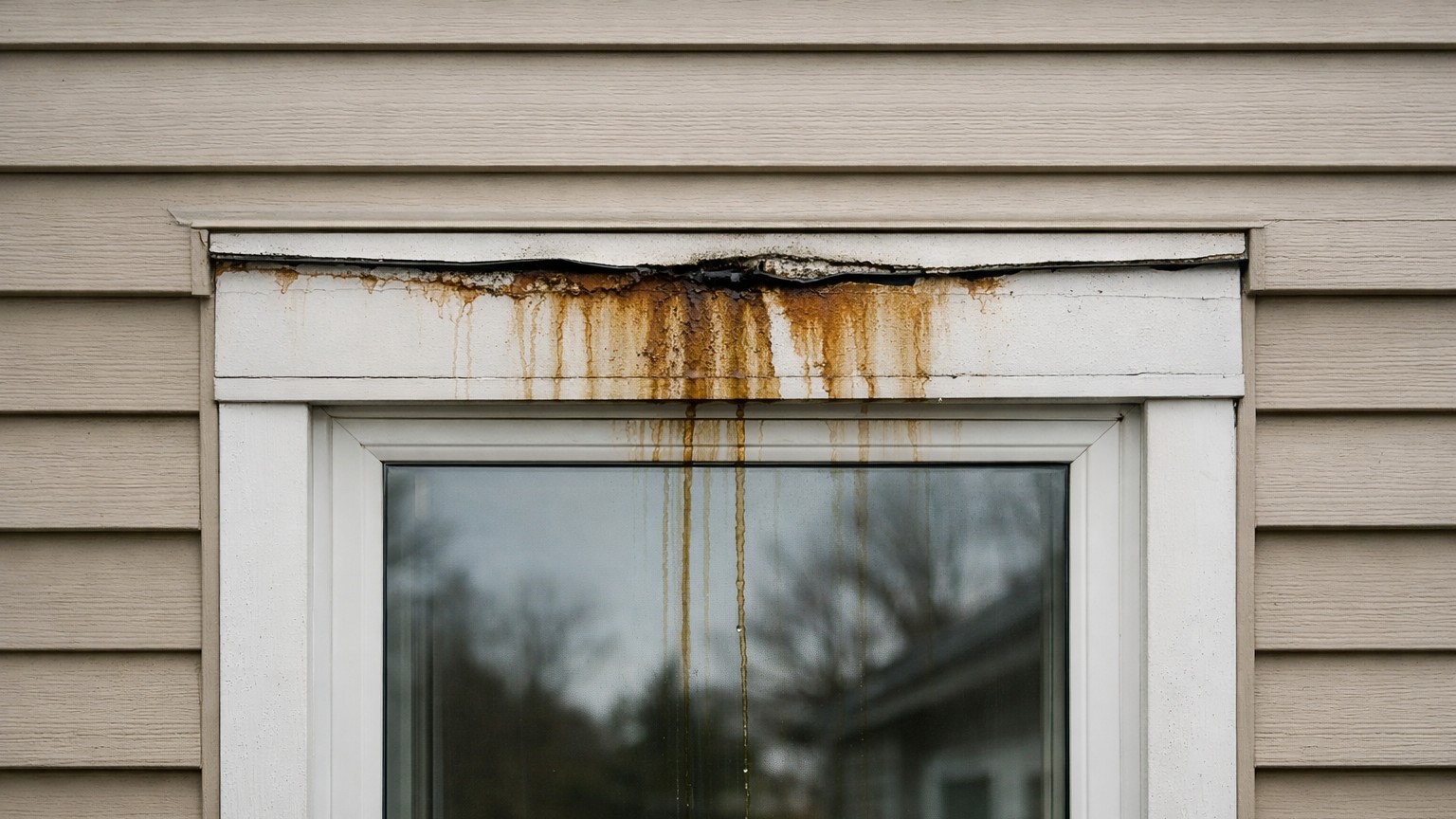
- Water runs behind the trim
- Flashing sheds water outward
For the flashing to work, the house wrap above must lap over it, and caulk is no substitute for a missing flashing. If stains appear above a window after rain, have the head flashing checked before repairing the interior.
Flashing Failures
- Missing head flashing above windows
- Improper overlap between flashing layers
- Gutters overflowing onto walls
Siding Problems
- Cracked or warped siding boards
- Gaps at corners and joints
- No drainage plane behind siding
Exterior Maintenance
- Clean gutters and downspouts regularly
- Extend downspouts to carry water away from walls
- Maintain specified window sealant joints without blocking weep holes or designed drainage paths
- Keep soil sloped away from the foundation
Steps After Discovery
- 1
Stop the water source
Fix flashing or siding defects first.
- 2
Assess interior damage
Check insulation and framing for wetness.
- 3
Dry affected materials
Use dehumidification and airflow promptly.