
Unlock more guides and resources
Concrete Characteristics
Concrete has unique properties that affect how mold grows on it and how remediation should be approached:
Why Concrete Is Manageable
- Generally non-porous surface
- Does not provide food for mold
- Surface contamination can be cleaned
- Structural integrity not affected by mold
- Can be sealed after cleaning
Challenges with Concrete
- Unsealed concrete is somewhat porous
- Holds moisture from ground contact
- Cracks allow moisture intrusion
- Surface coatings may complicate cleaning
- Often located in high-moisture areas
Efflorescence vs. Mold
White or gray deposits on concrete are often mistaken for mold but may actually be efflorescence:
Efflorescence
Mineral Deposits (Not Mold)
- White or grayish-white color
- Crystalline or powdery texture
- Dissolves in water (try a wet finger)
- No musty odor
- Caused by moisture carrying minerals to surface
Efflorescence indicates moisture movement but is not a health concern itself.
Mold
Fungal Growth
- Black, green, or other colors
- Fuzzy or slimy texture possible
- Does not dissolve in water
- May have musty odor
- Requires organic material to grow
True mold growth requires cleaning and moisture control.
Why Coatings Matter
The presence and condition of surface coatings significantly affects remediation approach:
Bare Concrete
Unsealed concrete is somewhat porous and may allow mold to grow in surface imperfections.
- Clean thoroughly
- Consider sealing after cleaning
- Address moisture source
Paint/Epoxy Coatings
Intact coatings are non-porous. Mold grows on the coating surface, not the concrete.
- Clean the coating surface
- Check for peeling or bubbling
- Damaged coatings may need removal
Porous Coatings
Some stains and sealers are porous and can harbor mold growth within the coating itself.
- May need to remove the coating
- Clean bare concrete
- Recoat with appropriate product
Cleaning Methods for Concrete
Several cleaning methods are effective for mold on concrete:
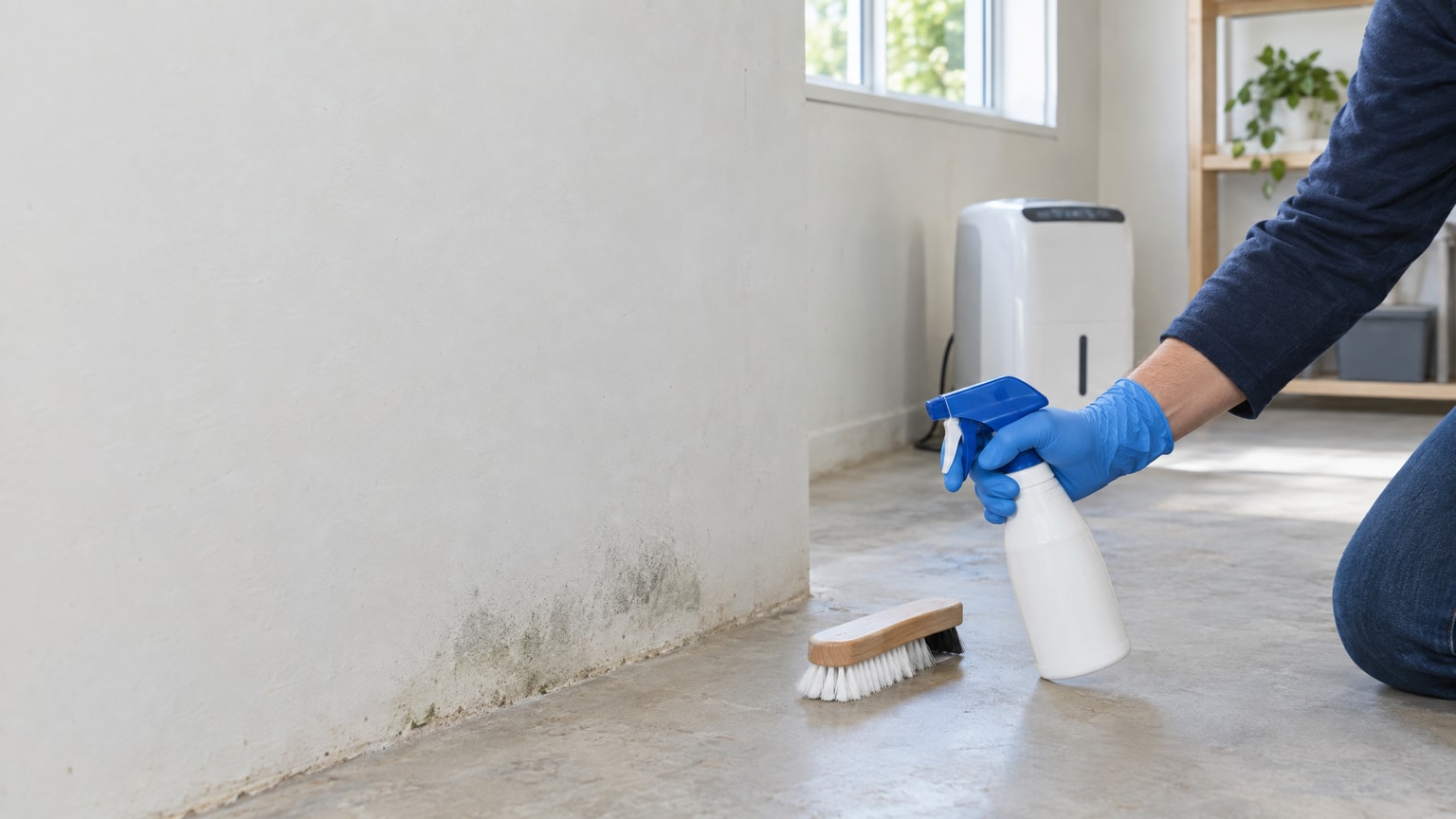
Basic Cleaning Process
- 1
Protect yourself
Wear an N95 respirator, gloves, and eye protection. Mold spores will become airborne during cleaning.
- 2
HEPA vacuum first
Remove loose debris and spores before wet cleaning.
- 3
Scrub with detergent
Use a stiff brush with detergent and water. TSP (trisodium phosphate) is effective for heavy contamination.
Cleaning Options
Mild to Moderate Contamination
- Detergent and water with scrub brush
- TSP solution for heavier contamination
- Commercial concrete cleaners
- Pressure washing (with caution)
Heavy Contamination
- Professional remediation may be advisable
- Media blasting (soda, dry ice)
- Grinding (creates significant dust)
- Multiple cleaning passes may be needed
Sealing After Cleaning
After cleaning, sealing concrete can help prevent future mold growth:
Sealing Benefits
- Reduces moisture absorption
- Creates cleanable surface
- Can help block moisture vapor
- Makes future cleaning easier
- Provides some protection against staining
Sealer Types
- Penetrating sealers (silane/siloxane)
- Acrylic sealers (film-forming)
- Epoxy coatings (durable, waterproof)
- Polyurethane (chemical resistant)
- Waterproofing paints
Sealing Considerations
- Concrete must be completely clean and dry before sealing
- Test moisture levels before applying sealers
- Some sealers trap moisture if applied over damp concrete
- Consider the intended use of the space (basement, garage, etc.)
- Penetrating sealers allow concrete to breathe while resisting water
- Film-forming sealers can peel if moisture pushes up from below
Addressing Moisture Sources
Cleaning mold from concrete is only effective if the moisture source is addressed. Mold will return if the underlying moisture problem persists.
Common Moisture Sources
- Groundwater seepage through foundation
- High humidity in basement or crawlspace
- Condensation on cool concrete surfaces
- Plumbing leaks or water heater failures
- Poor drainage around foundation
- Cracks in foundation walls or floor
Moisture Solutions
- Improve exterior drainage and grading
- Install or repair gutters and downspouts
- Use dehumidifiers to control humidity
- Seal cracks in foundation
- Install interior or exterior waterproofing
- Add sump pump if needed
See our guides on basement mold and humidity control for comprehensive moisture management strategies.
Common Concrete Mold Mistakes
- Mistaking efflorescence for mold (and vice versa)
- Painting over mold without proper cleaning
- Sealing damp concrete (traps moisture)