
Unlock more guides and resources
Why Prompt Drying Matters
EPA says mold can grow on wood, drywall, carpet, and furniture that remain wet for more than 24 hours. Start cleanup and drying as soon as entry and working conditions are safe, but do not treat 24 or 48 hours as a guarantee that mold is either present or absent.
Floodwater can contain bacteria, sewage, chemicals, and other hazards. Children, pregnant people, people with asthma or other breathing problems, and people with weakened immune systems should not participate in flood cleanup.
Immediate Response Steps
Report the loss promptly, but do not wait for an adjuster to remove an immediate health hazard or take safe steps to limit additional damage. Photograph or video conditions first when possible.
Safety Considerations
EPA Cleanup Gear
- NIOSH-approved N95 respirator
- Protective gloves appropriate for the task and products
- Goggles without ventilation holes
- Waterproof boots
- Long pants and a long-sleeved shirt
Safety Hazards
- Electrical hazards from wet wiring
- Structural damage and collapse risk
- Gas leaks from damaged lines
- Contaminated water and debris
- Wildlife displaced by flooding
Do not touch electrical equipment while standing in water. Have a qualified expert inspect the building before power is restored. If any part of the HVAC system was affected by floodwater, do not use it for drying until it has been professionally evaluated and cleaned as needed.
Drying Strategies
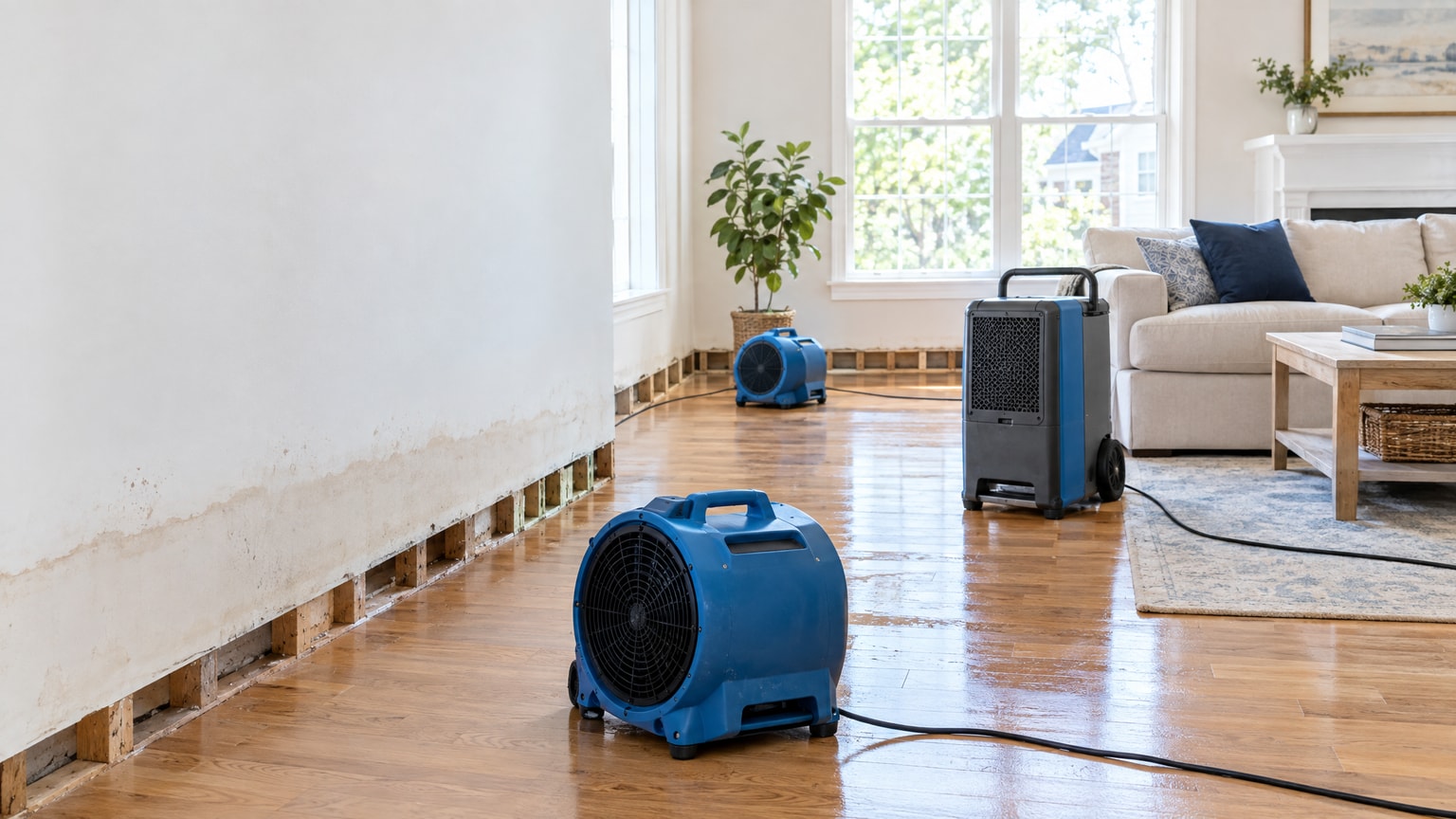
Drying may take days or weeks. Equipment choice and setup depend on weather, power safety, contamination, building materials, and the size and layout of the wet area.
Equipment Needed
- Dehumidifiers: Select capacity for the space and conditions, drain them safely, and follow the manufacturer's instructions. Rental availability does not make a hazardous job suitable for DIY.
- Fans or air movers: Use only after visible mold has been gently cleaned and only where power and airborne-contaminant risks are controlled.
- HEPA-filtered air cleaners: These may reduce some airborne particles but do not replace source removal, cleaning, or drying.
- Moisture meters: Use material-appropriate readings and compare wet areas with known-dry reference materials rather than relying on one universal number.
Drying Priorities
- Walls: Open wall cavities as needed and remove wallboard that cannot be cleaned and dried. Check for wiring, plumbing, lead paint, and asbestos before demolition.
- Floors: Remove flood-soaked carpet and pad and evaluate whether flooring and the subfloor can be cleaned and dried.
- Insulation: Remove saturated insulation that cannot be cleaned and dried.
- HVAC systems: Have flood-affected components evaluated and cleaned by a qualified professional before use.
What Can Be Saved
Usually Salvageable
- Hard, nonporous items that can be cleaned and dried
- Some washable fabrics and textiles after proper laundering
- Valuable items assessed by a specialist in that material
- Appliances only after qualified electrical or mechanical inspection
Often Cannot Be Cleaned and Dried
- Carpet and pad exposed to floodwater
- Saturated mattresses, pillows, and upholstered items
- Wallboard and insulation that absorbed contaminated water
- Swollen particleboard and fiberboard
- Other porous materials that cannot be thoroughly cleaned and dried
Follow local disposal instructions. For heirlooms, documents, artwork, or other valuable materials, ask a qualified conservator whether safe restoration is possible before discarding them.
When to Call Professionals
Flood cleanup can be difficult and dangerous. EPA says experienced, qualified professionals may be the best option, and even a professional inspection can help when full-service cleanup is unavailable.
- Get qualified help for: Unsafe entry, structural or electrical damage, suspected gas leaks, sewage or chemical hazards, widespread or hidden contamination, HVAC involvement, asbestos or lead concerns, or work beyond your training and protective equipment.
- Do not participate in cleanup if: You are pregnant, a child, have asthma or another breathing problem, or have a weakened immune system. Ask a healthcare professional about other individual risks.
See our DIY vs Professional guide and contractor vetting guide for more details.
Insurance Considerations
Documentation Tips
- Photograph and video all damage before cleanup begins
- Keep a written log of all actions taken with dates and times
- Record water lines and appliance model and serial numbers
- Keep small, safe samples of damaged materials the insurer requests
- Get written estimates before authorizing work
- Keep all receipts for cleanup supplies and equipment rental
- After documenting them, discard items that pose a health risk rather than waiting for an adjuster
File the claim as soon as possible and ask the insurer for every documentation, proof-of-loss, mitigation, and repair-approval requirement. NFIP mold coverage is limited: the Standard Flood Insurance Policy excludes water, moisture, mildew, or mold damage that results primarily from a condition substantially confined to the dwelling or within the policyholder's control. FloodSmart says a mold claim may be considered when officials restricted access or floodwater made entry unsafe, so document those conditions and ask the insurer to apply the policy to the claim. See our insurance coverage guide for the current NFIP limits and deadlines.