
Unlock more guides and resources
Where Leaks Hide
- Behind showers and tubs where seals fail
- Inside walls around supply lines and drain pipes
- Under sinks and cabinets
- Beneath windows with failed flashing
- Around HVAC condensate lines
Warning Signs
- Musty odors without visible growth
- Peeling paint or bubbling drywall
- Soft or swollen baseboards
- Recurring stains that reappear after cleaning
How to Investigate
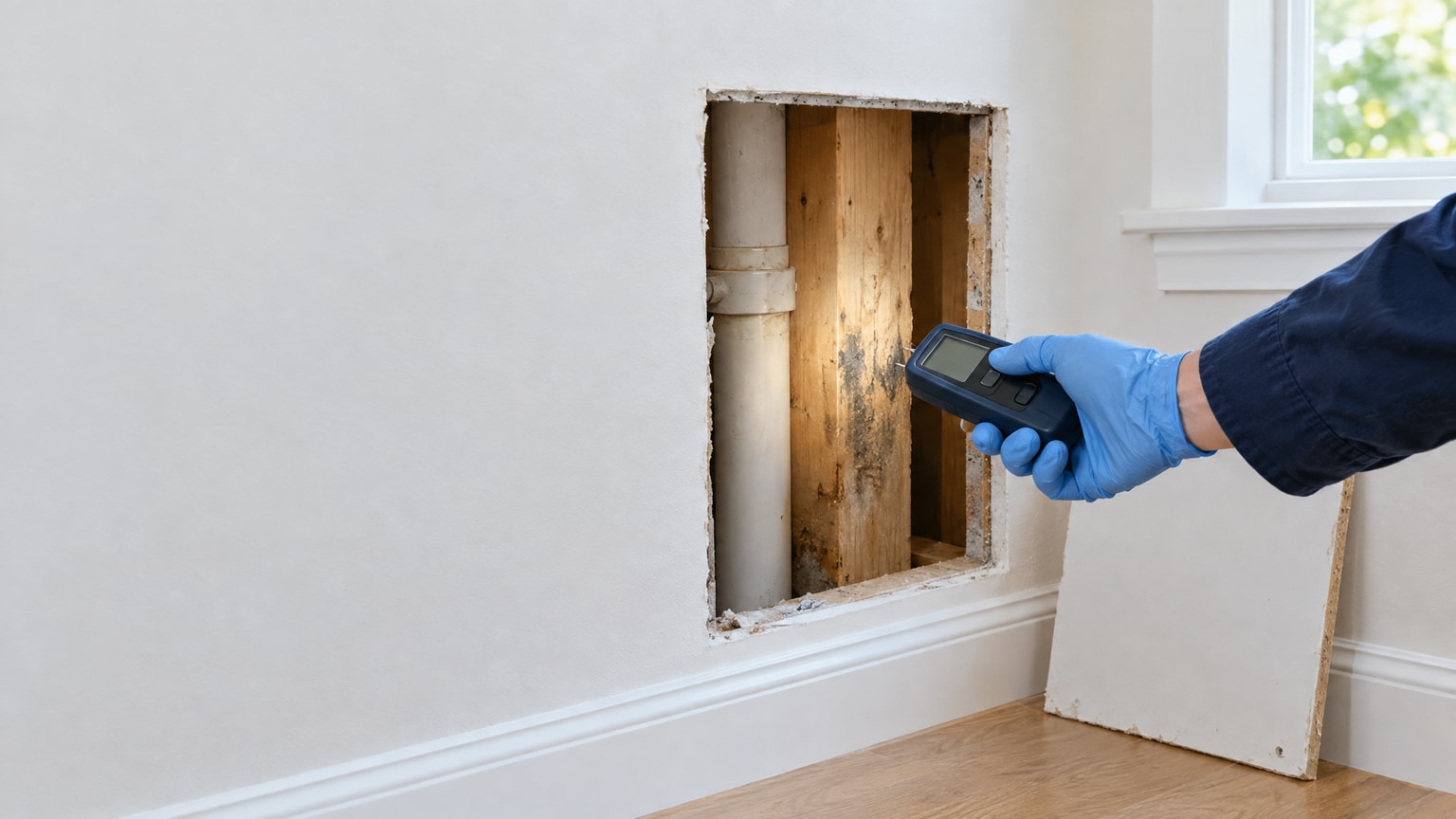
A moisture meter identifies a material-specific anomaly, not the source or cause of the moisture and not the presence of mold. Compare readings with an unaffected area of the same material, record trends and conditions, isolate likely sources, and pair the readings with direct observation. A normal reading does not rule out an intermittent or deeper leak; an elevated reading does not prove an active plumbing leak or mold.
- 1
Compare material-specific readings
Use the meter as a screening tool at the suspected area and at an unaffected, nearby area of the same material; follow the instrument instructions.
- 2
Track trends and isolate the source
Record the date, weather, humidity, plumbing use, HVAC operation, and direction of change, then compare readings after likely source events.
- 3
Observe accessible evidence
Look for dampness, staining, corrosion, standing water, odors, drainage changes, or other direct clues without opening unsafe assemblies.
- 4
Use targeted professional help
A qualified plumber, building-envelope professional, or other investigator can combine direct observation with borescope or focused inspection when the source remains unclear.
Common Fixes
- Replace failed caulk and grout lines
- Repair supply lines and shutoff valves
- Re-seal window flashing and trim
- Address HVAC condensate drainage
Drying Window
Moisture control is the key to preventing mold. Guidance from public health agencies emphasizes drying wet materials quickly.
- Stop the leak at the source first
- Dry affected materials within 24 to 48 hours
- Remove porous materials that stay saturated
- Confirm moisture levels before closing walls