
Unlock more guides and resources
Understanding the Mold-Asthma Connection
CDC says breathing in mold can trigger an asthma attack whether or not a person is allergic to mold. Damp indoor spaces are also associated with developing or worsening asthma. If someone in the home has asthma, moisture control and avoidance of damp or moldy areas belong alongside the written asthma action plan made with a clinician.
Not everyone with asthma has the same triggers. Allergy evaluation may help in some cases, but a home air sample cannot diagnose mold allergy or measure an individual's asthma risk. Focus the building response on dampness, visible growth, musty odor, and water damage.
How Mold Triggers Asthma
In a person with mold allergy, exposure can trigger an allergic response and worsen asthma. Damp buildings can also contain mold particles, bacteria, dust mites, compounds released from wet materials, and other irritants.
Public-health guidance does not use a musty odor, short air sample, or species result to determine which agent triggered one person's symptoms. Treat the asthma according to the action plan while investigating and correcting objective dampness and mold conditions.
When mold triggers an asthma attack, symptoms may include wheezing, coughing, chest tightness, shortness of breath, and difficulty breathing, especially at night or early morning. These symptoms can range from mild to severe and potentially life-threatening.
Managing Asthma in Moldy Environments
If you have asthma and cannot immediately leave a moldy environment, management strategies can help minimize the impact. Follow your asthma action plan, working with your doctor to ensure it accounts for mold exposure as a trigger. Track your symptoms and peak flow readings, noting any patterns related to location or moisture levels.
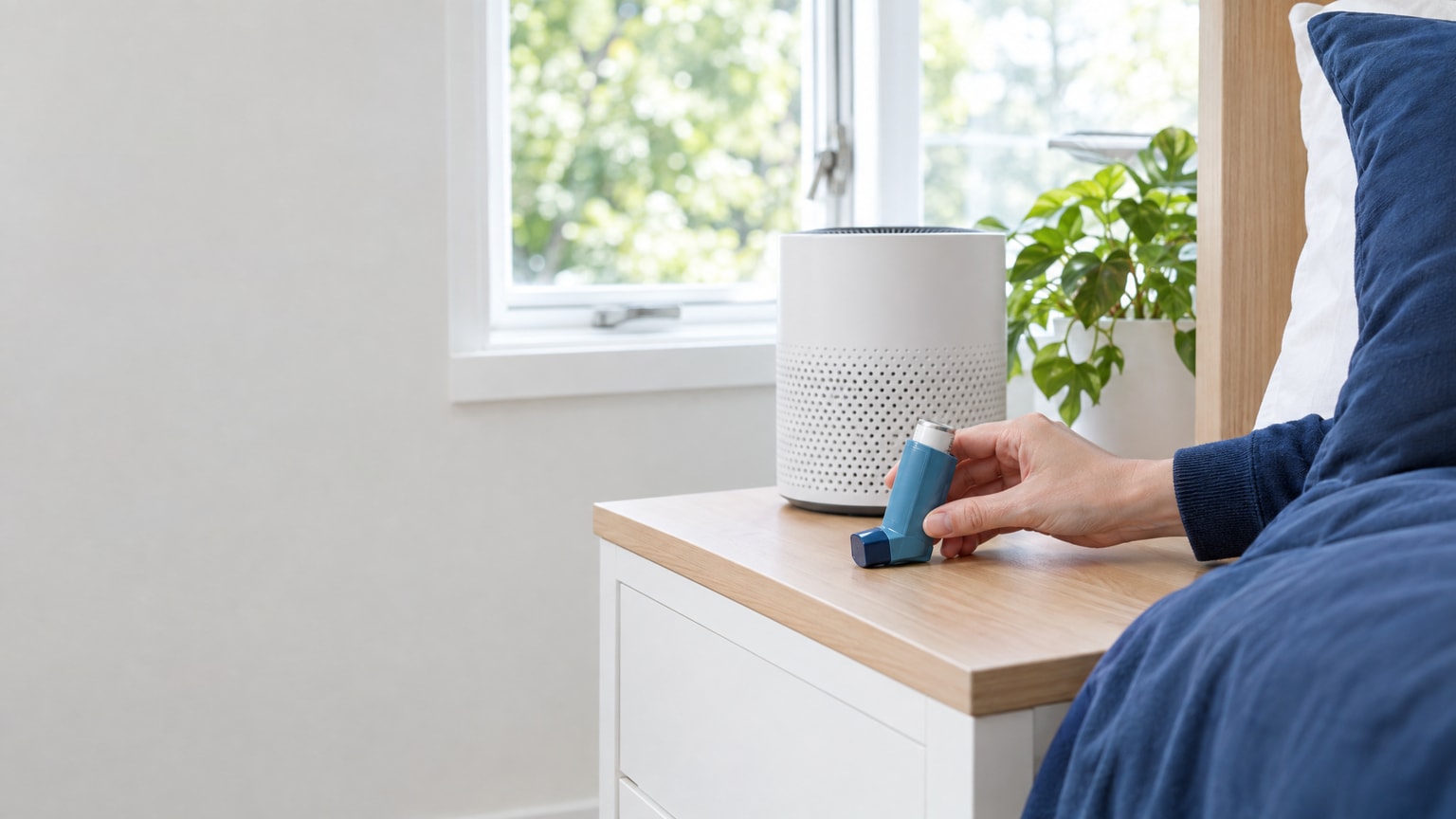
Take controller and quick-relief medication exactly as your asthma action plan directs. CDC says not to stop medication or change an asthma treatment plan without talking to a healthcare provider. Keep prescribed quick-relief medication accessible and reduce time in damp or moldy areas.
A correctly sized portable air cleaner may reduce some airborne particles while the underlying problem is addressed. It does not remove growth, correct moisture, or make a moldy room safe. Do not place or service a unit in a contaminated area if doing so would expose you.
Address the source, because while management helps, the long-term solution is proper mold remediation.
Prevention Strategies
Preventing mold growth is crucial for asthma management. Humidity control is foundational: keeping indoor relative humidity near the 30 to 50 percent range makes mold growth less likely. Use dehumidifiers in damp areas and air conditioning during humid seasons.
Ventilation matters greatly, so ensure bathrooms, kitchens, and laundry areas are well-ventilated to remove moisture-laden air and reduce mold growth opportunities.
Address leaks immediately, as water intrusion from leaks, floods, or condensation must be fixed and dried within 24-48 hours using the steps in our guide on what to do after a leak.
Focus on high-risk areas by paying special attention to bathrooms, basements, and areas around windows where condensation can occur. Your bedroom deserves special attention since you spend many hours sleeping there, so keep it dry and clean.
Maintain HVAC equipment and replace filters on the schedule and at the efficiency the system manufacturer supports. If the system was wet or contaminated, do not run it until a qualified professional evaluates it. Be cautious with humidifiers: over-humidifying can promote mold growth.
When to See a Doctor
People with asthma should seek medical attention in several mold-related situations. See your doctor if you are experiencing more frequent asthma symptoms than usual, needing to use your rescue inhaler more often, waking up at night due to asthma symptoms, having symptoms that do not improve despite following your action plan, or if you have identified mold in your home and want to adjust your management plan.
Seek urgent care if you have a severe asthma attack that does not respond to rescue medication, if you cannot complete normal activities due to breathing difficulty, or if peak flow readings are significantly below your personal best.
For more general guidance on mold and medical care, see our page on when to see a doctor about mold exposure.
Medication Considerations
Your written asthma action plan—not the presence of mold by itself—should tell you which daily and quick-relief medicines to use and when to seek help. If symptoms are increasing, quick-relief medicine is needed more often, or the plan is not working, contact your healthcare provider.
Allergy evaluation or treatment may be appropriate for some people, but an indoor mold sample does not diagnose mold allergy or determine medication. Always work with a qualified healthcare provider before starting, stopping, or changing medicine.
Official Resources
This content is for educational purposes only and is not a substitute for medical advice. Work with your healthcare provider to develop an asthma management plan appropriate for your situation.