
Unlock more guides and resources
Surface Sampling Methods
Common methods include tape lifts, swabs, and bulk material samples. Depending on the method and sample quality, a laboratory may report fungal structures or cultured organisms found in the submitted material. The result applies to that sample and does not establish what is present elsewhere in the building.
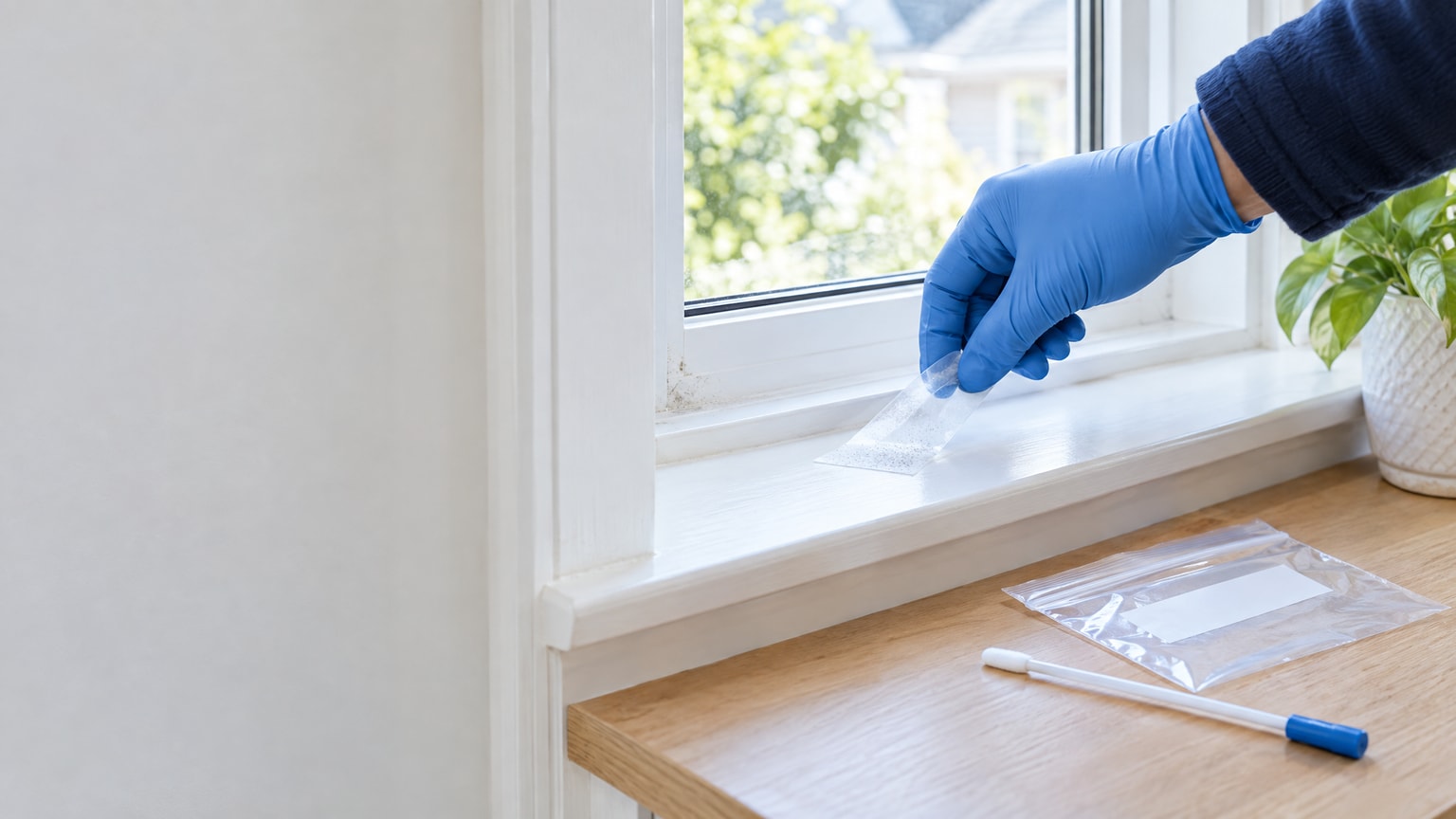
Tape Lifts
Press clear tape to a surface, then send to lab for microscopic analysis.
- Quick and non-destructive
- Good for flat surfaces
- Shows what is present on the surface
Swab Samples
Rub a sterile swab across a surface to collect material for culture or microscopy.
- Works on irregular surfaces
- May be cultured to identify organisms supported by the laboratory method
- Good for cracks and crevices
What Results Can Tell You
A targeted surface sample may help distinguish fungal material from soot, dirt, or another substance, characterize material from one selected spot, or evaluate a specified cleaned surface. A named genus may guide further moisture inspection, but it does not by itself prove the source, duration, or extent of a moisture problem.
- Characterizes material collected from the selected spot
- May distinguish fungal structures from soot, dirt, or another material
- May support documentation when the method and chain of custody are appropriate
- May evaluate a specified cleaned surface under criteria agreed in advance
Limitations to Know
Surface tests do not measure airborne exposure or overall building conditions. A clean surface result does not prove there is no hidden mold, and a positive result does not automatically indicate a health risk. EPA and NIOSH emphasize that visual inspection and moisture control are the core of mold assessment.
When Surface Testing Helps
Surface sampling may help when identifying material from a selected spot will change a building or contract decision, or when a written cleanup protocol requires evaluation of a specified surface. It should not be ordered merely to justify cleanup when visible growth or moisture already establishes the need to act.
- Distinguishing suspect fungal material from soot, dirt, or another substance
- Documenting one selected location under an appropriate method and chain of custody
- Evaluating a specified cleaned surface under pre-agreed criteria
- Answering a material-identification question that will change the building plan
Collecting Samples Safely
If you need to collect surface samples yourself, follow these steps to minimize spore release:
- 1
Wear proper protection
Use gloves and an N95 respirator, especially if you have respiratory conditions or allergies.
- 2
Prepare your materials
Have clear tape or sterile swabs ready, along with clean containers or slide holders.
- 3
Avoid aggressive scraping
Gently press tape or swab to the surface without disturbing surrounding areas.