
Unlock more guides and resources
Quick Visual Sweep
- Look for staining or discoloration on ceilings and walls
- Check under sinks and around toilets for dampness
- Smell for musty odors in closets and corners
- Note peeling paint, bubbling drywall, or warped trim
Room by Room Hotspots
Bathrooms and Laundry
- Check caulk lines, grout, and exhaust fans in bathrooms
- Look behind toilets and around tubs for staining
- Inspect laundry drain pans and supply hoses
Kitchen
- Look under sinks and behind appliances in kitchens
- Check the dishwasher base and fridge drip pan
- Inspect cabinet floors for swelling
Bedrooms and Living Areas
- Check exterior walls for cold spots or staining
- Look behind furniture that blocks airflow
- Inspect window sills for condensation damage
Exterior and Mechanical Checks
Moisture often starts outside or in mechanical systems. These quick checks catch issues before they appear indoors.
Exterior Moisture Control
- Clean gutters and downspouts regularly
- Extend downspouts away from the foundation
- Make sure soil slopes away from the home
- Check window and door caulk for gaps
Mechanical Systems
- Confirm bathroom and kitchen fans vent outdoors
- Keep HVAC drip pans clean and draining
- Clear condensate drain lines and traps
- Inspect ducts and air handlers for moisture
Moisture Clues to Measure
- 1
Measure humidity
Target 30 to 50 percent relative humidity in living spaces.
- 2
Check material moisture
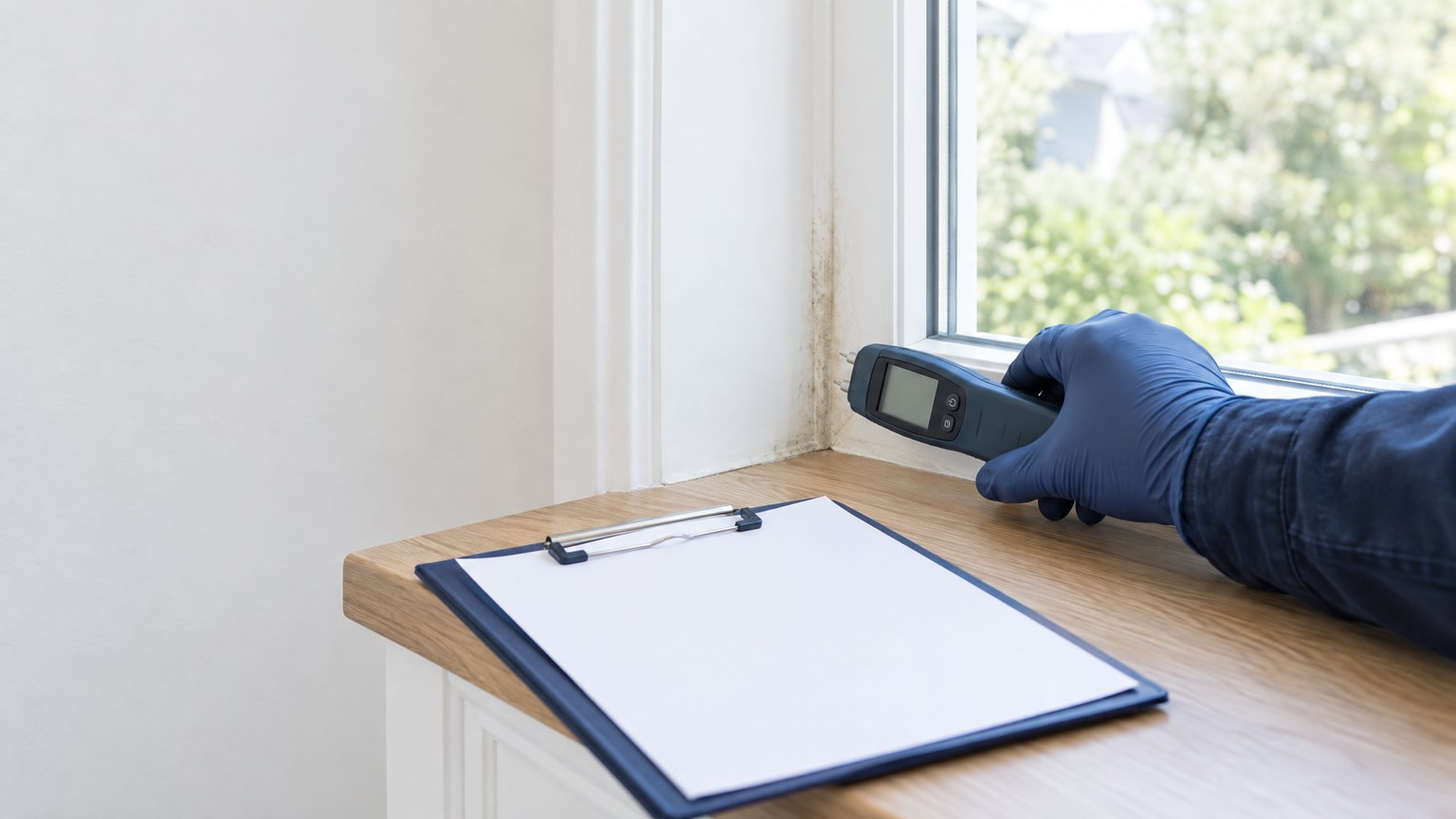
Use a moisture meter on drywall, wood, and trim near stains.
- 3
Track temperature differences
Cold surfaces create condensation and mold risk.
Photo and Notes Checklist
- Take wide shots of each room and close ups of damage
- Record dates of leaks, repairs, or flooding
- Note any rooms with persistent odors