
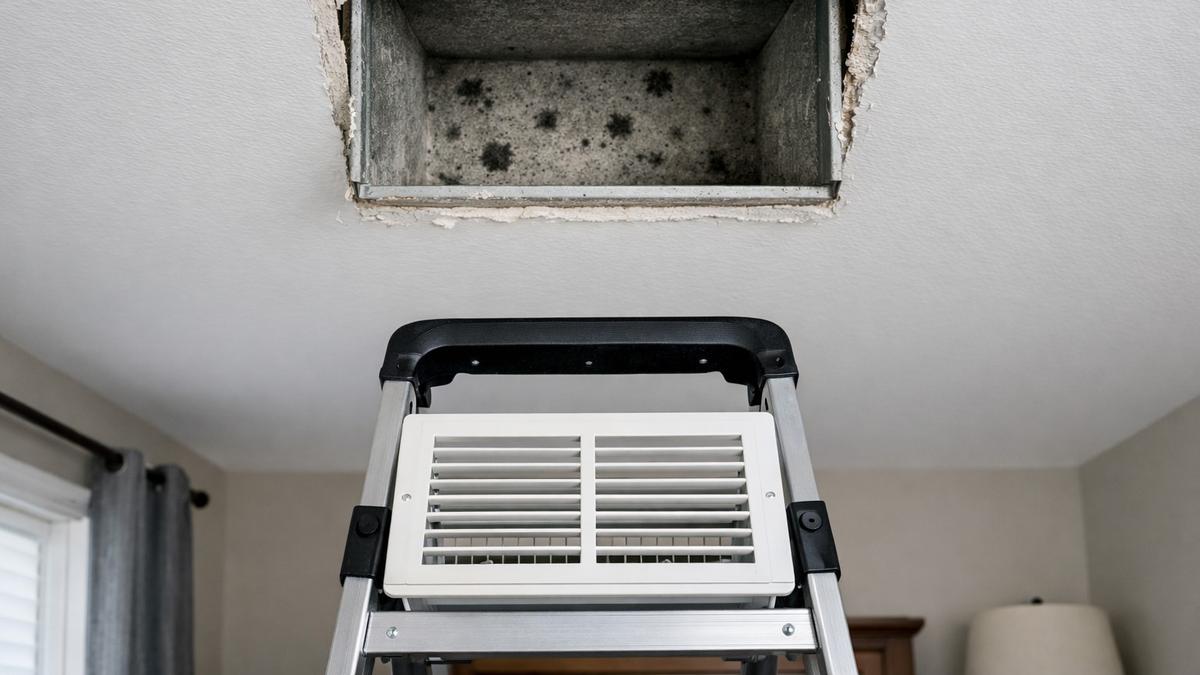
A contaminated HVAC system may distribute material to other spaces. If you know or suspect mold contamination, keep the system off and obtain a qualified assessment.
The good news: with proper maintenance, your AC system can be your best defense against mold rather than its source. Here's how to keep it clean and efficient all summer.
How Your AC Removes Humidity
Understanding how your system works helps you maintain it:
- Warm, humid air passes over cold evaporator coils
- Moisture condenses on the coils (like water on a cold glass)
- Water drips into a drain pan
- Condensate drain carries water outside
- Dry, cool air returns to your home
Each step in this process creates opportunities for mold if something goes wrong.
The Condensate Drain System
Why It Matters
Cooling coils produce condensate when conditions call for moisture removal. The amount varies with weather, airflow, equipment and operation; the drain must remain functional.
Signs of Problems
- Water pooling around indoor unit
- Musty odors from vents
- Water stains on ceiling below AC unit
- System repeatedly shutting off (safety switch)
- Higher than expected humidity indoors
Maintenance Tasks
Monthly during cooling season:
- Locate condensate drain line (usually PVC pipe near indoor unit)
- Find the maintenance procedure for your exact condensate system before adding cleaners or opening fittings.
- Use only products, concentrations and contact times the equipment manufacturer permits.
- If drainage remains slow or blocked, stop and have a qualified HVAC technician address the cause.
- Check that water flows freely from exterior drain
If drain is clogged:
- Do not disassemble or snake a drain near energized equipment
- Check only user-accessible components permitted in the manual
- Have recurrent blockage, overflow or inaccessible drainage investigated by a technician
- Verify normal drainage after service
Drain Pan Care
Inspection
The drain pan catches water before it enters the drain line:
- Check monthly for standing water (indicates drain problem)
- Look for rust, cracks, or algae growth
- Clean any debris
- Verify pan isn't tilted incorrectly
Prevention
- Inspect the condensate pan and drain for standing water or blockage
- Follow the HVAC manufacturer's maintenance instructions; do not add chemicals unless the equipment or product label specifically allows it
- Have a qualified HVAC technician evaluate recurring drain problems or damaged pans
- Replace rusty or cracked pans with the correct part
Evaporator Coils
The Problem
Evaporator coils stay wet during operation—perfect for mold. Dirty coils are worse:
- Dust and debris provide food for mold
- Reduced airflow keeps coils wetter longer
- Dirty coils don't dehumidify effectively
Professional Cleaning
Coil cleaning is best left to professionals:
- Have coils inspected during service and cleaned when their condition and the manufacturer’s instructions call for it.
- Part of regular HVAC maintenance
- Requires proper access and chemicals
- DIY attempts can damage delicate fins
What You Can Do
- UVGI can affect some organisms on exposed HVAC surfaces when properly designed, but typical home units have limits. It does not remove mold or repair the moisture source.
Air Filters
Why Filters Matter for Mold
Filters do more than clean your air:
- Catch mold spores before they enter ductwork
- Keep dust off coils (reduces food for mold)
- Maintain proper airflow (prevents frozen coils)
Filter Maintenance
- Use only a filter type and resistance compatible with the HVAC system. A technician can confirm whether a higher-efficiency filter or a separate air cleaner is appropriate.
Filter Selection
MERV ratings and mold:
- Filter efficiency varies by particle size and filter rating. Use a well-fitted compatible filter; filtration does not resolve mold growing on wet equipment.
- MERV 11-13: Better filtration, check system compatibility
- HEPA: Best for mold spores, but system must be designed for it
Ductwork
Mold Risk
Ducts can harbor mold if:
- Moisture enters the system
- Condensation forms inside ducts
- Spores from contaminated coils spread
- Water damage occurred
Inspection Signs
- Visible mold at vent registers
- Musty smell when system runs
- Record symptoms and when they occur for your healthcare professional; a pattern during AC operation does not establish the medical cause.
- Visible debris or dust at vents
Duct Cleaning
Professional duct cleaning may be needed if:
- Visible mold is present
- Rodent/pest infestation occurred
- Significant renovation dust entered system
- Previous water damage to ducts
UV Light Systems
How They Work
UVGI performance depends on the design, exposure and target surface or organism. A consumer UV lamp is not a mold-clearance device.
- UV-C light damages microorganism DNA
- UVGI does not replace cleaning, drainage correction or removal of material that cannot be cleaned.
- Some systems also treat air passing through
Considerations
- Professional installation required
- Follow the device manufacturer’s lamp replacement and safe-service procedure; intervals vary, and UV exposure can harm eyes and skin.
- Ask what a proposed UV installation is intended to control, what evidence supports it and how it will be maintained.
- Not a substitute for proper maintenance
- Cost varies by equipment, access, maintenance scope, and local labor. Ask for a written quote that identifies the work, parts, exclusions, and any follow-up needed to control moisture.
Summer Maintenance Schedule
Monthly
- Check filters and user-accessible drain indicators as instructed
- Do not pour vinegar, bleach or other chemicals into a condensate system without manufacturer approval
- Arrange service for leaks, clogs, icing or suspected contamination
Seasonally
- Professional tune-up before summer
- Coil cleaning
- Refrigerant check
- Electrical inspection
As Needed
- Review the manufacturer’s maintenance schedule
- Have required electrical, refrigerant and internal equipment service performed by a qualified technician
- If UVGI is installed, follow its own safe-service and replacement instructions
- Record unresolved drainage or contamination concerns
When to Call Professionals
Call for professional help if:
- Visible mold on components
- Persistent musty odors
- Water damage to system
- Recurring drain clogs
- System not dehumidifying properly
- Discuss health symptoms with a clinician and investigate observable equipment or moisture problems with the appropriate building professional.
Your AC as Mold Fighter
Routine service can reveal problems, but continued drainage, moisture and equipment checks are still needed.
Keep the service record and verify that the source of any recurring moisture has been addressed.
Sources and Further Reading
For current indoor-air guidance, see EPA's Improve Indoor Air Quality in Your Home.