
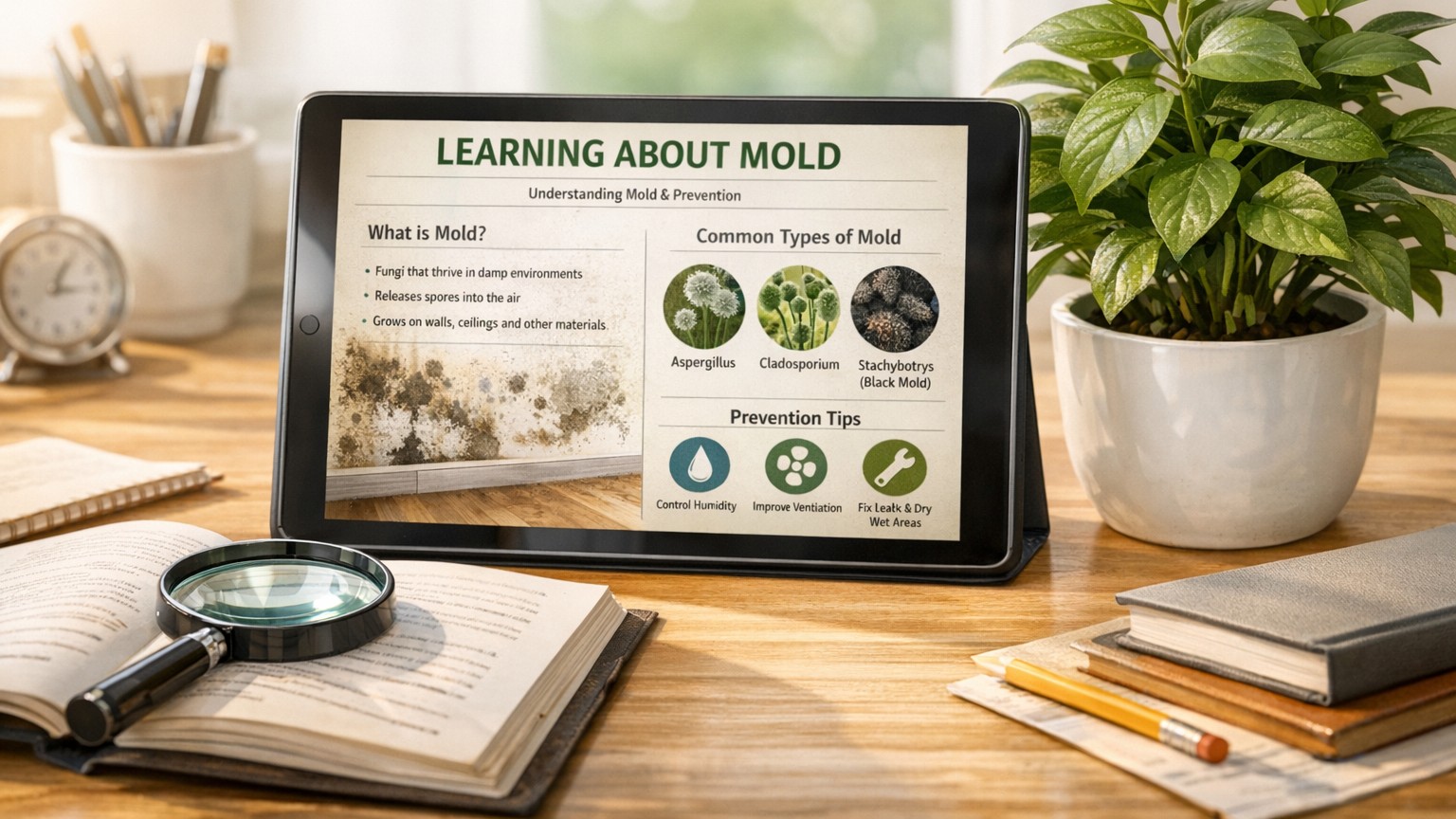
Discovering what looks like mold on basement concrete is a common concern. Concrete is mineral-based, but its pores, cracks, coatings, dust, and attached organic materials can hold moisture and debris. Treat the visible condition as a reason to identify the moisture source, not as proof that the surface is harmless or easy to clean.
Mold vs. Efflorescence: Know the Difference
Before treating for mold, make sure that's actually what you have. White, powdery deposits on concrete are often efflorescence - mineral salts left behind when water evaporates through concrete. Unlike mold:
- Efflorescence is white or grayish; mold can be black, green, white, or other colors
- Efflorescence feels crystalline or powdery; mold may be fuzzy or slimy
- Efflorescence dissolves in water; mold does not
- A water spray can be a rough screening clue because mineral deposits may temporarily disappear when wet, but it is not a reliable mold test. If the appearance, odor, or material condition matters to a repair decision, document it and define what an inspection needs to answer.
Both indicate moisture problems, but they require different approaches. Learn more about mold on concrete in our complete guide.
Why Mold Grows on Concrete
Mold does not use bare mineral concrete as a food source, but dust, dirt, paint, paper, wood, and other organic residue on or beside the slab can support growth. Cool surfaces can also collect condensation. Address moisture and attached materials rather than assuming a concrete label explains the whole problem.
Cleaning Mold from Concrete
For mold on bare concrete:
- Scrub with detergent solution and stiff brush
- For stubborn staining, do not default to bleach. Use a compatible detergent or product selected for the surface and follow its label, ventilation, and protective-equipment instructions. Never mix household chemicals.
- Rinse thoroughly and allow to dry completely
- HEPA vacuum to capture any remaining spores
For painted or sealed concrete:
- Start with detergent solution to preserve the finish
- Avoid bleach on painted surfaces (may cause discoloration)
- Consider removing and replacing damaged paint or sealant
Long-Term Moisture Control
Cleaning is temporary if you do not address moisture. Monitor relative humidity, improve drainage and ventilation as appropriate, and repair cracks, leaks, seepage, or condensation. Use the range recommended by EPA for occupied spaces and the conditions of the basement rather than chasing one reading as a guarantee.
- Run a dehumidifier: Maintain humidity below 50%
- Improve drainage: Grade soil away from foundation, clean gutters
- Seal concrete: Apply penetrating sealer to reduce moisture transmission
- Insulate properly: Prevent condensation on cold surfaces
- Address water intrusion: Fix any cracks, leaks, or seepage
When Moisture Is Coming Through
If water is seeping through concrete walls or floors (hydrostatic pressure), surface treatments won't solve the problem. You may need interior drainage systems, exterior waterproofing, or sump pump installation. Consult a basement waterproofing specialist for persistent moisture problems.
Prevention for the Future
Once cleaned and dried, choose finishes that suit the moisture conditions and follow the product label. Regular monitoring can reveal changes, but a sealer or mold-resistant coating does not stop active water intrusion. In a chronically damp basement, avoid adding absorbent organic materials until the moisture problem is solved.
For room-level moisture context, see our Basement Mold guide and Humidity Control guide.
When to Bring in a Professional
Get help when water is entering through walls or floors, the source is not visible, contaminated water is involved, finishes are damaged, or the affected area is too large to contain safely. A waterproofing contractor may address drainage or pressure; a building or remediation professional may define material work. Ask each one to separate observed moisture, proposed repairs, and limitations.
Check the Room After Cleaning
Before storing belongings or installing new finishes, confirm that the water source is controlled, surfaces are clean enough for the intended use, and the area is dry under normal conditions. Keep photographs, product names, dates, and unresolved access notes. A clean appearance does not certify health safety or prove that a recurring moisture pathway has been fixed.
- Keep cardboard, fabric, and other absorbent storage off damp floors
- Inspect around windows, penetrations, drains, and foundation cracks after heavy rain
- Do not conceal seepage with paint or sealant before the source is understood
- Use a written scope when drainage, structure, or hidden materials are involved
Sources and Further Reading
For current remediation guidance, see EPA's Mold Remediation in Schools and Commercial Buildings guide.