
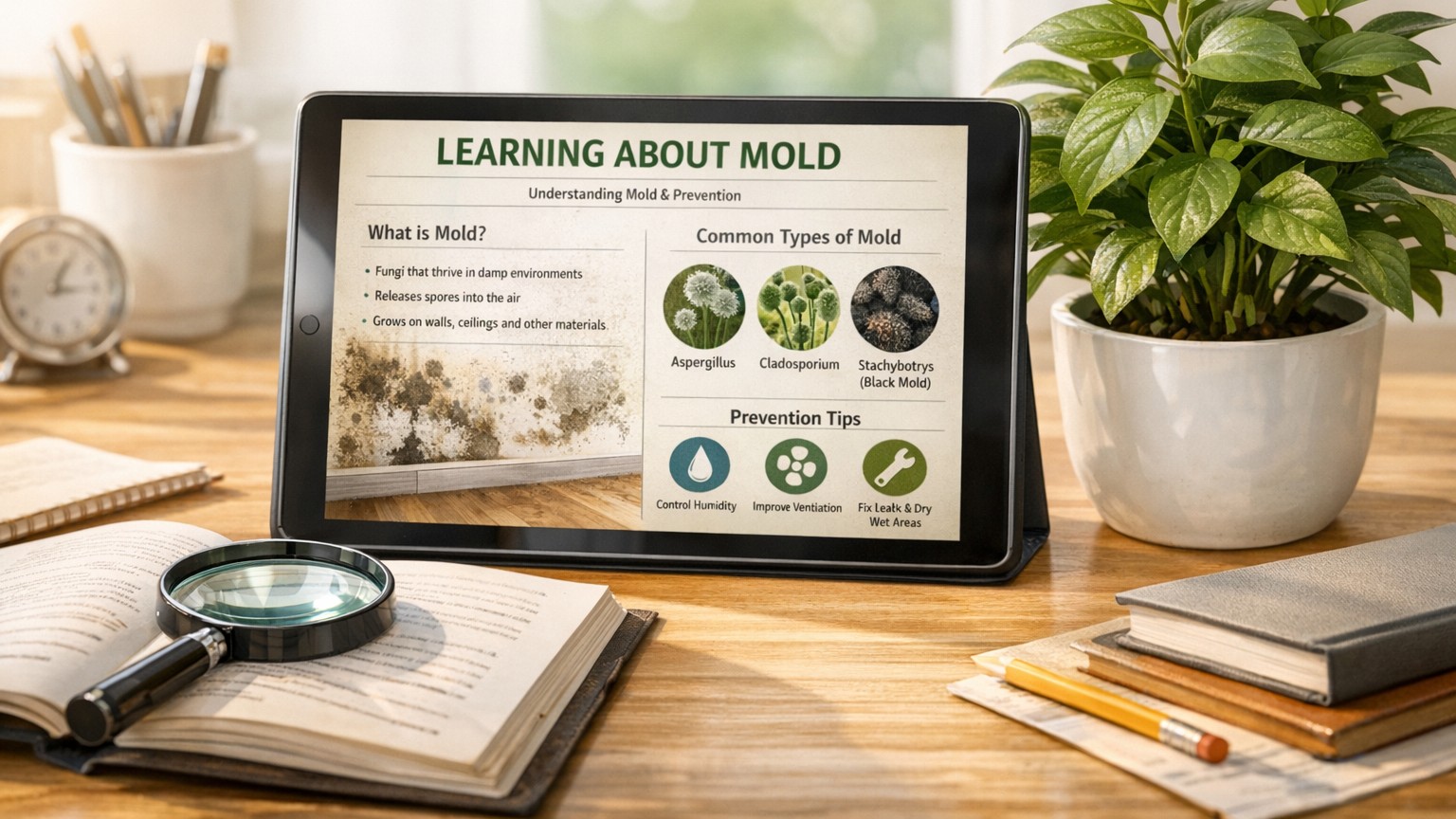
Mold is not always visible. A musty odor, water damage, or a change in materials can point to a moisture problem, but none of these signs identifies a species or proves the extent or health significance of growth. Here are five clues worth investigating carefully.
1. Persistent Musty Odor
A persistent earthy or musty odor can indicate damp materials or microbial activity, even when growth is not visible. Odor can also come from drains, stored items, or other sources, so use it as a reason to look for moisture rather than as proof of mold. Note when the smell appears and whether it changes after ventilation or weather changes.
2. Unexplained Allergy Symptoms
Sneezing, congestion, itchy eyes, cough, or wheezing can have many causes. If symptoms vary by location or improve away from home, record the pattern and discuss persistent or concerning symptoms with a clinician. Symptoms do not identify a mold species or establish that a building requires testing or remediation.
3. Water Stains or Discoloration
Yellow or brown stains on ceilings, walls, or floors can indicate past or present water intrusion. Moisture makes mold growth possible, but a stain may also be an old or non-microbial discoloration. Find and correct the source, inspect nearby materials, and document what changed after the repair. Learn more about what to do after a leak.
4. Peeling or Bubbling Paint
When paint bubbles, cracks, or peels — especially in bathrooms, kitchens, or basements — moisture may be trapped behind the surface. Do not open a wall solely because paint is peeling; first consider plumbing, condensation, exterior drainage, and the material condition, then choose an inspection or repair scope that answers the building question.
5. Warped or Buckled Materials
Wood floors that buckle, baseboards that warp, or drywall that feels soft show that materials have been exposed to moisture or movement. These changes do not establish how long a condition has been present or whether mold is behind the surface. Limit further water exposure and have inaccessible or damaged materials assessed before disturbing them.
What to Do Next
If you notice any of these signs, start by identifying and correcting moisture sources, then document the area and decide what question needs answering. A qualified inspection can help locate moisture or damaged materials; sampling is not automatically necessary and should have a defined purpose. Use our DIY vs. Pro tool to organize the decision, and seek medical care separately for persistent or concerning symptoms.
What These Signs Can and Cannot Tell You
The five clues point to conditions that deserve attention, not a diagnosis. Odor does not measure airborne concentration; symptoms do not identify a building source; and a surface stain does not reveal what is behind a wall. A useful assessment connects the observation to moisture, material, access, contamination, and the decision you need to make.
A Cautious Inspection Sequence
Start outside the suspected area: check plumbing, roof and window details, gutters, grading, ventilation, and condensation. Photograph the condition and note dates, weather, odors, and any recent leak or repair. Avoid cutting into walls or using fans that could spread contaminated dust until you understand the area. For a defined question, an independent professional can explain what visual inspection, moisture measurement, or targeted sampling would add and what each cannot establish.
- Control active leaks and reduce ongoing humidity or condensation
- Keep children, pets, and people with asthma away from dusty disturbance
- Do not use a home test kit as a substitute for a building assessment
- Separate medical questions from the building decision and consult the appropriate professional for each
When to Pause and Get Help
Pause DIY work when the suspected area is large, connected to an HVAC pathway, affected by sewage or floodwater, hidden behind finishes, or difficult to contain. People with asthma, significant allergies, immune compromise, or other health concerns should ask a clinician about personal exposure and avoid dusty work. A building professional can define containment and material work; that assessment is separate from a medical diagnosis.
For a practical next step, compare our Inspection versus Testing guide, DIY versus Pro Quiz and Remediation guide.
Sources and Further Reading
For current moisture and mold guidance, see EPA's A Brief Guide to Mold, Moisture, and Your Home.