%20--%3e%3cpath%20d='M128%2056%20L144%20128%20L128%20116%20L112%20128%20Z'%20fill='%23d39b4a'/%3e%3c!--%20Compass%20needle%20-%20South%20(white)%20--%3e%3cpath%20d='M128%20200%20L144%20128%20L128%20140%20L112%20128%20Z'%20fill='%23ffffff'%20opacity='0.85'/%3e%3c!--%20Center%20circle%20--%3e%3ccircle%20cx='128'%20cy='128'%20r='12'%20fill='%23d39b4a'/%3e%3ccircle%20cx='128'%20cy='128'%20r='6'%20fill='%230f4f52'/%3e%3c/svg%3e)
Why Industry Standards Matter
Mold remediation is an unregulated industry in most states. Without licensing requirements, anyone can call themselves a "mold remediation specialist." Industry standards provide the benchmark for professional, safe, and effective work.
When you hire a contractor who follows established standards, you get:
- Procedures developed by scientific and industry consensus
- Consistent methodology that has been proven effective
- Protection from shortcuts that could harm your health or property
- Documentation that supports insurance claims and legal matters
- Objective criteria to evaluate whether work was done properly
The IICRC S520 Standard
The ANSI/IICRC S520 Standard for Professional Mold Remediation is the main consensus standard used to evaluate professional mold remediation in the United States. Published by the Institute of Inspection, Cleaning and Restoration Certification (IICRC), it gives contractors, consultants, property owners, and insurers a common framework for planning, documenting, and verifying mold remediation work.
What S520 Covers
- Assessment and documentation procedures
- Containment and worker safety requirements
- Cleaning and removal methods by material type
- Post-remediation verification standards
- Communication and documentation protocols
Key Principles
- Source removal is primary—not chemical treatment
- Containment prevents cross-contamination
- Different materials require different approaches
- Independent verification confirms success
- Documentation protects all parties
The Core Principle: Source Removal
The most important concept in S520 is that physical removal of mold contamination is the primary means of remediation—not killing mold with chemicals.
That principle matters because dead mold fragments can still contain allergens and irritants. Proper remediation removes contaminated dust and materials, fixes the moisture source, and verifies that the work area has returned to normal conditions.
Understanding Conditions 1, 2, and 3
The S520 standard uses a "Condition" system to classify environments. Understanding these terms helps you interpret inspection reports and remediation plans:
Condition 1
Normal Fungal Ecology
An indoor environment where mold spores are present at levels similar to outdoor air—this is normal and unavoidable. Condition 1 is the goal of every remediation project.
Condition 2
Settled Spores
An area contaminated with spores that spread from elsewhere (a Condition 3 area), but without active mold growth. Requires cleaning but not material removal.
Condition 3
Actual Growth
An area with actual mold growth—visible or hidden, active or dormant. This is where remediation focuses and often requires material removal.
A proper remediation project will identify all Condition 3 areas, address the moisture source, remove contamination, clean Condition 2 areas, and verify that all spaces return to Condition 1 before declaring the project complete.
Professional Certifications to Look For
While no certification guarantees quality work, these credentials indicate formal training in industry standards:
Remediation Certifications
- IICRC AMRT (Applied Microbial Remediation Technician)
- IICRC CMR (Certified Mold Remediator)
- ACAC CMRS (Certified Mold Remediation Supervisor)
- RIA MRS (Mold Remediation Specialist)
These certifications indicate training in proper remediation techniques.
Inspection/Assessment Certifications
- ACAC CMI (Certified Mold Inspector)
- ACAC CIE (Council-Certified Indoor Environmentalist)
- IICRC CMI (Certified Microbial Investigator)
- ASHI Certified Home Inspectors (for general assessments)
Inspectors and assessors should be independent from remediation contractors.
What to Expect from Certified Professionals
When you hire a contractor who follows S520 standards, your project should include these elements:
- 1
Thorough assessment
Before work begins, you should receive a written scope of work identifying all affected areas, moisture sources, and proposed remediation methods. An independent assessment by a qualified Indoor Environmental Professional (IEP) is recommended for significant projects.
- 2
Proper containment setup
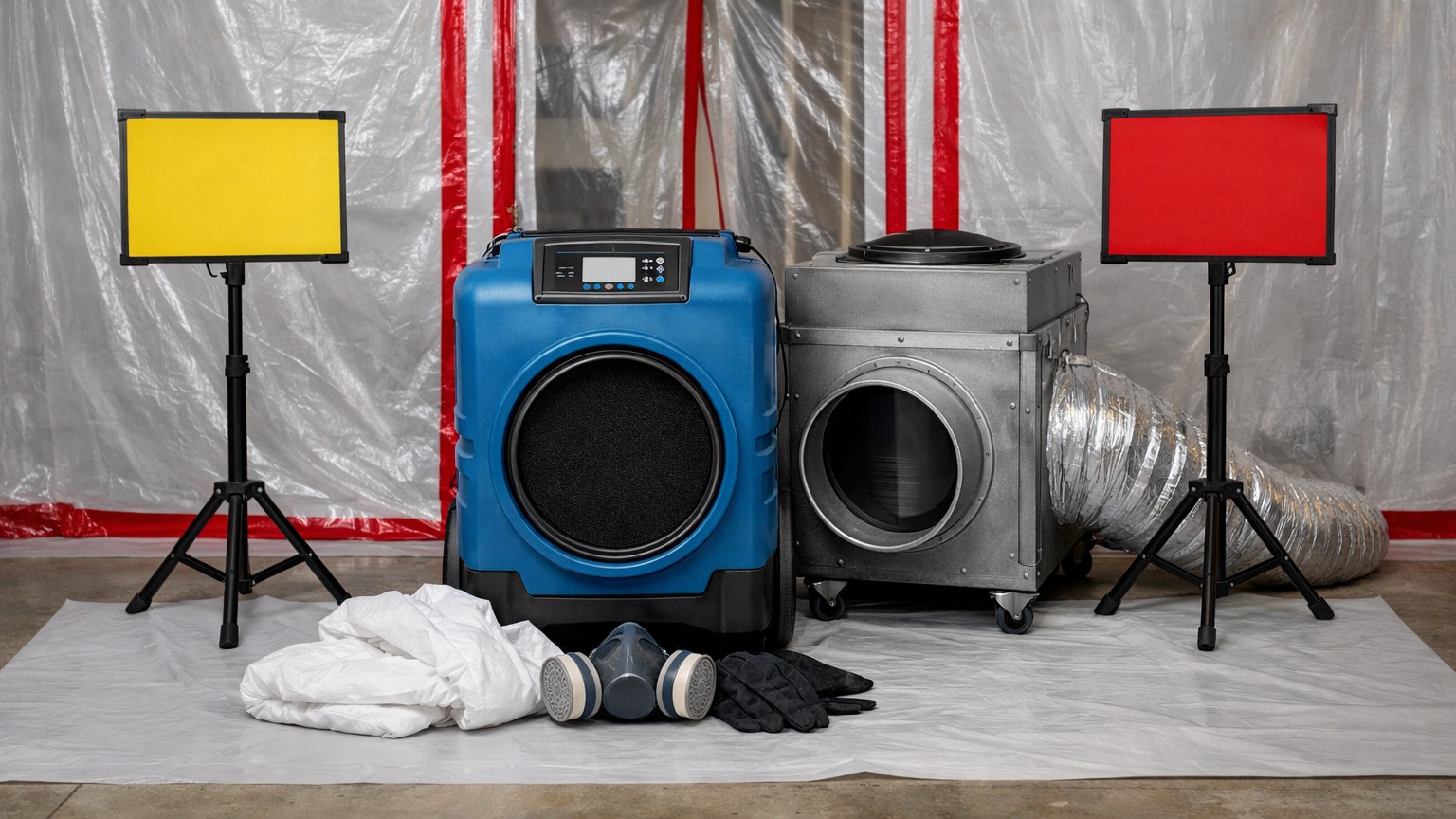
Work areas are isolated with plastic sheeting, negative air is used when the scope requires it, and controls are monitored so contamination does not spread. You should see air scrubbers running continuously and workers using appropriate protective equipment.
- 3
Source removal, not just treatment
Contaminated porous materials (drywall, insulation, carpet) are physically removed and disposed of. Semi-porous materials (wood) are cleaned using HEPA vacuuming and appropriate cleaning methods. Non-porous materials are wiped clean.
- 4
Moisture source addressed
The water source that caused the mold is identified and corrected. Remediation without fixing the moisture problem is pointless—mold will return.
- 5
Documentation throughout
Reputable contractors document pre-remediation conditions, work in progress, and final results with photos. You should receive copies of all documentation.
- 6
Post-remediation verification
After work is complete, an independent inspector verifies the area has returned to Condition 1. This verification should not be performed by the remediation company.
For more details, see our guides on containment and negative air and post-remediation verification.
Red Flags: When Standards Aren't Followed
Be cautious if a contractor:
- Primarily relies on chemical sprays, foggers, or "mold bombs"
- Cannot explain how they will contain the work area
- Offers to do both inspection and remediation without independent verification
- Provides no written scope of work or contract
- Guarantees "mold-free" results (impossible—mold spores are everywhere)
- Uses scare tactics about "toxic black mold" to pressure immediate decisions
- Cannot provide proof of training, certification, or insurance
- Offers prices dramatically lower than other quotes
- Refuses to address the moisture source as part of the project
- Does not recommend post-remediation verification
For more warning signs, see our guide on mold scams and red flags.
Questions to Ask Contractors
Use these questions to evaluate potential remediation contractors:
Use our contractor vetting guide for a complete checklist, and our cost estimator to prepare realistic budget expectations.