%20--%3e%3cpath%20d='M128%2056%20L144%20128%20L128%20116%20L112%20128%20Z'%20fill='%23d39b4a'/%3e%3c!--%20Compass%20needle%20-%20South%20(white)%20--%3e%3cpath%20d='M128%20200%20L144%20128%20L128%20140%20L112%20128%20Z'%20fill='%23ffffff'%20opacity='0.85'/%3e%3c!--%20Center%20circle%20--%3e%3ccircle%20cx='128'%20cy='128'%20r='12'%20fill='%23d39b4a'/%3e%3ccircle%20cx='128'%20cy='128'%20r='6'%20fill='%230f4f52'/%3e%3c/svg%3e)
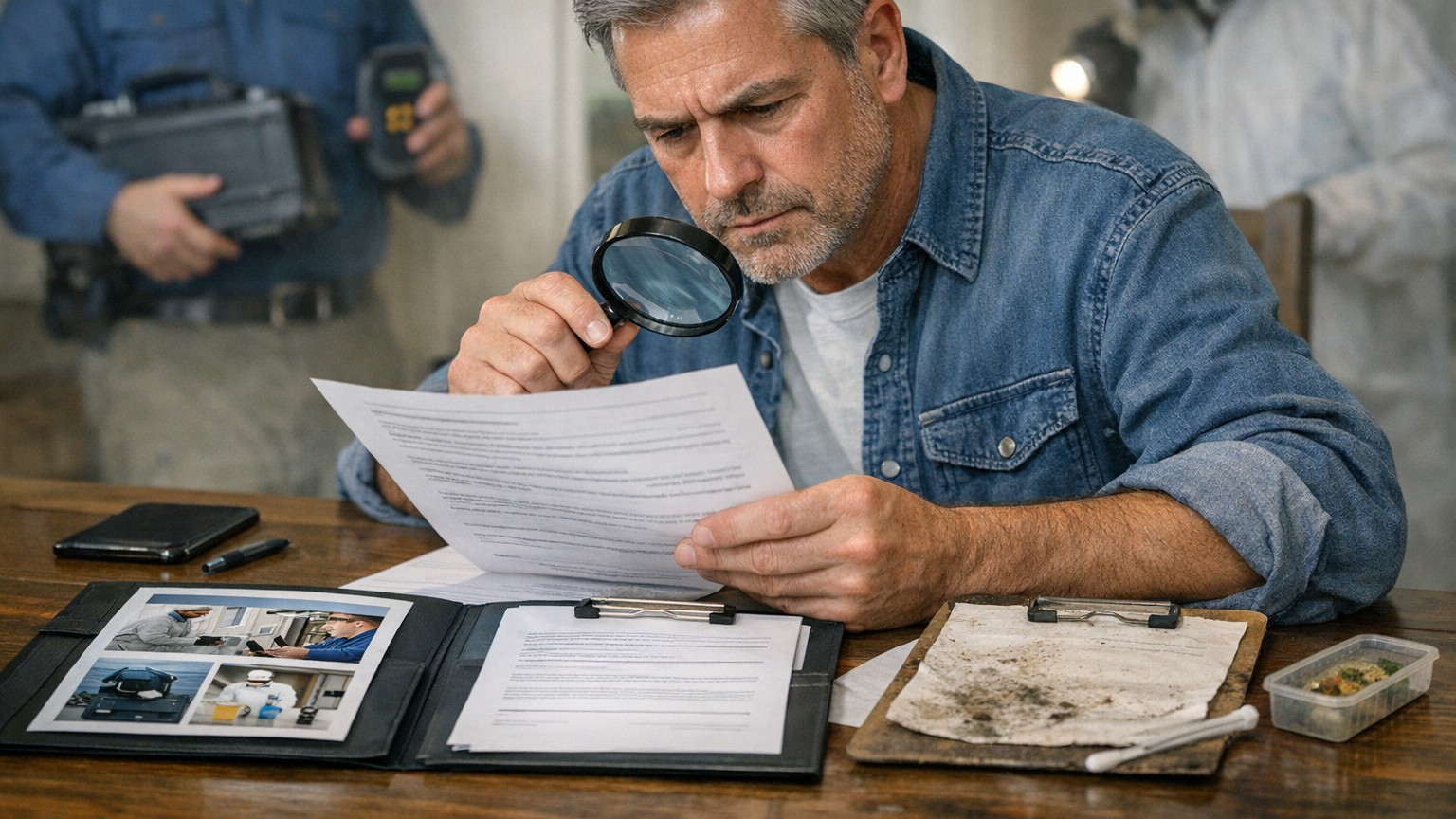
Testing Without a Real Inspection
EPA and NIOSH emphasize that visual inspection and moisture diagnosis are the most important parts of mold assessment. A company that only sells air tests without checking for moisture sources is skipping the step that actually solves the problem. Good inspectors look for hidden mold and trace moisture to its source in problem areas throughout your home.
One-Sample Promises
Be cautious if someone offers a single air sample as a complete answer. A proper sampling plan includes an outdoor control sample and targeted indoor locations, plus notes about building conditions. Without context, results are easy to misread.
Pass/Fail Claims
There are no federal exposure limits for mold, and results depend on many variables. Anyone promising a simple pass/fail result is oversimplifying. Interpretation must compare indoor and outdoor samples and consider building conditions. Learn how to read your test results properly so you can evaluate whether an inspector's conclusions are supported by the data.
Conflict of Interest
If the same company tests and remediates, they profit from finding a bigger problem. Independent inspection reduces bias and helps ensure you get an objective scope of work. Our Contractor Vetting Guide can help you find trustworthy professionals who prioritize your interests.
Fogging or Spray-Only Fixes
EPA does not recommend routine use of biocides or antimicrobials. Spraying or fogging without removing damaged materials and fixing the moisture source is not effective remediation and can leave contamination behind. Proper remediation requires deciding whether to clean or remove materials based on the contamination level, and often requires containment and negative air to prevent spreading spores.
Red Flags Checklist
Watch for these warning signs when evaluating a mold testing or remediation company:
- Offers free testing (often leads to inflated remediation quotes)
- Uses scare tactics about toxic mold or health dangers
- Refuses to provide credentials or references
Questions to Ask Any Testing Company
Ask these questions before hiring a mold testing company:
- What moisture tools do you use during inspection?
- How do you determine the source of dampness?
- Will you take an outdoor control sample?