%20--%3e%3cpath%20d='M128%2056%20L144%20128%20L128%20116%20L112%20128%20Z'%20fill='%23d39b4a'/%3e%3c!--%20Compass%20needle%20-%20South%20(white)%20--%3e%3cpath%20d='M128%20200%20L144%20128%20L128%20140%20L112%20128%20Z'%20fill='%23ffffff'%20opacity='0.85'/%3e%3c!--%20Center%20circle%20--%3e%3ccircle%20cx='128'%20cy='128'%20r='12'%20fill='%23d39b4a'/%3e%3ccircle%20cx='128'%20cy='128'%20r='6'%20fill='%230f4f52'/%3e%3c/svg%3e)
Why Containment Matters
Disturbing mold releases spores and fragments. Containment prevents those particles from spreading to clean areas, protects occupants, and keeps remediation focused on the affected zone.
When Containment Is Required
Typically Required
- Visible growth covering more than a small patch
- Demolition or material removal is planned
- Mold is inside wall cavities or ceilings
- HVAC system contamination
- Occupants with asthma, allergies, or immune conditions
Extra Precautions
- Use full containment for large or multi-room jobs
- Add a decontamination entry (two-stage) for heavy work
- Keep HVAC off or isolated during active remediation
- Protect adjacent rooms with critical barriers
What Good Containment Looks Like
Physical Barriers
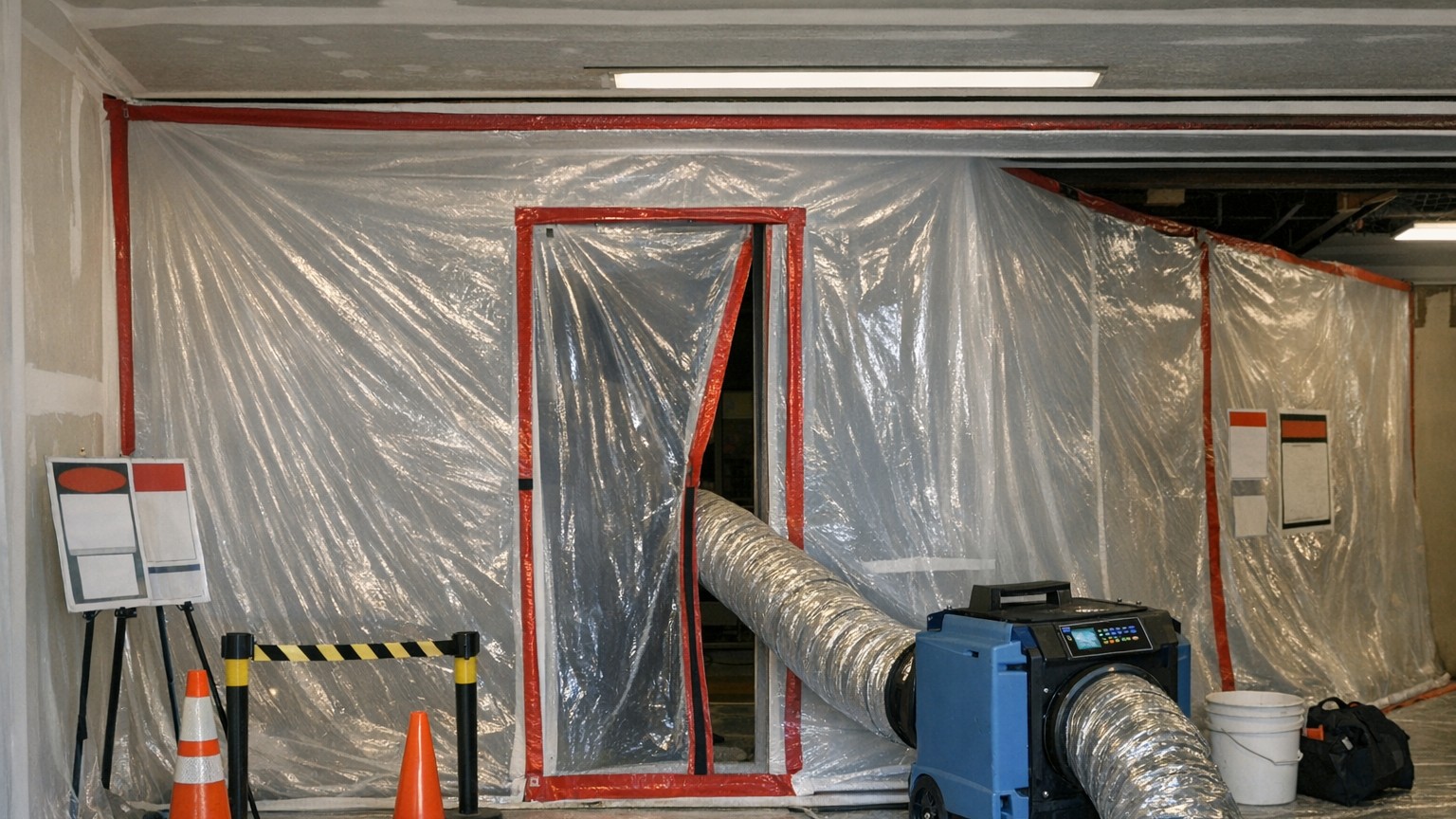
- 6-mil plastic sheeting with sealed seams
- Floor-to-ceiling coverage around the work area
- Zipper doors or sealed entry points
- Protected pathways for debris removal
Work Practices
- HEPA air scrubbers running continuously
- HEPA vacuuming before and after removal
- Bagging debris inside the containment zone
- Clean tools and PPE before leaving the area
Negative Air Pressure: How It Works
Negative air pressure means air flows into the work area, not out. HEPA-filtered air scrubbers exhaust or recirculate air so spores are captured rather than escaping into the rest of the building.
- 1
Seal the work zone
Close all openings and tape seams to prevent leaks.
- 2
Set up HEPA air scrubbers
Position units so air flows across the work area and out through filtration.
Homeowner Checklist
- Ask how containment will be built and photographed
- Confirm HEPA air scrubbers will run throughout work