%20--%3e%3cpath%20d='M128%2056%20L144%20128%20L128%20116%20L112%20128%20Z'%20fill='%23d39b4a'/%3e%3c!--%20Compass%20needle%20-%20South%20(white)%20--%3e%3cpath%20d='M128%20200%20L144%20128%20L128%20140%20L112%20128%20Z'%20fill='%23ffffff'%20opacity='0.85'/%3e%3c!--%20Center%20circle%20--%3e%3ccircle%20cx='128'%20cy='128'%20r='12'%20fill='%23d39b4a'/%3e%3ccircle%20cx='128'%20cy='128'%20r='6'%20fill='%230f4f52'/%3e%3c/svg%3e)
The Core Principle
EPA guidance emphasizes that porous materials with mold growth often need to be removed because mold can penetrate into the material. Non-porous surfaces can usually be cleaned if the moisture source is fixed.
Material Decision Guide
Usually Remove
- Drywall and insulation
- Carpet and carpet pad
- Ceiling tiles
- Particle board or pressboard
- Paper products and cardboard
Usually Clean
- Glass, metal, and tile
- Solid plastic and laminate
- Sealed concrete or masonry
- Non-porous fixtures
Sometimes Salvage
- Solid wood framing
- Subflooring
- Concrete or brick
- Cabinet boxes (if solid and dry)
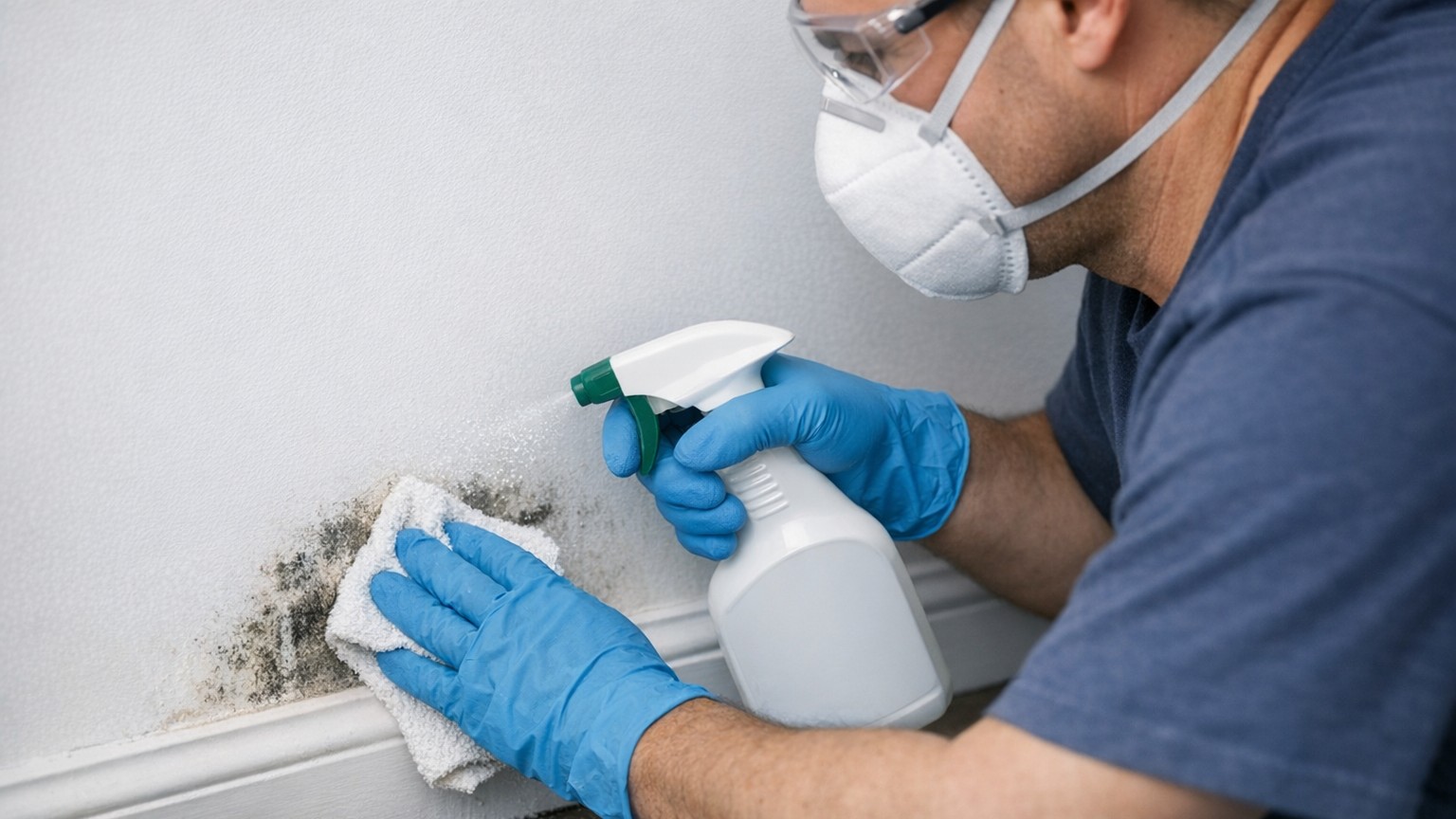
Small-Area Cleaning Steps
Common Mistakes
- Painting over mold without cleaning
- Using bleach on porous materials
- Skipping moisture repair
- Leaving damp materials in place
When to Call a Pro
- Large areas or multiple rooms
- HVAC system contamination
- Sewage or contaminated water
- Health concerns or vulnerable occupants
- Hidden mold behind walls or ceilings