%20--%3e%3cpath%20d='M128%2056%20L144%20128%20L128%20116%20L112%20128%20Z'%20fill='%23d39b4a'/%3e%3c!--%20Compass%20needle%20-%20South%20(white)%20--%3e%3cpath%20d='M128%20200%20L144%20128%20L128%20140%20L112%20128%20Z'%20fill='%23ffffff'%20opacity='0.85'/%3e%3c!--%20Center%20circle%20--%3e%3ccircle%20cx='128'%20cy='128'%20r='12'%20fill='%23d39b4a'/%3e%3ccircle%20cx='128'%20cy='128'%20r='6'%20fill='%230f4f52'/%3e%3c/svg%3e)
Start With Risk, Not Just Size
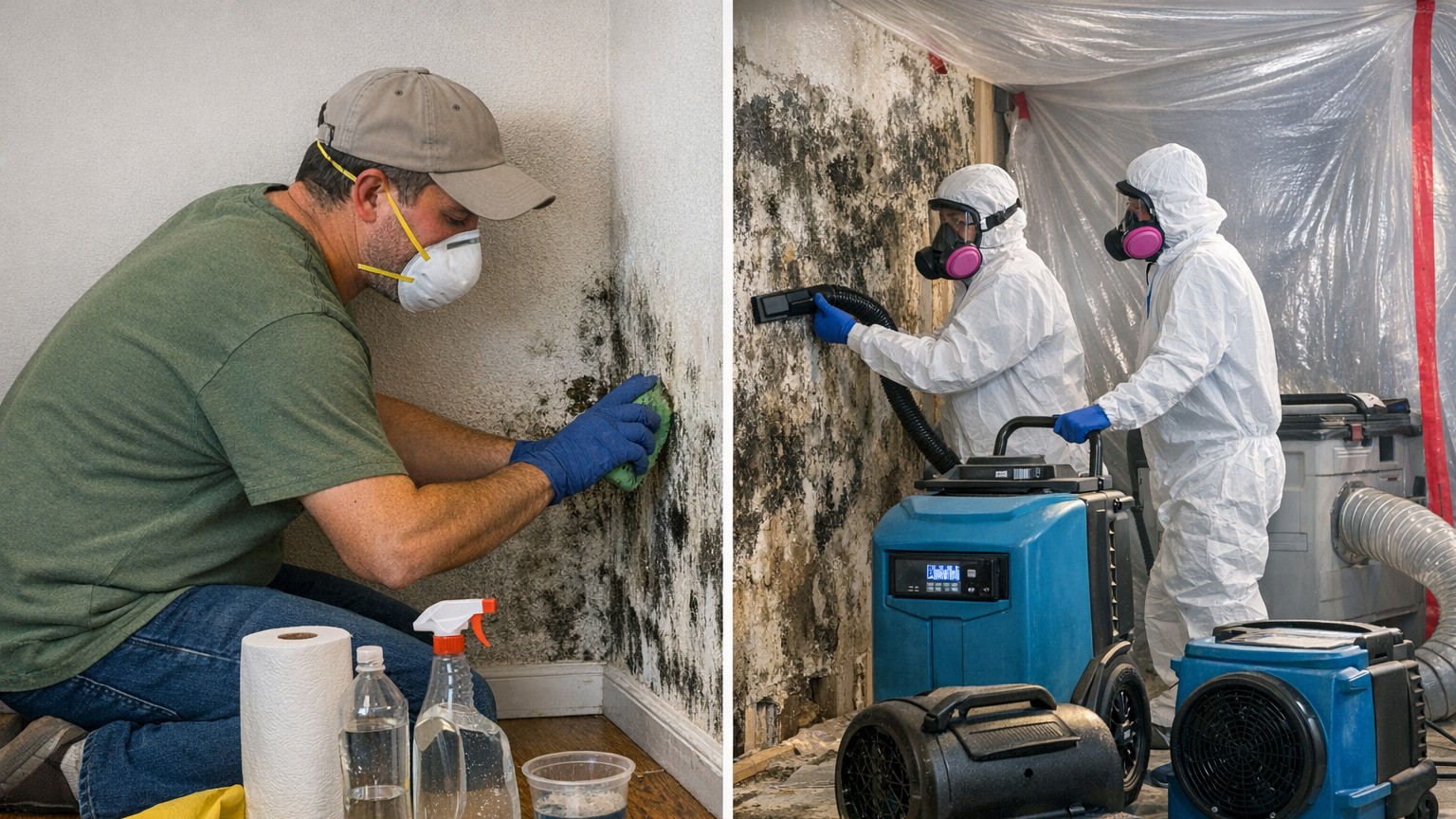
EPA guidance uses project size categories, but other factors matter just as much: moisture severity, material type, and occupant health. Small, surface-level growth on non-porous materials can often be handled safely. Larger areas, hidden growth, or health concerns typically require a professional.
DIY Is Usually OK When
- Mold is limited to a small, visible area
- Growth is on non-porous surfaces like tile or glass
- You can fully fix the moisture source
- No one in the home is medically vulnerable
- You can clean and dry the area completely
Call a Professional When
- The area is large or in multiple rooms
- Mold is inside walls, ceilings, or HVAC systems
- Sewage or contaminated water is involved
- You have asthma, allergies, or immune conditions
- You need formal documentation for a landlord or insurer
DIY Safety Steps
- 1
Protect yourself
Use gloves, eye protection, and a properly fitted respirator.
- 2
Isolate the area
Close doors and avoid spreading dust or debris.
What a Pro Should Provide
Scope of Work
- Written remediation plan
- Containment and negative air setup
- Material removal details
- Cleaning and drying steps
- Post-remediation verification plan
Credentials
- Relevant IICRC certifications (AMR/WRT)
- Proof of liability insurance
- Clear conflict-of-interest disclosures
- References and recent similar projects