%20--%3e%3cpath%20d='M128%2056%20L144%20128%20L128%20116%20L112%20128%20Z'%20fill='%23d39b4a'/%3e%3c!--%20Compass%20needle%20-%20South%20(white)%20--%3e%3cpath%20d='M128%20200%20L144%20128%20L128%20140%20L112%20128%20Z'%20fill='%23ffffff'%20opacity='0.85'/%3e%3c!--%20Center%20circle%20--%3e%3ccircle%20cx='128'%20cy='128'%20r='12'%20fill='%23d39b4a'/%3e%3ccircle%20cx='128'%20cy='128'%20r='6'%20fill='%230f4f52'/%3e%3c/svg%3e)
When You Need a Dehumidifier
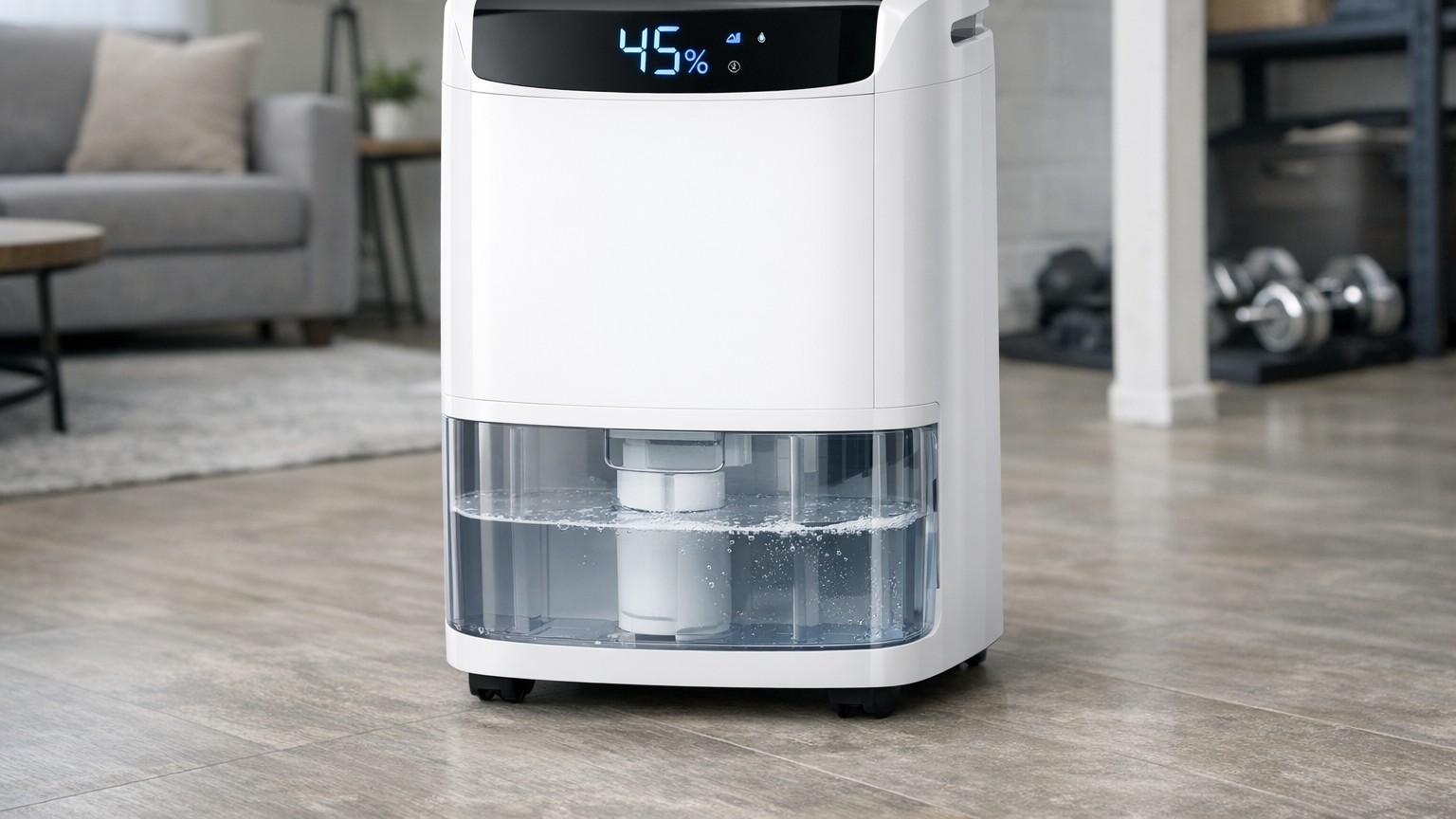
If indoor humidity stays above 60% or you notice musty odors, condensation, or dampness, a dehumidifier can help keep moisture under control. Basements and crawlspaces often benefit the most.
Choosing the Right Unit
Sizing Tips
- Match capacity to room size and dampness level
- Bigger is better for very damp basements
- Look for Energy Star models for efficiency
- Check noise ratings for bedrooms or living areas
Helpful Features
- Built-in humidistat
- Auto-restart after power loss
- Continuous drain option
- Easy-to-clean filter
Portable vs. Whole-House
Deciding between a portable and whole-house dehumidifier depends on your specific situation, budget, and the scope of your humidity problem.
When Portable Dehumidifiers Are Sufficient
- Humidity problems are limited to one area (basement, bathroom, bedroom)
- You're renting and can't modify the HVAC system
- Budget is a primary concern ($200-300 vs. $1,000+ for whole-house)
Types of Whole-House Units
Whole-house dehumidifiers come in two main configurations, each with distinct advantages.
HVAC-Integrated Units
Connect directly to your existing ductwork. Air is drawn through the return, dehumidified, and distributed through your vents.
- Requires central HVAC system
- Controlled via thermostat humidity setting
- Completely out of sight
- Most common for residential use
Ducted Standalone Units
Operate independently with their own ductwork. Can be installed without central HVAC.
- Works in homes without central air
- Can target specific problem areas
- Independent of heating/cooling cycles
- Good for additions or outbuildings
Professional Installation
Whole-house dehumidifiers require professional installation. Here's what to expect and how to prepare.
What to Expect During Installation
- Technician assesses your ductwork and recommends placement
- Unit is mounted (usually in basement, utility room, or attic)
Placement and Operation
- Place the unit in the dampest area with airflow around it
- Keep doors open if you want to dehumidify adjacent rooms
Maintenance
- Clean or replace filters per the manual
- Wipe down the tank to prevent buildup
- Check the drain hose for clogs
- Monitor humidity with a hygrometer
If Humidity Stays High
A dehumidifier helps, but it cannot fix a water problem. Persistent humidity usually means a moisture source is still active.
- Check for plumbing or roof leaks
- Inspect foundations and gutters