%20--%3e%3cpath%20d='M128%2056%20L144%20128%20L128%20116%20L112%20128%20Z'%20fill='%23d39b4a'/%3e%3c!--%20Compass%20needle%20-%20South%20(white)%20--%3e%3cpath%20d='M128%20200%20L144%20128%20L128%20140%20L112%20128%20Z'%20fill='%23ffffff'%20opacity='0.85'/%3e%3c!--%20Center%20circle%20--%3e%3ccircle%20cx='128'%20cy='128'%20r='12'%20fill='%23d39b4a'/%3e%3ccircle%20cx='128'%20cy='128'%20r='6'%20fill='%230f4f52'/%3e%3c/svg%3e)
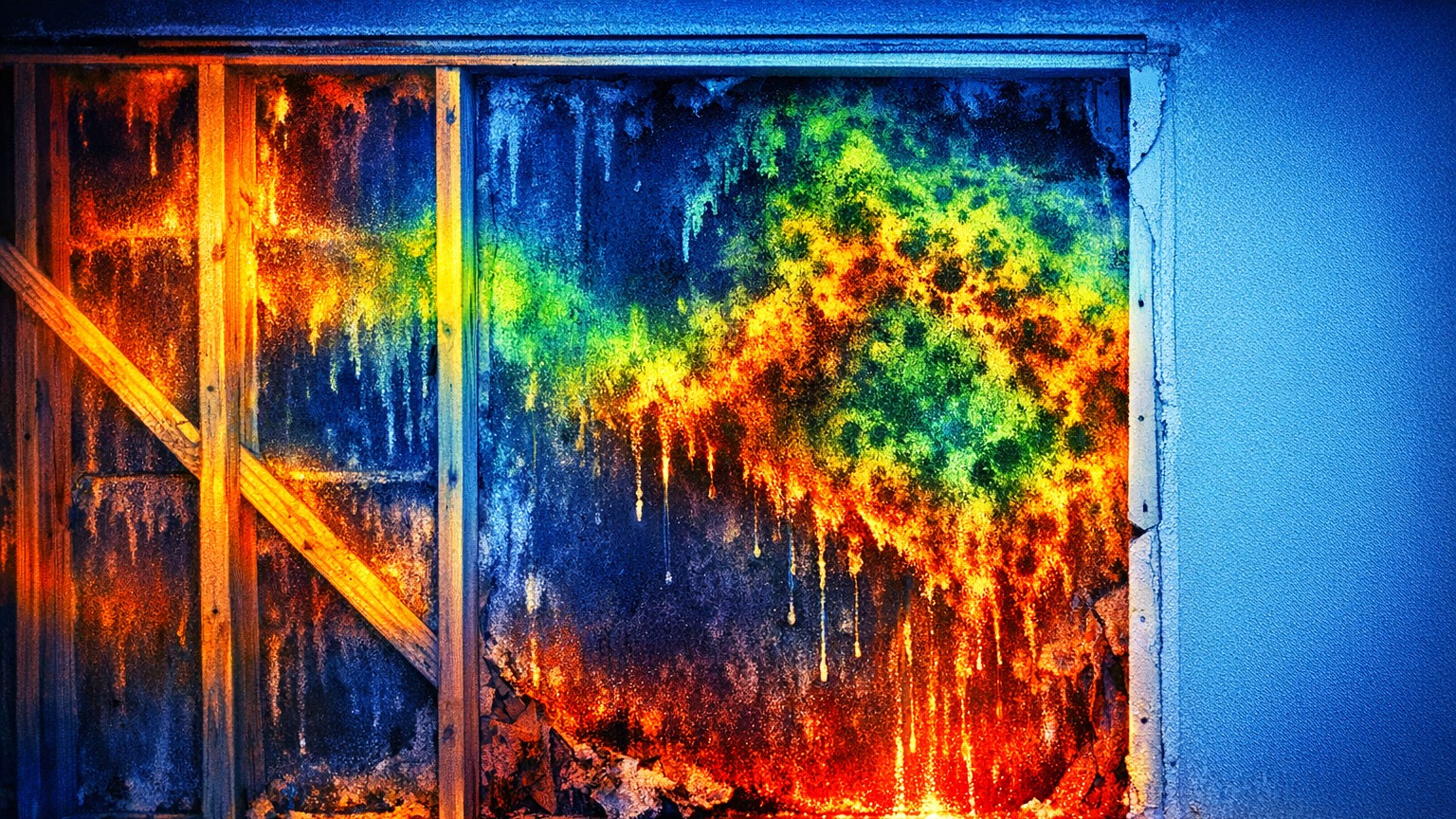
Why Mold Hides
Mold needs three things to grow: moisture, a food source (organic material), and time. These conditions often occur in places you don't regularly see, behind walls, under floors, inside HVAC systems, or in enclosed spaces with poor ventilation.
The most problematic mold is often the mold you cannot see. Visible mold on a surface can indicate a larger problem behind it, especially in wall cavities, under flooring, or inside HVAC systems.
Common Hiding Places
Mold colonizes areas where moisture accumulates without adequate drying. These are the most common hiding spots in residential buildings:
Inside Walls and Ceilings
- Behind drywall near exterior walls (condensation)
- Around plumbing penetrations and pipe chases
- Behind bathroom tile with failed grout
- In wall cavities after slow leaks
- Around window frames with condensation issues
Below Floors and in Foundations
- Under carpet and padding (especially after spills)
- In crawlspaces with ground moisture
- Behind baseboards after flooding
- Under vinyl or laminate flooring
- In basement wall cavities
HVAC and Mechanical Systems
- Inside ductwork and air handlers
- On evaporator coils and drain pans
- Around condensate lines
- In return air plenums
- Behind registers and grilles
See our detailed guide on HVAC and duct mold.
Attics and Roof Spaces
- On roof sheathing from poor ventilation
- Around bathroom exhaust vents that terminate in attic
- Near roof valleys and penetrations
- On insulation from ice dam leaks
- In soffits with blocked ventilation
Learn more in our attic mold guide.
Room-specific hiding spots are covered in our dedicated guides for bathroom mold, bedroom mold, basement mold, and kitchen mold.
Health Symptoms That May Indicate Hidden Mold
Your body may detect hidden mold before your eyes do. While these symptoms have many possible causes, a pattern linked to your home environment warrants investigation.
Respiratory Symptoms
- Chronic congestion or runny nose
- Sneezing, especially upon waking
- Wheezing or difficulty breathing
- Coughing that worsens indoors
- Sinus pressure or headaches
- Worsening asthma symptoms
Other Common Symptoms
- Itchy, watery, or red eyes
- Skin irritation or rashes
- Fatigue that improves away from home
- Throat irritation
- Recurring respiratory infections
For detailed information on health impacts, see our guides on respiratory and allergic reactions and when to see a doctor. Vulnerable populations including infants, older adults, and immunocompromised individuals should take symptoms especially seriously.
How to Investigate Without Causing Spread
Improper investigation can release millions of spores into your living space. Follow these steps to minimize contamination:
When to Call a Professional
While some investigation can be done yourself, certain situations require professional assessment:
- You suspect mold in HVAC systems or ductwork
- Large areas of dampness or water damage (EPA suggests extra caution for areas larger than about 10 sq ft)
- Hidden mold behind finished walls or under flooring
- Recurring mold despite previous cleaning efforts
- Health symptoms that may be mold-related
- Sensitive occupants (young children, elderly, immunocompromised)
- Preparation for real estate transactions
- Insurance claims or documentation requirements
Take our DIY vs Pro quiz for personalized guidance. If you decide professional help is needed, use our contractor vetting guide and cost estimator to prepare.
Professional Remediation Standards
When hidden mold requires professional remediation, the work should follow established industry standards:
Key principles from the S520 standard for hidden mold remediation:
- Source removal is the primary method-not spraying chemicals
- Containment with negative air pressure prevents spread
- Materials are categorized (porous, semi-porous, non-porous) for appropriate treatment
- Post-remediation verification confirms return to normal conditions
- Independent inspectors should ideally verify work instead of the remediation company
Learn more about professional remediation and the DIY vs Pro decision. For renters dealing with landlord mold issues, understand your tenant rights.