%20--%3e%3cpath%20d='M128%2056%20L144%20128%20L128%20116%20L112%20128%20Z'%20fill='%23d39b4a'/%3e%3c!--%20Compass%20needle%20-%20South%20(white)%20--%3e%3cpath%20d='M128%20200%20L144%20128%20L128%20140%20L112%20128%20Z'%20fill='%23ffffff'%20opacity='0.85'/%3e%3c!--%20Center%20circle%20--%3e%3ccircle%20cx='128'%20cy='128'%20r='12'%20fill='%23d39b4a'/%3e%3ccircle%20cx='128'%20cy='128'%20r='6'%20fill='%230f4f52'/%3e%3c/svg%3e)
The Four Requirements for Mold Growth
Mold needs four things to grow: moisture (the most controllable factor), organic material to feed on, suitable temperature, and sufficient time.
Of these, moisture is the factor you can most effectively control in a building environment. The EPA puts it simply: "The key to mold control is moisture control."
Organic materials are inherent in building construction, and temperature ranges that support mold overlap with human comfort. But you can control moisture, and doing so effectively prevents mold growth. This is why our prevention guide focuses primarily on moisture management strategies.
Moisture: The Critical Factor
Moisture is the only mold growth requirement that building occupants can consistently control. Remove moisture, and mold growth stops.
Moisture enters buildings through several pathways. Bulk water intrusion includes roof leaks, plumbing leaks, flooding, and rain penetration through walls or windows. If you have experienced a water event, see our guide on what to do after a leak.
Condensation occurs when warm, humid air contacts cold surfaces such as windows, pipes, exterior walls, and cold bridges in the building envelope. Our window condensation guide addresses this common issue.
Humidity means high ambient moisture levels where no direct water is present but relative humidity stays high for long periods. Learn about humidity control.
Built-in moisture comes from wet building materials during construction or renovation, where new concrete, lumber, and drywall contain moisture that must dry out.
Organic Material: Food for Mold
Mold feeds on organic (carbon-containing) materials. Unfortunately, most building materials provide excellent mold food sources.
High-risk materials include wood and wood products (framing, plywood, OSB), paper products (drywall facing, wallpaper, cardboard, books), natural fibers (cotton, wool, jute backing on carpet), and leather and natural fabrics.
Moderate-risk materials include painted surfaces (mold can grow on paint, especially if dirty or dusty), dust accumulation that provides nutrients even on non-organic surfaces, and adhesives and glues used in building materials.
Lower-risk materials include concrete and masonry (inert, but mold can grow on surface dust and dirt), glass and metal (do not support growth but can host mold if covered with organic debris), and plastic and vinyl (low nutrient value, but mold can grow on surface contaminants).
Note that even surfaces that do not support mold growth can become contaminated if nearby materials are growing mold. During remediation, understanding which materials can be cleaned versus which must be removed is critical. See our guide on cleaning vs. removal.
Temperature Requirements
Most indoor molds grow well at the same temperatures humans find comfortable. Many species grow across typical indoor ranges (roughly 60 to 85 degrees F).
Some molds like Cladosporium (see our guide on common indoor molds) can grow at cooler temperatures, which is why refrigerators and cold storage areas can develop mold problems.
At high heat, growth slows or stops, but spores remain viable. Below freezing, growth stops but mold is not killed. It becomes dormant and revives when conditions warm.
The practical implication is that temperature control alone is not an effective mold prevention strategy for occupied buildings. Normal heating and cooling for human comfort keeps buildings within mold's growth range. Focus moisture control efforts rather than trying to make your home too hot or cold for mold.
Time: The 24-48 Hour Window
Time is the factor that makes rapid response to water events critical. Under favorable conditions (warmth, moisture, organic material), mold spores can germinate and begin growing within 24 to 48 hours.
Visible growth can appear within days and spread over time if materials stay wet. The 24 to 48 hour window is why every water damage response emphasizes speed.
If you can dry materials within this timeframe, mold establishment is much less likely. This window applies to all water sources: burst pipes, flooding, roof leaks, appliance overflows, condensation problems, and any other water intrusion.
For immediate steps after water damage, see our guide on what to do after a leak.
Practical Control Strategies
Since moisture is the controllable variable, prevention focuses on moisture management.
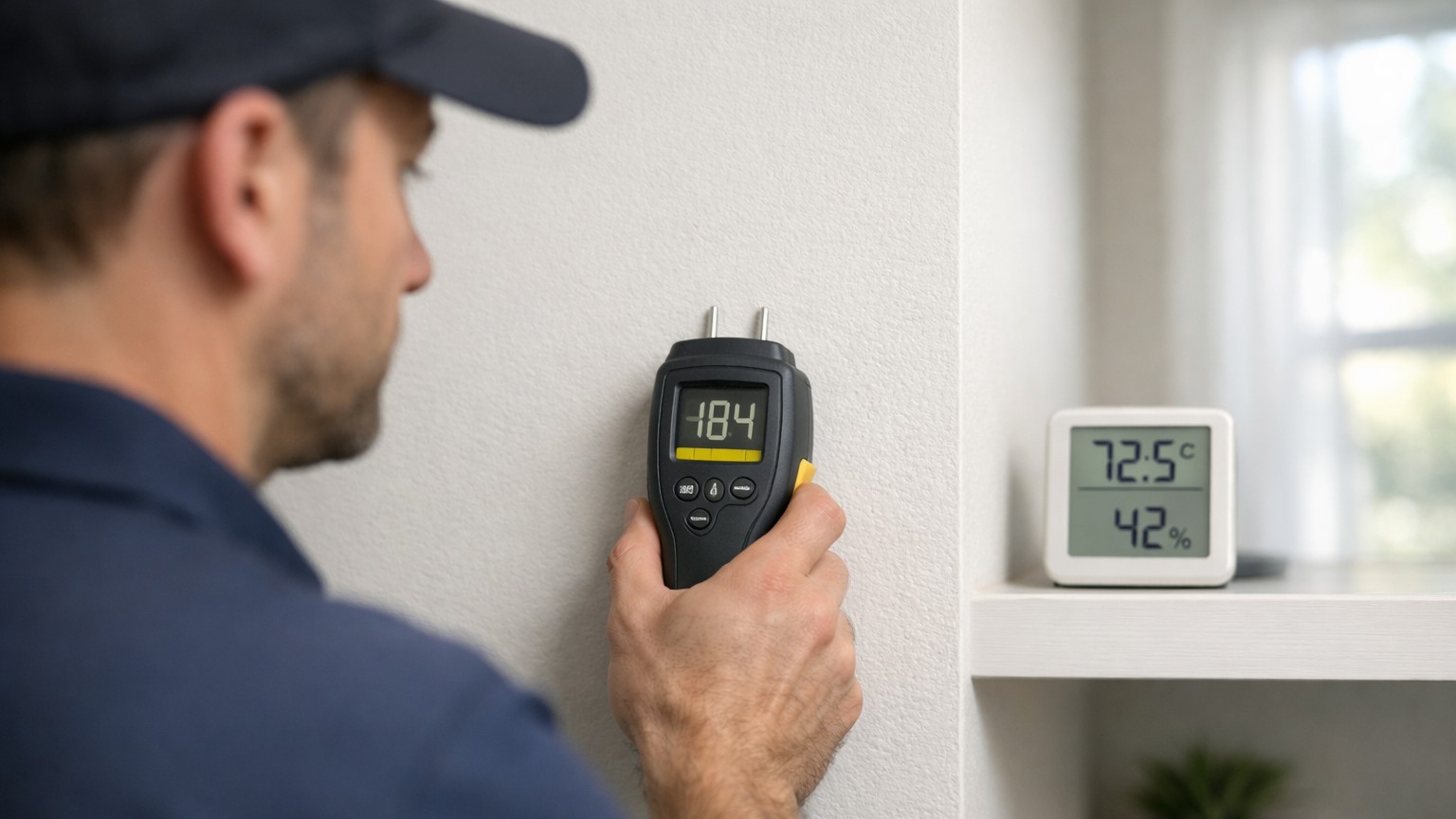
Control indoor humidity by using dehumidifiers in basements and other high-humidity areas, using exhaust fans in bathrooms and kitchens, venting dryers to the outside, and monitoring humidity with a hygrometer.
Fix water intrusion promptly by repairing leaks quickly, addressing roof and flashing problems, maintaining caulk and weatherstripping, and ensuring proper drainage around foundations.
Manage condensation by improving ventilation in problem areas, insulating cold water pipes, addressing cold bridges in the building envelope, and using exhaust ventilation during moisture-generating activities. See our window condensation guide.
Respond quickly to water events by extracting standing water immediately, using fans and dehumidifiers to accelerate drying, removing water-damaged porous materials if they cannot be dried in time, and monitoring moisture levels until materials are dry.
Building design best practices include positive drainage away from foundations, properly sized and maintained HVAC systems, vapor control appropriate for the climate zone, and ventilation that exhausts moisture outdoors instead of into attics, crawlspaces, or wall cavities. See our guide on HVAC and duct mold for system-specific issues.
If you are unsure whether a mold problem requires professional help, our DIY vs Pro quiz can help you decide.
Official Resources
Educational content based on EPA, CDC, and FEMA guidance. Building-specific advice may require professional consultation.