%20--%3e%3cpath%20d='M128%2056%20L144%20128%20L128%20116%20L112%20128%20Z'%20fill='%23d39b4a'/%3e%3c!--%20Compass%20needle%20-%20South%20(white)%20--%3e%3cpath%20d='M128%20200%20L144%20128%20L128%20140%20L112%20128%20Z'%20fill='%23ffffff'%20opacity='0.85'/%3e%3c!--%20Center%20circle%20--%3e%3ccircle%20cx='128'%20cy='128'%20r='12'%20fill='%23d39b4a'/%3e%3ccircle%20cx='128'%20cy='128'%20r='6'%20fill='%230f4f52'/%3e%3c/svg%3e)
Common Causes and Warning Signs
Crawlspace issues often go unnoticed until they affect the living space above. Learn to recognize hidden mold signs before damage becomes severe.
Common Causes
- Bare earth with no vapor barrier (moisture evaporates directly into the space)
- Poor drainage causing standing water or saturated soil
- Leaky HVAC ducts or plumbing runs
- High outdoor humidity entering through foundation vents
- Blocked or inadequate ventilation
Warning Signs
- Musty odor in living spaces above (especially noticeable in winter)
- Condensation on metal ducts and pipes
- Sagging, damp, or falling insulation
- Visible growth on floor joists and subfloor
- Wood rot or structural softening
Inspection Checklist
- Look for standing water or damp soil
- Check for a continuous vapor barrier
Safe Cleanup for Small Areas
Crawlspace work is challenging due to confined spaces and potential exposure. Review DIY vs. professional considerations before attempting cleanup yourself.
- 1
Fix moisture sources first
Remediation is pointless without addressing drainage, leaks, and vapor barriers.
- 2
Improve ventilation or encapsulate
Either ensure vents are clear and adequate, or consider full encapsulation for persistent issues.
Prevention Tips
Effective crawlspace moisture control combines vapor barriers, drainage, and often active humidity management.
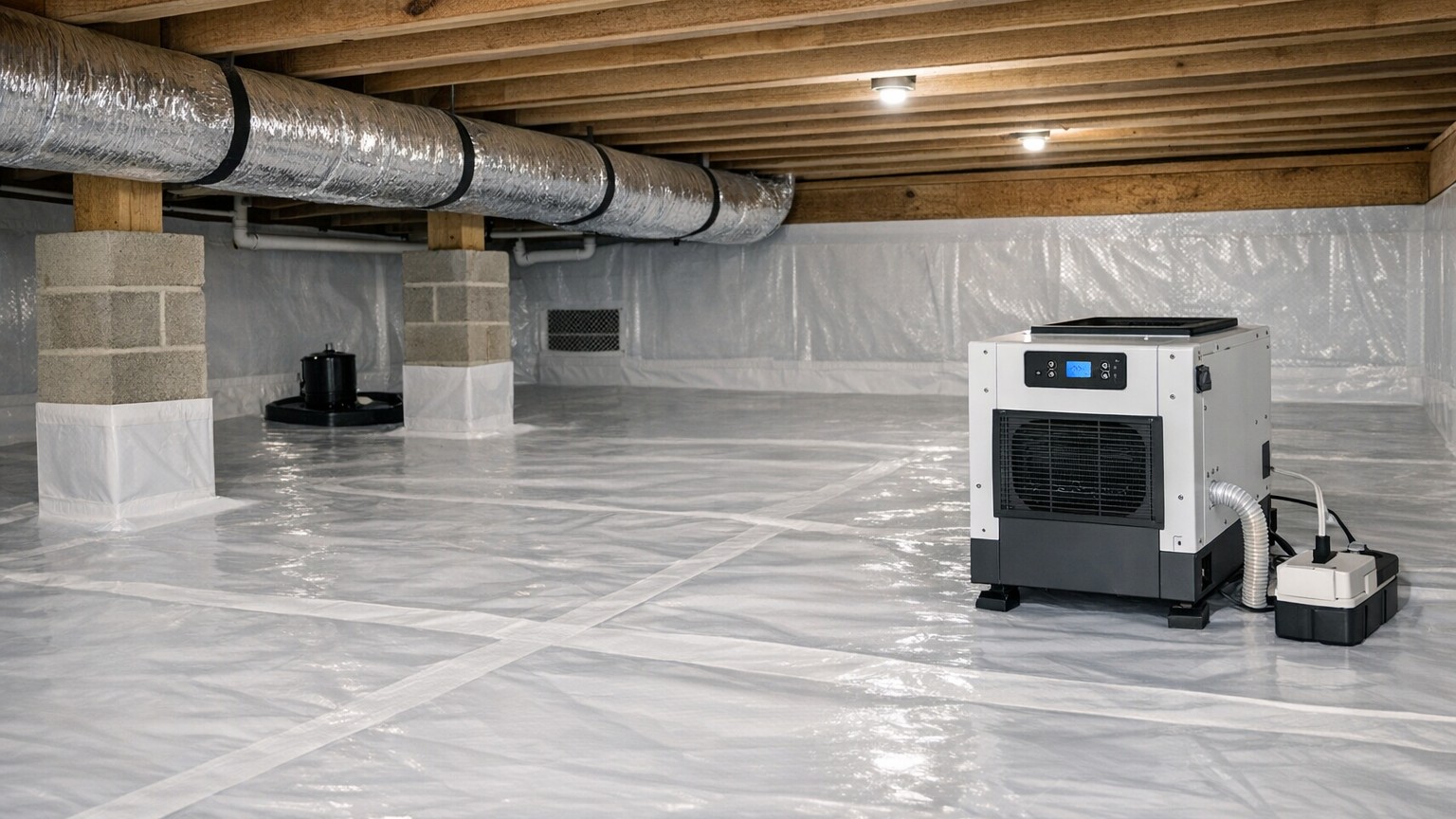
- Install a 6-mil (minimum) polyethylene vapor barrier covering all exposed earth
- Improve exterior grading so water flows away from the foundation
- Seal all duct joints and insulate ducts to prevent condensation
- Install a crawlspace-rated dehumidifier for persistent humidity issues
- Inspect annually, especially after heavy rains or flooding
See our dehumidifier guide for sizing recommendations for crawlspace applications.
When to Call a Pro
Crawlspace remediation often requires specialized equipment and expertise. Use our DIY vs. Pro quiz for guidance.
- Large areas of structural wood (joists, subfloor) affected
- Standing water, active leaks, or history of flooding
- Significant insulation contamination requiring removal