%20--%3e%3cpath%20d='M128%2056%20L144%20128%20L128%20116%20L112%20128%20Z'%20fill='%23d39b4a'/%3e%3c!--%20Compass%20needle%20-%20South%20(white)%20--%3e%3cpath%20d='M128%20200%20L144%20128%20L128%20140%20L112%20128%20Z'%20fill='%23ffffff'%20opacity='0.85'/%3e%3c!--%20Center%20circle%20--%3e%3ccircle%20cx='128'%20cy='128'%20r='12'%20fill='%23d39b4a'/%3e%3ccircle%20cx='128'%20cy='128'%20r='6'%20fill='%230f4f52'/%3e%3c/svg%3e)
Common Causes and Warning Signs
Bedroom mold often indicates broader humidity problems or building envelope issues. Learn to recognize hidden mold signs.
Common Causes
- Window condensation from temperature differences
- Furniture placed tight against cold exterior walls
- High indoor humidity (above 60%)
- Roof leaks or water intrusion through walls
- Poor airflow in closets, especially those on exterior walls
Warning Signs
- Musty odor in closets or corners
- Water staining or discoloration near windows
- Peeling or bubbling paint on exterior walls
- Damp-feeling bedding, carpets, or curtains
- Allergy or respiratory symptoms that worsen at night
Inspection Checklist
- Check window frames and sills for condensation
- Move furniture to inspect exterior walls
Safe Cleanup for Small Areas
Bedroom mold on hard surfaces can often be handled with DIY methods. For larger areas or wall cavity issues, see our DIY vs. professional guidance.
- 1
Clean non-porous surfaces
Use detergent and water on window frames, sills, and trim. Avoid bleach on porous materials.
- 2
Dry thoroughly
Increase airflow with fans and reduce indoor humidity levels.
Prevention Tips
Bedroom mold prevention focuses on humidity control and addressing window condensation.
- Keep indoor humidity between 30-50% (no higher than 60%)
- Leave 2-4 inches between furniture and exterior walls for airflow
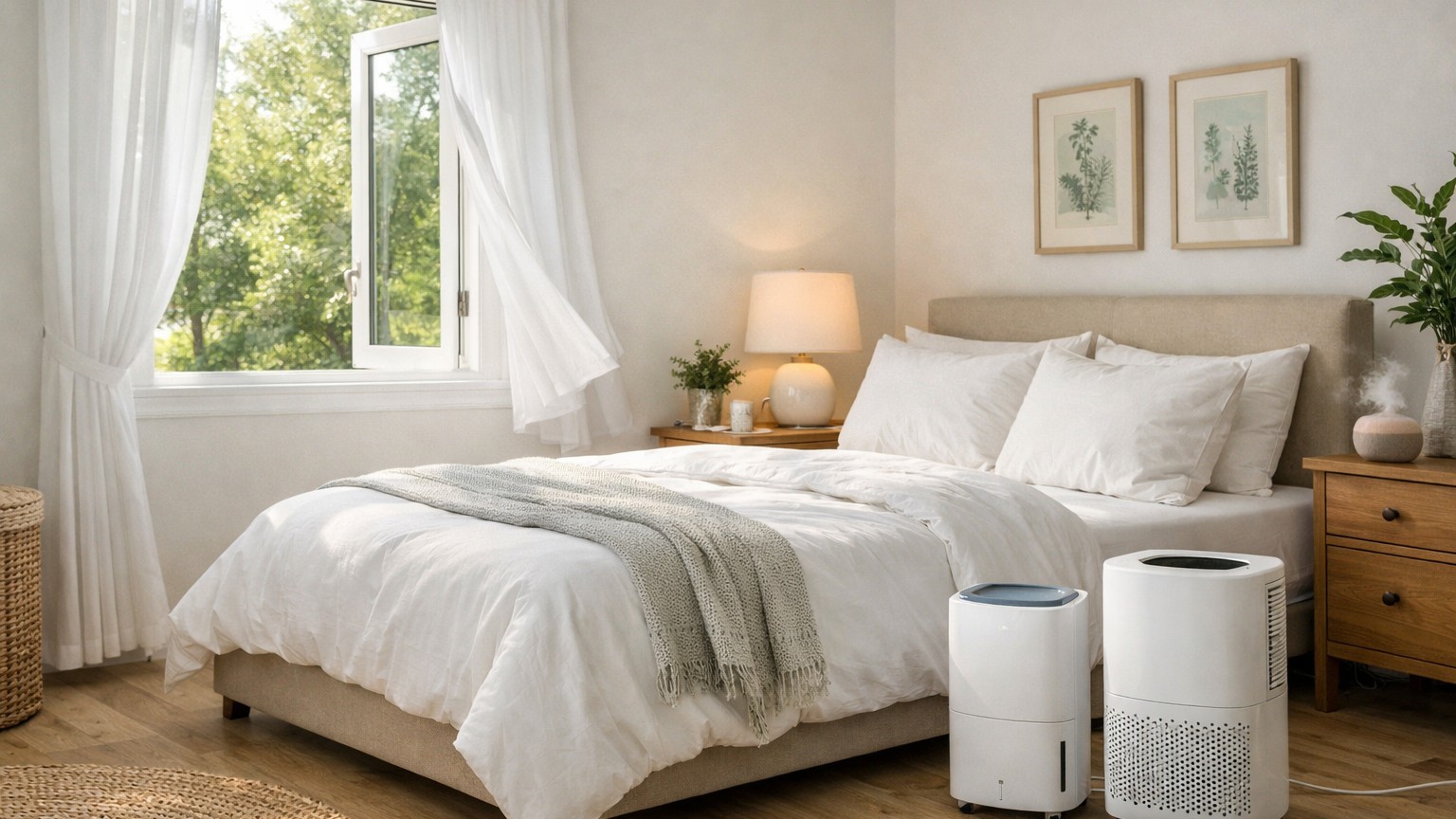
- Use a portable dehumidifier if humidity is consistently high
- Open windows briefly each day for fresh air exchange when weather permits
- Seal window weatherstripping and caulk gaps around frames
- Keep closet doors open or use louvered doors for airflow
For sizing guidance, see our dehumidifier guide.
When to Call a Pro
Bedroom mold that persists or affects wall cavities needs professional attention. Take our DIY vs. Pro quiz for personalized guidance.
- Mold recurring behind walls, in closets, or in corners despite cleaning
- Large areas of staining, soft drywall, or bubbling paint
- Health symptoms that worsen at night or upon waking