%20--%3e%3cpath%20d='M128%2056%20L144%20128%20L128%20116%20L112%20128%20Z'%20fill='%23d39b4a'/%3e%3c!--%20Compass%20needle%20-%20South%20(white)%20--%3e%3cpath%20d='M128%20200%20L144%20128%20L128%20140%20L112%20128%20Z'%20fill='%23ffffff'%20opacity='0.85'/%3e%3c!--%20Center%20circle%20--%3e%3ccircle%20cx='128'%20cy='128'%20r='12'%20fill='%23d39b4a'/%3e%3ccircle%20cx='128'%20cy='128'%20r='6'%20fill='%230f4f52'/%3e%3c/svg%3e)
Common Causes and Warning Signs
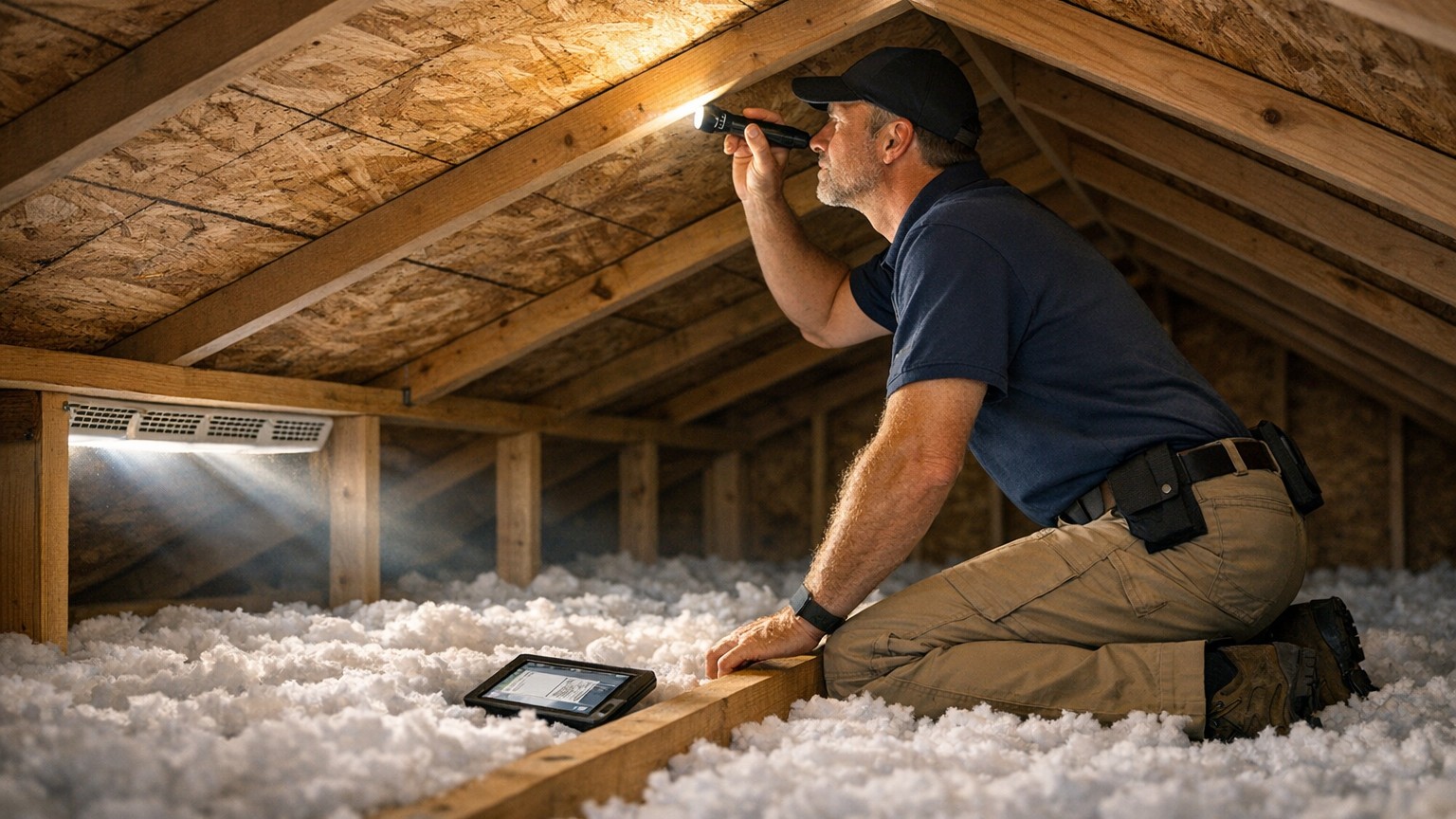
Attic mold often goes undetected until it becomes extensive. Learning to spot hidden mold indicators early prevents costly damage.
Common Causes
- Roof leaks from damaged shingles, flashing, or ice dams
- Inadequate attic ventilation (blocked soffit or ridge vents)
- Bathroom or kitchen exhaust fans venting directly into attic
- Air leaks around recessed lights, attic hatches, or plumbing penetrations
- Condensation from insufficient or improperly installed insulation
Warning Signs
- Dark staining or fuzzy growth on roof sheathing
- Musty odor when entering the attic
- Frost or moisture on roofing nails during cold weather
- Wet, compressed, or discolored insulation
- Condensation on HVAC ducts running through attic
Inspection Checklist
- Check roof decking for staining or fuzz
- Look for roof leaks or damaged flashing
Safe Cleanup for Small Areas
Attic work requires caution due to limited access, heat, and confined spaces. Review our DIY vs. professional guidance before proceeding.
- 1
Stop the moisture source first
Fix roof leaks, re-route exhaust fans to exterior, and seal air leaks from below.
- 2
Improve attic ventilation
Clear blocked soffit vents and ensure ridge vents or other exhaust points are functioning.
Prevention Tips
Attic mold prevention focuses on controlling moisture at its source and ensuring proper ventilation. See our prevention overview for comprehensive strategies.
- Seal air leaks around attic hatches, recessed lights, and plumbing penetrations
- Ensure all bathroom and kitchen exhaust fans vent directly to the exterior, not into the attic
- Maintain balanced attic ventilation with adequate intake (soffit) and exhaust (ridge or gable vents)
- Install proper insulation with vapor barriers on the warm side where required by climate
- Inspect roof annually and after major storms for damage
Address condensation issues throughout your home, as the same humid air affecting windows also rises into the attic.
When to Call a Pro
Attic mold remediation can be dangerous and often requires specialized equipment. Take our DIY vs. Pro quiz for personalized guidance.
- Large areas of roof sheathing affected (more than 10-15 square feet)
- Wet insulation that needs removal and replacement
- Evidence of structural damage or wood rot